
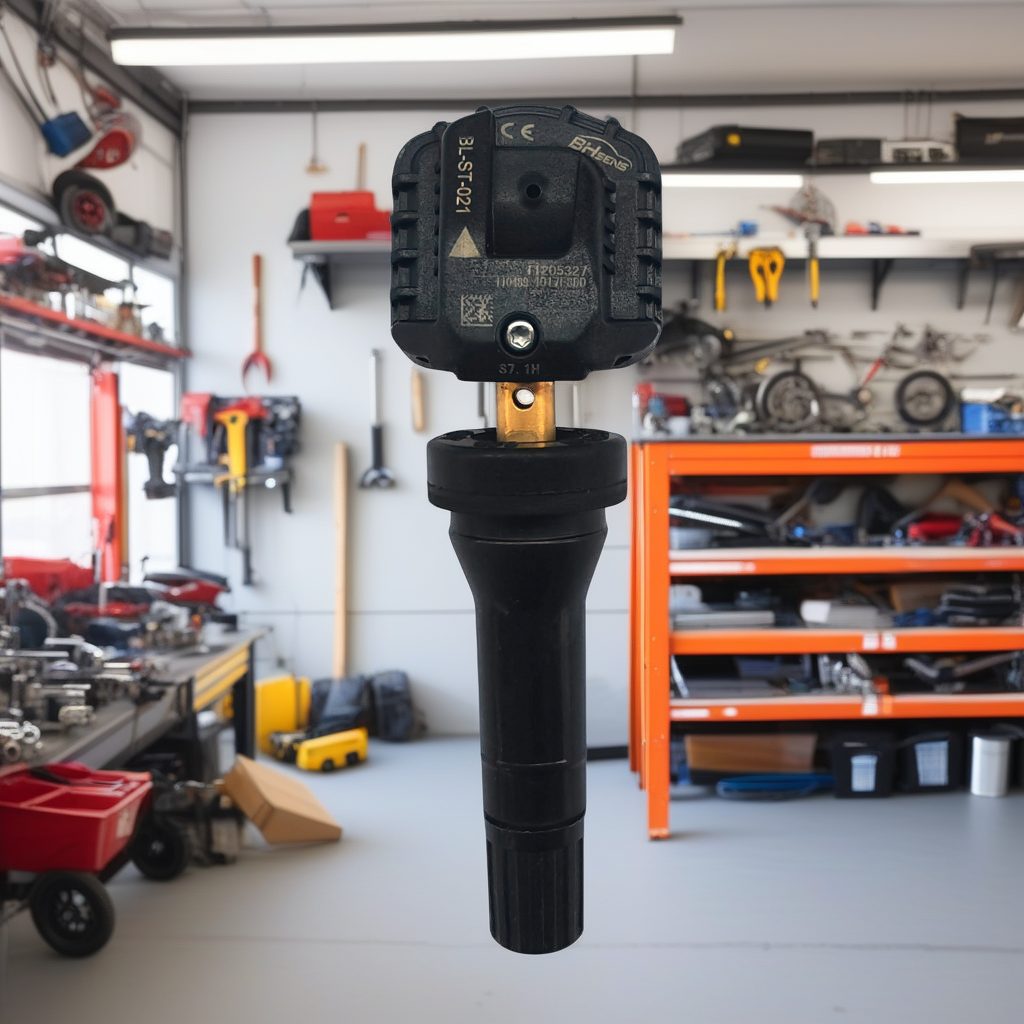
Understanding the TPMS Dilemma for 龙猫 Owners
龙猫, as the Chinese domestic version of the MG/ROEWE platform, shares many components with its international siblings — including the TPMS system. If you own a 龙猫 and one (or more) of your tire pressure sensors has failed, you’ve likely seen the dreaded TPMS warning light. The question is: should you shell out for a genuine OEM sensor from the dealer, or is an aftermarket alternative like the BH-Sens BL-ST-021 a safe bet?
The answer depends on your specific situation. Let’s break it down.
OEM vs Aftermarket: The Core Differences
OEM Sensors (Genuine Baolong/Continental)
The OEM sensors on most 龙猫 models are manufactured by Baolong Technology — the same company that produces the BH-Sens aftermarket line. In fact, Baolong is the OE supplier for many Chinese domestic brands including 龙猫, MG, and Roewe. This means the OEM sensor and the BH-Sens aftermarket sensor often come from the same factory floor.
OEM Pros:
- Guaranteed exact match to your vehicle’s original programming
- No compatibility concerns with the 龙猫’s TPMS module
- Covered under your vehicle’s new parts warranty (usually 12 months)
- Ideal for insurance claims or warranty work
OEM Cons:
- 3–5x the price of an aftermarket equivalent
- Often requires dealer programming (additional labor cost)
- Limited availability — dealers may need to order
Quality Aftermarket (BH-Sens BL-ST-021)
The BL-ST-021 | BH-Sens 433MHz TPMS Tire Pressure Sensor | Fits Im, MG, Rising, Roewe | OE# 10290600, 10625492, 10718213 is a direct-fit, pre-programmed aftermarket sensor designed specifically for the 龙猫 platform and its MG/Roewe/Rising cousins. It operates at 433MHz — the standard frequency used by 龙猫 TPMS systems.
Aftermarket Pros:
- Significant cost savings (typically 60–70% less than OEM)
- Pre-programmed to common 龙猫 TPMS protocols — usually auto-learns within minutes
- Same OE manufacturer (Baolong Technology) as the factory parts
- Widely available with fast shipping
Aftermarket Cons:
- May not be compatible with the very latest 龙猫 model year updates (check your vehicle’s TPMS protocol version)
- Some very new models may require OBD-II programming to register the sensor
- Warranty is typically shorter (1–2 years versus OEM’s longer coverage)
Price/Value Analysis: What Are You Really Paying For?
| Factor | OEM Sensor | Aftermarket (BH-Sens BL-ST-021) |
|---|---|---|
| Price per sensor | $60–$100+ | $18–$30 |
| Set of 4 | $240–$400+ | $72–$120 |
| Programming | Often required (dealer) | Pre-programmed; auto-learns |
| Manufacturer | Baolong Technology | Baolong Technology (same factory) |
| Frequency | 433MHz | 433MHz |
| Warranty | 12–24 months | 12–24 months |
| Compatibility risk | Zero | Very low for 2018–2024 models |
The math is clear: for a set of four sensors, you save $150–$300 by choosing the aftermarket option. That’s enough to cover installation costs and still have money left over.
When OEM Is Actually Worth It
Despite the price advantage, OEM is the smarter choice in three specific scenarios:
1. Your 龙猫 Is Under Factory Warranty
If your vehicle is still covered by the manufacturer’s warranty (typically 3–5 years/60,000–100,000 km), using non-OEM parts could technically void your TPMS-related coverage. Some dealers will refuse to service a TPMS fault if aftermarket sensors are installed. Check your warranty terms first.
2. You Have a 2024 or Newer Model
Newer 龙猫 models may use updated TPMS protocols that aftermarket sensors haven’t yet been validated against. While the BH-Sens BL-ST-021 covers 59 specific OE fitments, the very latest software revisions can cause learning issues. If your vehicle is less than 2 years old, OEM gives you peace of mind.
3. Your Dealer Offers Free Installation with OEM Parts
Some dealers run promotions where OEM sensors include free installation or free TPMS relearn. In that case, the price gap narrows. Always ask for a quote before buying aftermarket.
When Aftermarket Makes More Sense
For the vast majority of 龙猫 owners — particularly those with 2018–2023 models — the aftermarket path is the obvious winner.
You should buy the BH-Sens BL-ST-021 if:
- Your 龙猫 is out of factory warranty
- You’re replacing 2–4 sensors at once (the savings multiply)
- You’re comfortable with a 5-minute auto-learn procedure after installation
- You want to avoid dealer wait times and markup
- You own an older 龙猫 (2016–2019) where OEM sensors are becoming scarce
Installation and Programming: What to Expect
The BH-Sens BL-ST-021 is a clamp-in, pre-programmed sensor. This means it comes ready to install out of the box — no additional programming required for most 龙猫 models.
Typical installation steps:
- Remove the wheel and deflate the tire
- Break the bead and remove the old sensor
- Install the new BH-Sens sensor with the correct torque (check your vehicle manual for the specific value — typically around 35–40 N·m)
- Remount and balance the tire
- Reinstall the wheel
- Drive the vehicle at 20–30 km/h for 5–10 minutes — the TPMS module should automatically learn the new sensor IDs
Troubleshooting:
- If the TPMS light doesn’t go out after driving, you may need an OBD-II TPMS relearn tool. Many tire shops can do this for a small fee (usually $20–$40).
- For very new 龙猫 models, a professional TPMS programming tool may be required — confirm compatibility before purchase.
Recommended Part
For most 龙猫 owners, the BL-ST-021 | BH-Sens 433MHz TPMS Tire Pressure Sensor | Fits Im, MG, Rising, Roewe | OE# 10290600, 10625492, 10718213 is the best balance of price, quality, and fit. It’s built by Baolong Technology — the same company that supplies OEM sensors — and comes pre-programmed for the 433MHz frequency used by 龙猫, MG, Roewe, and Rising vehicles. With 59 verified OE fitments, it covers the vast majority of 龙猫 models from 2016 onward.
FAQ
Can I mix OEM and aftermarket TPMS sensors on my 龙猫?
Technically yes, but it’s not recommended. Mixing sensors from different manufacturers can cause inconsistent signal strength and potential learning issues. If you’re replacing only one sensor, try to match the existing brand. If three are still good, buy a single BH-Sens sensor that matches the OE frequency — but be prepared for a possible relearn procedure.
How do I know if the BH-Sens BL-ST-021 fits my specific 龙猫 model?
Check your current sensor’s part number. The BL-ST-021 covers OE numbers 10290600, 10625492, 10718213, and 11205327. If your existing sensor has one of these numbers, it’s a direct fit. You can also remove the sensor from the wheel and read the FCC ID — if it matches the BH-Sens compatibility list, you’re good.
Will the TPMS light turn off automatically after installing aftermarket sensors?
In most cases, yes — after driving at moderate speed for a few minutes, the 龙猫’s TPMS module will detect the new sensor IDs and turn off the warning light. If it doesn’t, a simple OBD-II relearn tool can force the registration. This is a one-time process and not a sign of a faulty sensor.
Is BH-Sens a reliable brand for TPMS sensors?
Yes. BH-Sens is a product line of Baolong Technology, one of the world’s largest TPMS sensor manufacturers. They supply OEM sensors to multiple Chinese and European automakers. The aftermarket sensors use the same components and manufacturing processes as the factory parts — just without the dealer markup.