
Understanding Your ENVISTA’s TPMS System
The ENVISTA uses a direct TPMS system with individual sensors mounted inside each tire. These sensors measure pressure and temperature, then transmit data via 433MHz radio frequency to the vehicle’s receiver module. When the system detects a problem, it illuminates the TPMS warning light on the dashboard—usually a cross-section tire icon with an exclamation mark.
Two distinct failure modes trigger this light: dead sensor batteries and radio frequency interference. Knowing the difference saves you time and money.
Dead Sensor Battery Symptoms
TPMS sensors run on sealed lithium batteries designed to last 7-10 years. Your ENVISTA’s sensors are approaching that range if the vehicle is a 2016-2020 model. Here’s what to look for:
Key Signs of a Dead Battery
- Warning light stays solid after driving 20 minutes above 25 mph
- Same sensor consistently fails in the same wheel position
- No pressure reading for that tire in the dash display or scan tool
- Cold weather worsens the issue (batteries lose capacity in freezing temps)
Battery Failure Timeline
| Symptom | Likely Cause | Action Needed |
|---|---|---|
| Light on, one tire shows 0 psi | Dead battery or damaged sensor | Replace that sensor |
| Light on, all tires show 0 psi | Receiver module fault | Check module, not sensors |
| Light flashes 60 seconds then stays on | System fault detected | Scan for trouble codes |
| Light on intermittently in cold weather | Weak battery near end of life | Plan replacement soon |
When a battery dies completely, the sensor stops transmitting. The ENVISTA’s receiver sees no signal for that wheel and triggers the warning. This is the most common TPMS issue on older vehicles.
Signal Interference Diagnosis
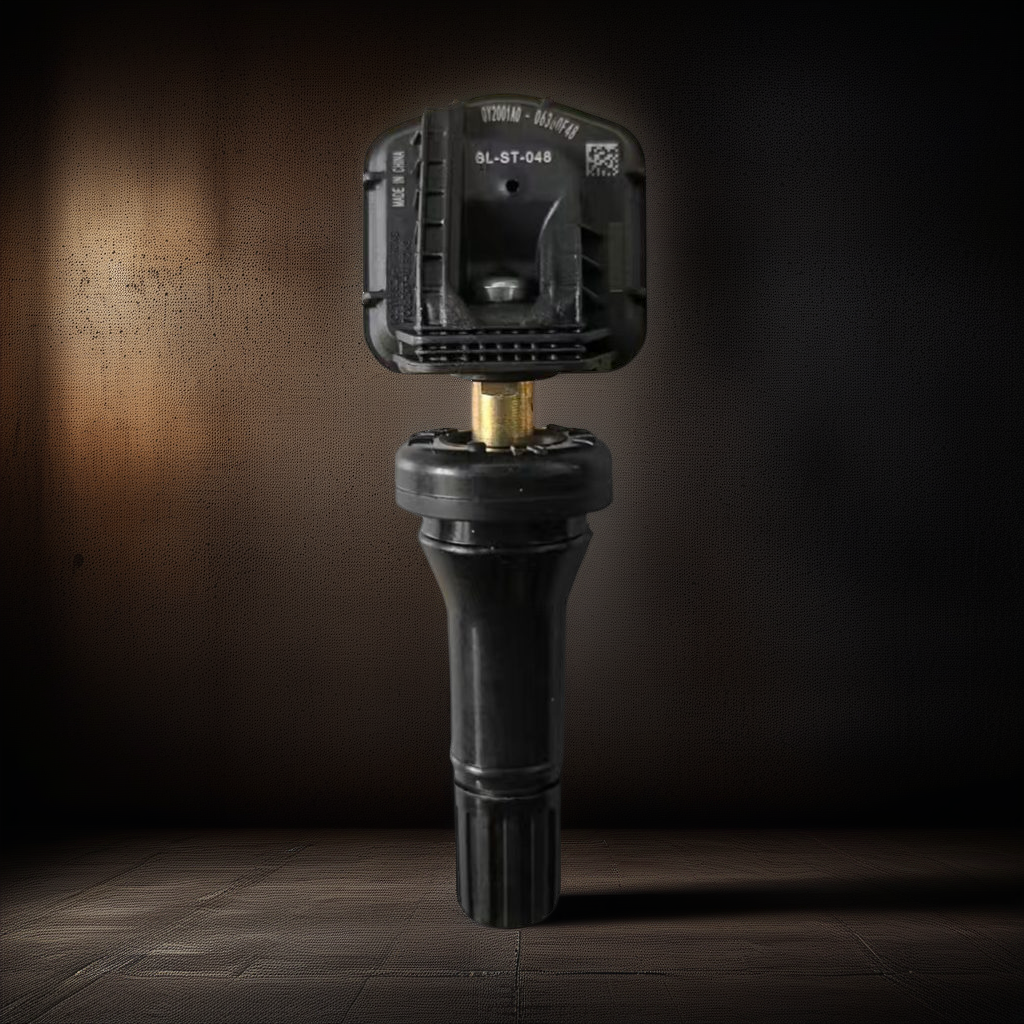
Signal interference is rarer but more frustrating because it mimics a failing sensor. The 433MHz frequency used by your ENVISTA’s sensors (including the BL-ST-048 | BH-Sens 433MHz TPMS Tire Pressure Sensor | Fits Buick, Cadillac, Chevrolet, Nevo | OE# 13530661, 13533166, 13538565) can be blocked or overwritten by other electronics.
Common Interference Sources
- Dashcams – especially cheap models with poor shielding
- LED interior/exterior lights – some aftermarket LEDs emit RF noise
- Wireless phone chargers – especially Qi chargers mounted near the center console
- Aftermarket remote starters – can send conflicting signals
- CB radios or amateur radios – high-power transmitters near the receiver
How to Test for Interference
- Note the pattern: Does the warning appear when you start the car, then go away after driving? Interference often affects the initial handshake between sensors and receiver.
- Park in a different location: Move the vehicle 50 feet away. If the light goes out, external interference from nearby buildings or equipment is likely.
- Turn off aftermarket electronics one by one: Start with any device installed near the dashboard or center console.
- Use a TPMS scan tool: A professional tool will show signal strength for each sensor. If all sensors report but the light stays on, interference is the culprit.
Interference vs. Dead Battery – Quick Comparison
| Feature | Dead Battery | Signal Interference |
|---|---|---|
| Warning pattern | Always on after driving | Comes and goes, often at startup |
| Number of affected wheels | Usually one | Usually all or random |
| Scan tool reading | No signal for one sensor | All sensors respond, but signal strength varies |
| Temperature effect | Worse in cold | No temperature correlation |
| Fix | Replace sensor | Remove or shield interfering device |
When to Replace vs. Investigate
If you confirm a dead battery, replacement is the only fix. Do not attempt to replace sensor batteries—they are sealed and not serviceable. The recommended part for your ENVISTA is the BL-ST-048 | BH-Sens 433MHz TPMS Sensor, which is pre-programmed and directly compatible with your vehicle’s OE system (OE# 13530661, 13533166, 13538565). This sensor uses the same Baolong Technology platform as the factory units.
If interference is suspected, start by removing any recently installed electronics. Move wireless chargers away from the center console (where the TPMS receiver is typically located). For persistent interference, a TPMS technician can install a signal repeater or relocate the factory receiver module.
Recommended Part
For ENVISTA owners needing a reliable replacement, we recommend the BL-ST-048 | BH-Sens 433MHz TPMS Tire Pressure Sensor | Fits Buick, Cadillac, Chevrolet, Nevo | OE# 13530661, 13533166, 13538565. It is a clamp-in, pre-programmed 433MHz sensor that matches the original equipment specifications. No programming tool is required—it auto-learns to your vehicle after installation. Always replace all four sensors at once if your vehicle is over 8 years old to avoid staggered failures.
FAQ
How do I know if my ENVISTA’s TPMS sensor battery is dead vs. just low pressure?
A dead battery produces no pressure reading at all—your dash display will show dashes or zero for that tire. Low pressure shows a number (like 28 psi) but below the threshold. If you see a number, check and inflate the tire. If you see no data, the battery is likely dead.
Can a TPMS sensor work again after the battery dies?
No. The lithium battery inside the sensor is sealed and non-replaceable. Once voltage drops below the operating threshold, the sensor is permanently disabled. The only solution is replacement.
Will aftermarket LED headlights cause TPMS interference on my ENVISTA?
Possibly. Poorly shielded LED headlights can emit RF noise in the 433MHz range. If you notice the TPMS warning light appears only when the headlights are on, try swapping back to factory bulbs to confirm. Quality LEDs from reputable brands are less likely to cause issues.
How long does a BH-Sens TPMS sensor last?
BH-Sens sensors (Baolong Technology) typically last 7-10 years from the installation date. The battery life depends on driving frequency and ambient temperatures. In warmer climates, expect closer to 10 years; in cold climates, around 7-8 years.