
Understanding the KADJAR TPMS System
The KADJAR (Renault Kadjar, typically 2015–2022 models) uses direct TPMS sensors mounted inside each wheel. These sensors measure actual tire pressure and temperature, then transmit that data via radio frequency to a receiver module in the vehicle. The system is designed to alert you when pressure drops below a critical threshold — usually 25% below the recommended cold pressure — or when a sensor stops communicating altogether.
Unlike some older systems that use indirect TPMS (wheel speed sensors), the KADJAR relies on battery-powered sensors. Each sensor has a sealed lithium battery that is not replaceable. When the battery dies, the sensor must be replaced entirely. This is a key point many owners miss: you cannot just change the battery in a TPMS sensor.
Common Causes of a TPMS Warning Light on a KADJAR
1. Dead Sensor Battery (Most Common)
The average TPMS sensor battery lasts between 5 and 7 years depending on driving conditions and temperature extremes. If your KADJAR is from 2016–2019, you are likely approaching or already past this window. Symptoms of a dead battery include:
- The TPMS warning light comes on and stays solid (or flashes briefly at startup, then stays on).
- One specific tire position shows no reading on the dashboard display (if your KADJAR has individual pressure readouts).
- The light may turn off after driving for a few minutes then come back — this usually means the battery is intermittent before dying completely.
How to confirm: Use a TPMS diagnostic tool that can read sensor IDs and battery status. A dead sensor will not respond to the tool at all, or it will show “low battery” status. If you don’t have a tool, swap the suspected sensor to a different wheel position and see if the fault moves with it. This is a crude but effective method for a DIY mechanic.
2. Signal Interference
Signal interference is more common than most owners think, especially on the KADJAR because of its wheel design and aftermarket accessory trends. Common causes include:
- Aftermarket wheels with metallic paint or carbon fiber construction — these can block or weaken the 433MHz signal from the sensor to the receiver.
- Tire sealant or puncture repair foam — some brands contain metal particles that interfere with RF transmission.
- Heavy-duty tire pressure monitoring system (TPMS) repeater or antenna issues — the KADJAR’s receiver is typically behind the dashboard or in the B-pillar. Aftermarket window tint with metallic coatings can reduce signal strength.
- Proximity to high-power electronics — aftermarket dash cams, radar detectors, or phone chargers plugged into the OBD-II port sometimes emit noise in the 433MHz band.
How to diagnose: If the warning light appears after you’ve recently installed new wheels, tires, or accessories, start by removing the recent addition one at a time. If you can, drive the car in a different location away from known radio frequency sources (like near a cell tower or airport radar) to see if the light clears.
3. Sensor Physical Damage or Failure
Sensors can fail due to:
- Impact damage from potholes or curb strikes.
- Corrosion from water ingress (especially if the sensor was not sealed properly after a tire change).
- Age-related component failure (capacitors dry out, internal circuit boards crack from thermal cycling).
Symptoms are similar to a dead battery, but the sensor may still show a good battery voltage on a diagnostic tool yet fail to transmit data. In this case, replacement is the only fix.
Diagnosing the Issue Step by Step
Step 1: Check Actual Tire Pressures
Before assuming a sensor fault, use a manual tire gauge to check all four tires (including the spare if equipped). If any tire is low, inflate it to the recommended pressure (found on the driver’s door jamb sticker). Drive for 5–10 minutes at speeds above 20 mph. The TPMS light should reset automatically if the pressure was the only issue.
Step 2: Identify Which Sensor Is Faulty
If pressures are correct, the next step is to find which sensor is failing. On many KADJAR models with a digital display, you can cycle through the tire pressure menu (usually via the steering wheel controls or infotainment screen) to see individual pressures. A missing reading or a “—“ display indicates that sensor is not communicating.
If your KADJAR only has a warning light without individual readouts, you’ll need a TPMS activation tool. These tools can trigger each sensor to flash its ID and battery status. A tool like the Autel TS508 or Bartec Tech400 is common among shops and can also read the sensor’s battery voltage.
Step 3: Test for Signal Interference
If the sensors all respond to the tool but the warning light persists, suspect interference. A simple test: park the car in a different spot (away from buildings, power lines, and other vehicles) and try resetting the system via the TPMS reset button (usually under the steering column or in the glove box). If the light goes out and stays out, interference was likely the cause.
Step 4: Confirm Sensor Age and Battery Life
Check the date code on each sensor. Most original KADJAR sensors have a date stamped on the metal body (format: year/week, e.g., “1619” means 16th week of 2019). If the sensor is over 5 years old, replace it proactively even if it’s still working — battery failure is imminent.
KADJAR TPMS Sensor Fitment and Compatibility
The KADJAR uses a 433MHz frequency sensor (common to many Renault and Nissan platforms). The following table shows the OE numbers and compatible brands for replacement:
| OE Number | Cross Reference | Notes |
|---|---|---|
| 11B0015CP | BH-Sens RDE048V21 | Direct fit for KADJAR 2015–2022 |
| 11B0022CP | BH-Sens RDE048V21 | Also fits Nissan Qashqai / Juke |
| 2000680 | BH-Sens RDE048V21 | Common Renault part |
| 282189 | BH-Sens RDE048V21 | Used on earlier models |
| 4F0907275B | BH-Sens RDE048V21 | Also fits Audi / VW platforms (same frequency) |
| 7P0907275 | BH-Sens RDE048V21 | Porsche Cayenne / Touareg compatible |
| 7PP907275F | BH-Sens RDE048V21 | Updated version for newer models |
| 95560602100 | BH-Sens RDE048V21 | Porsche 911 / Boxster compatible |
| 95836166100 | BH-Sens RDE048V21 | Porsche Cayenne / Macan |
| 9976060212 | BH-Sens RDE048V21 | Porsche 911 / Cayman |
| 36236781847 | BH-Sens RDE048V21 | BMW / Mini compatible |
| 36236798726 | BH-Sens RDE048V21 | BMW 5/6/7 Series |
Important note: While the KADJAR shares the 433MHz frequency with many other brands, the sensor programming and ID must match the Renault/Nissan protocol. The BH-Sens RDE048V21 is pre-programmed to work with the KADJAR’s TPMS system without additional cloning. Always verify with your vehicle’s VIN before ordering.
Recommended Part for KADJAR TPMS Replacement
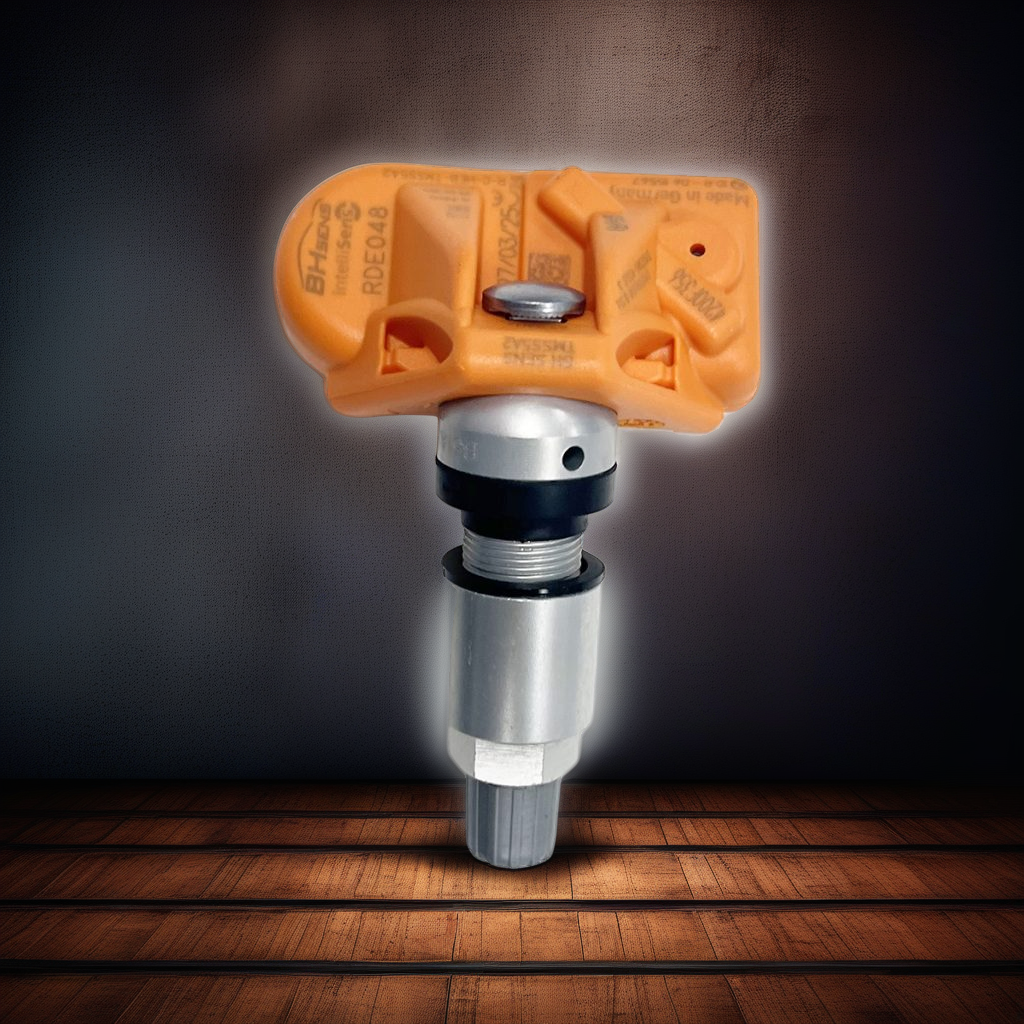
For a reliable, direct-fit replacement, the RDE048V21 | BH-Sens 433MHz TPMS Tire Pressure Sensor | Fits Aston Martin, Audi, BMW, Bentley, Bugatti & 9 More | OE# 11B0015CP, 11B0022CP, 2000680 is a solid choice. It’s manufactured by BH-Sens (Baolong Technology), which supplies OE-quality sensors for many European brands including Aston Martin, Audi, BMW, Bentley, and Bugatti — the same manufacturing standards apply here. The 433MHz frequency matches the KADJAR’s system, and the sensor comes pre-programmed, so installation is straightforward: remove the old sensor, install the new one, and the car will automatically learn the new ID after a short drive.
If you are replacing all four sensors (recommended if the car is over 6 years old), buying a set of four of the RDE048V21 | BH-Sens 433MHz TPMS Tire Pressure Sensor | Fits Aston Martin, Audi, BMW, Bentley, Bugatti & 9 More | OE# 11B0015CP, 11B0022CP, 2000680 units will save you from dealing with another failure in a few months.
Frequently Asked Questions About KADJAR TPMS
Why does my KADJAR TPMS light come on in cold weather but go off when it warms up?
This is normal. Cold temperatures cause tire pressure to drop (about 1 psi per 10°F drop), which can trigger the TPMS warning. Once the tires warm up from driving, the pressure rises and the light goes off. However, if the light stays on consistently in cold weather, your tires may be borderline low. Inflate them to the recommended cold pressure, and the issue should resolve. If it still happens, the sensor battery may be weak and temperature-sensitive.
Can I replace just one TPMS sensor on my KADJAR?
Yes, you can replace just one sensor if the others are still within their battery life (under 5 years old). However, if the other sensors are near the 5–7 year mark, it’s more cost-effective to replace all four at once. You’ll save on labor and avoid having to redo the service when the next one fails. Also, mixing old and new sensors can sometimes cause inconsistent readings due to battery voltage differences.
How do I reset the TPMS light on my KADJAR after replacing a sensor?
Most KADJAR models have an automatic reset procedure. After installing the new sensor, drive the car for 10–15 minutes at speeds above 20 mph. The system will detect the new sensor ID and clear the warning light automatically. If it doesn’t reset, check that the sensor is properly programmed for your vehicle. Some shops use a TPMS tool to force a learn procedure, but in most cases, the auto-learn function works. If the light remains on after 30 minutes of driving, there may be a wiring or receiver issue.
Can I use a universal TPMS sensor on my KADJAR?
Universal (programmable) TPMS sensors can work, but they require a programming tool to set the correct protocol and ID. Many DIY owners find this complicated and risk programming errors. It’s simpler and more reliable to use a pre-programmed sensor like the RDE048V21 | BH-Sens 433MHz TPMS Tire Pressure Sensor | Fits Aston Martin, Audi, BMW, Bentley, Bugatti & 9 More | OE# 11B0015CP, 11B0022CP, 2000680 that is guaranteed to work with the KADJAR’s system out of the box. Universal sensors are best left to professional installers who have the correct equipment.