
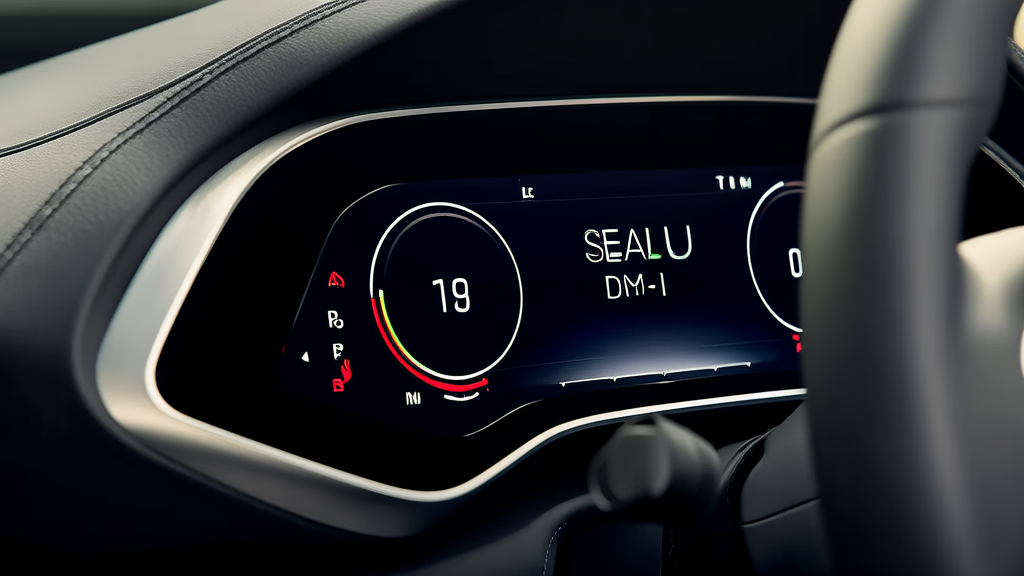
Understanding the TPMS Warning Light on the SEAL U DM-I
The SEAL U DM-I is a modern plug-in hybrid SUV that uses direct TPMS sensors mounted inside each wheel. When the amber tire pressure warning light illuminates on your dashboard, it’s not always a simple low-pressure issue. The system can detect four distinct fault types, and knowing which one you’re dealing with saves time and money.
Common TPMS warning patterns:
- Solid light on startup: Low pressure in one or more tires
- Flashing light for 60–90 seconds then stays on: System malfunction or sensor fault
- Intermittent light: Signal interference or failing sensor battery
- Light stays off despite low pressure: Dead sensor or receiver module fault
Dead Sensor Battery Symptoms – What to Look For
The BH-Sens sensors used in the SEAL U DM-I (OE# 802000277AA and 802000589AA) contain non-replaceable lithium batteries rated for 5–7 years of normal driving. After that, the battery voltage drops below the 2.0V threshold needed for reliable RF transmission.
Key symptoms of a dying sensor battery:
- Intermittent warning light – the light comes on during cold mornings but goes off after driving 10–15 minutes
- One sensor consistently reads lower than others – even after inflating to the correct pressure
- Temperature sensitivity – the warning only appears below 40°F (4°C) because cold reduces battery output further
- No reading on the infotainment display – the TPMS screen shows “– –” or a dashed line for one wheel
Test procedure:
- Use a TPMS activation tool (like the ATEQ VT56 or Autel TS508) to check each sensor
- A healthy sensor should show battery voltage above 2.3V and transmit a steady signal within 2–3 feet of the tire
- If the tool cannot wake the sensor within 5 seconds, the battery is dead or the sensor has failed internally
Signal Interference Diagnosis
The SEAL U DM-I TPMS operates at 433MHz, which is the same frequency used by many aftermarket accessories. Interference causes the receiver to miss sensor data, triggering a false warning light.
Common interference sources:
- Dash cameras with poorly shielded power cables (especially hardwired units)
- LED headlight or fog light drivers that emit RF noise
- Phone chargers plugged into the 12V outlet near the TPMS receiver (located behind the glovebox)
- Aftermarket remote starters or keyless entry systems
- Nearby tire shops or gas stations using 433MHz tools (temporary interference)
Diagnosis steps for interference:
- Temporary elimination test: Turn off all aftermarket electronics one by one while the warning light is active. If the light goes out after turning off a specific device, that’s your culprit.
- Relocation: Move dash cam power cables away from the center console area (where the TPMS receiver is located).
- Frequency check: If you have access to a spectrum analyzer, scan the 433MHz band near the receiver during the fault. A strong constant signal (not the 2–3 second sensor burst) indicates interference.
- Shielding: Ferrite cores on power cables can suppress RF noise from aftermarket accessories.
TPMS Fault Comparison Table
| Symptom | Likely Cause | Diagnostic Tool Result | Fix |
|---|---|---|---|
| Light on, all pressures correct | Dead sensor battery or weak signal | Tool shows battery < 2.1V or no wake response | Replace sensor |
| Light flashes then stays solid | Internal sensor failure or receiver fault | Tool reads sensor ID but no pressure data | Replace sensor or check receiver module |
| Light on during cold start only | Low battery (temperature-sensitive) | Tool shows 2.1–2.3V at room temp, drops below 2.0V when cold | Replace sensor before it fails completely |
| Light comes on near specific locations | RF interference from external sources | Tool reads all sensors fine when away from interference source | Eliminate interference source or shield affected electronics |
| All four sensors show “– –” on display | Receiver module fault or blown fuse | No sensor responds to activation tool | Check TPMS fuse (usually in passenger compartment fuse box) |
When to Replace the Sensor
If you’ve confirmed a dead battery or internal failure, the sensor must be replaced. The BH-Sens BL-ST-013 is a clamp-in, pre-programmed 433MHz sensor that fits the SEAL U DM-I directly. It matches OE# 802000277AA and 802000589AA, and is compatible with the vehicle’s original TPMS receiver without needing a relearn tool (auto-relearn after 10–15 minutes of driving above 15 mph).
Installation notes:
- Always replace the tire valve stem and sealing gasket when swapping sensors
- Torque the sensor nut to the manufacturer’s spec (typically 35–45 in-lbs; check your vehicle manual)
- After installation, drive the vehicle for 10–15 miles to allow the system to re-register the sensor IDs
Recommended Part
For a direct replacement on your SEAL U DM-I, use the BL-ST-013 | BH-Sens 433MHz TPMS Tire Pressure Sensor | Fits Chery, Exeed, Hima | OE# 802000277AA, 802000589AA. It’s pre-programmed with the correct frequency and protocol, so no cloning or programming tool is required. This sensor also fits Chery, Exeed, and Hima models that share the same TPMS platform.
FAQ
How do I know if my SEAL U DM-I TPMS sensor battery is dead without a diagnostic tool?
Start by inflating all tires to the recommended pressure (usually 35–38 PSI, check your driver’s door sticker). If the warning light stays on solid after a 15-minute drive, one or more sensors likely have a dead battery. The quickest home test: rotate the suspected tire to a different position. If the warning still points to the same wheel location (not the same tire), the sensor is probably dead.
Can aftermarket wheels cause TPMS interference on the SEAL U DM-I?
Yes, especially if the wheels are constructed with metallic alloys that block RF signals (e.g., certain chrome-plated or painted rims). Additionally, aftermarket wheels often use different valve stem positions that may crowd the sensor against the brake caliper, physically blocking the signal. Stick with OEM-style wheels or ensure the sensor mounting area is clear of metal obstructions.
How long does a SEAL U DM-I TPMS sensor battery actually last?
Factory estimates are 5–7 years, but real-world lifespan depends on driving patterns. Vehicles driven daily in hot climates may see 4–5 years due to battery chemistry degradation at high temperatures. If your SEAL U DM-I is from the 2022–2023 model years and the warning light has started appearing intermittently, the sensors are approaching end of life.
Will disconnecting the car battery reset the TPMS warning light?
No. Disconnecting the 12V battery will clear the dashboard warning temporarily, but it will return as soon as the system completes its self-check (usually within the first 2 miles of driving). The only permanent fix is addressing the actual fault—low pressure, dead sensor, or interference.