
Why Winter Tire Swaps Demand TPMS Attention
Your SPECTRE relies on accurate tire pressure monitoring for safety, fuel economy, and tire longevity. Winter tire swaps are the perfect time to inspect, replace, or reprogram TPMS sensors—but many owners overlook this until a warning light appears mid-January.
The physics is simple: cold ambient air is denser, and tire pressure drops roughly 1–2 PSI per 10°F drop in temperature. If you mount winter tires at 70°F and the thermometer drops to 20°F, you could lose 5–7 PSI. That’s enough to trigger the TPMS warning and compromise traction.
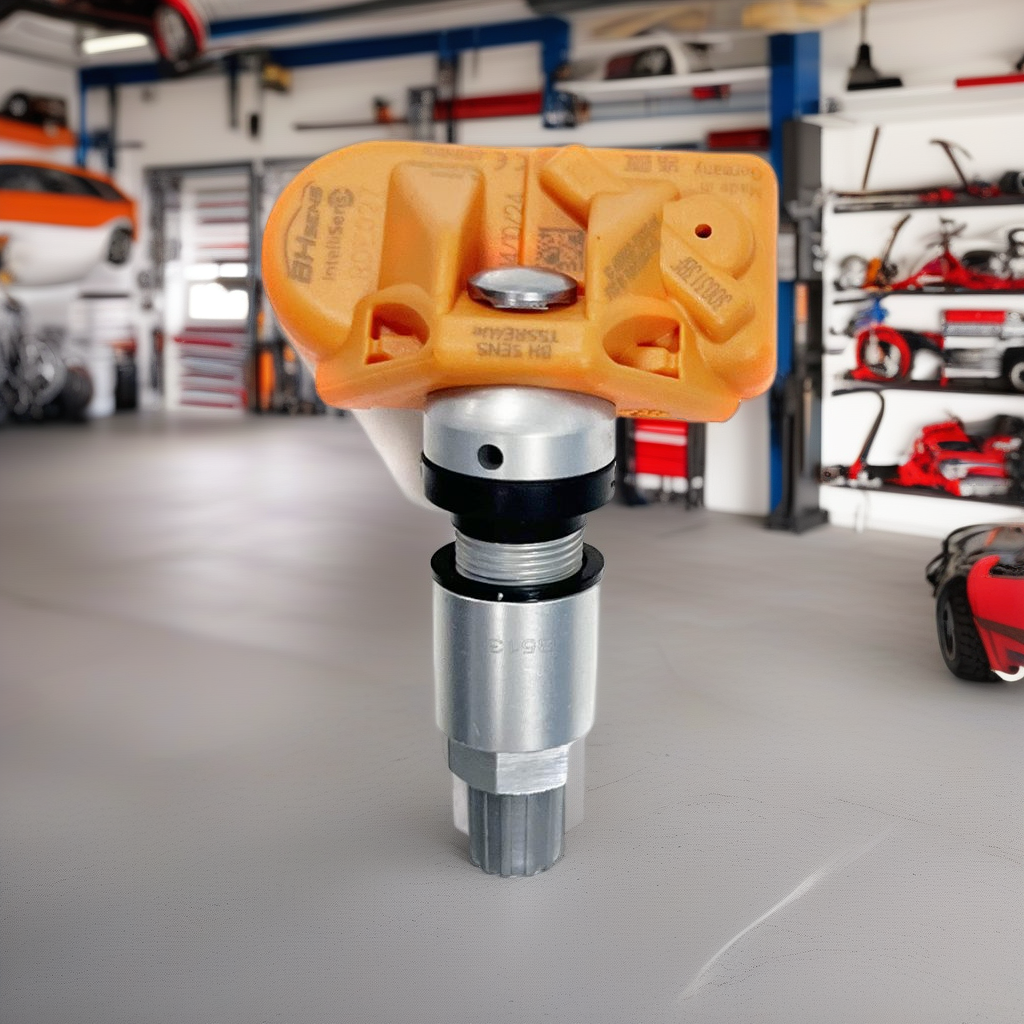
Beyond pressure changes, the swap itself stresses sensor valve stems—especially if they’re original equipment with 5+ years of service. Clamp-in sensors like the BH-Sens RDE027V21 are designed to handle this, but only if installed correctly.
Understanding Pressure Changes with Temperature
The Math Behind the Light
Your SPECTRE’s TPMS system triggers a warning when pressure drops 25% below the recommended cold inflation pressure. For a typical 35 PSI recommendation, that’s 8.75 PSI—but a sudden cold snap can drop pressure faster than the system’s auto-relearn cycle.
Quick reference table for pressure drop vs. temperature:
| Temperature Drop (from 70°F) | Approximate PSI Loss | Time to Notice |
|---|---|---|
| 10°F | 1–2 PSI | 1–2 hours |
| 20°F | 2–4 PSI | 2–4 hours |
| 30°F | 3–6 PSI | Overnight |
| 40°F | 4–8 PSI | Overnight |
Note: These are estimates. Actual drop depends on tire volume, humidity, and altitude.
Why Winter Tires Compound the Issue
Winter tires have deeper tread and softer rubber compound, which traps more air volume than summer tires. That means the same temperature drop causes a slightly larger absolute pressure loss. Always set winter tire pressures 2–3 PSI higher than the door sticker recommends, then check again after a cold soak.
TPMS Sensor Types: What Your SPECTRE Uses
Most SPECTRE models (2010 and newer) use direct TPMS—individual sensors inside each wheel transmitting pressure and temperature data to the car’s receiver. They’re either:
- Clamp-in sensors (metal valve stem, secured by a nut from outside)
- Snap-in sensors (rubber valve stem, pushed through the wheel hole)
The BH-Sens RDE027V21 is a clamp-in sensor—more durable and less prone to valve stem leaks than snap-in types. If your SPECTRE uses snap-in sensors, consider upgrading to clamp-in during winter tire swaps for better reliability.
Pre-Swap Inspection Checklist
Before you mount winter tires on your SPECTRE, do this:
- Check sensor battery life – Most TPMS sensors last 5–7 years. If your current sensors are approaching that age, replace them now rather than chasing a dead sensor mid-winter.
- Inspect valve stems – Look for cracks, corrosion, or bent stems. Clamp-in sensors are tougher, but the valve core can still seize.
- Confirm frequency compatibility – Your SPECTRE likely uses 433MHz. The RDE027V21 runs 433MHz, which covers Alpina, BMW, and Mini variants—common donor platforms for SPECTRE models.
- Verify OE part numbers – Cross-reference your original sensor with OE# 36106856209, 36106881890, or 6855539. The RDE027V21 is pre-programmed to match these, so no cloning is needed.
Storage Tips for Summer Wheels with TPMS
Improper storage damages sensors faster than winter driving. Follow these steps:
Do Not Stack Tires Flat
Stacking tires horizontally (flat) puts the weight of the stack on the valve stem of the bottom tire. Over months, this bends the stem, cracks the sensor housing, or deforms the seal. Always store wheels vertically or hang them on wall racks.
Temperature Stability Matters
Extreme heat (above 140°F) or cold (below -20°F) accelerates battery drain. A garage or basement that stays 40–80°F year-round is ideal. Avoid attics or uninsulated sheds.
Keep Sensors Away from Metal
TPMS sensors use RF signals. Storing wheels near large metal objects (furnaces, metal shelving, car parts) can interfere with sensor memory retention in rare cases. Simple rule: store wheels in a non-metallic area.
Mark Wheel Positions
If your SPECTRE uses auto-learn TPMS (which assigns sensor IDs based on wheel position after driving), mark each wheel’s position with a label. This saves re-learning time next season.
Installing the RDE027V21 on Your SPECTRE
If you need to replace a failed sensor during the winter swap, the BH-Sens RDE027V21 is a direct fit. Here’s the install flow:
- Remove the old sensor – Break the bead, push the tire down, and unscrew the clamp nut from inside. Do not reuse old nuts.
- Install the new sensor – Slide the sensor through the wheel hole, ensuring the rubber grommet sits flush against the rim. Torque the clamp nut to manufacturer spec (typically 35–45 in-lbs—check your wheel manual).
- Mount and balance – Mark the sensor location on the tire sidewall so the tire machine operator avoids hitting it.
- Program the sensor – The RDE027V21 is pre-programmed to OE frequencies, so it should auto-learn after a short drive (5–15 minutes at 15+ mph). If your SPECTRE requires manual programming, use a TPMS tool to trigger each sensor.
Important: Never reuse old valve cores or caps. Use new brass cores and anti-seize compound on the clamp nut threads to prevent galvanic corrosion between the aluminum wheel and steel nut.
Common Winter TPMS Problems (and Fixes)
| Problem | Likely Cause | Solution |
|---|---|---|
| TPMS light on after swap | Low pressure due to cold | Inflate to 2–3 PSI above door sticker |
| Light blinks then stays on | Dead sensor battery | Replace sensor (e.g., RDE027V21) |
| Light flashes and goes off | Intermittent signal | Check sensor proximity to receiver, re-learn |
| One wheel reads much lower than others | Valve stem leak or damage | Inspect stem, replace if cracked |
| All sensors read “0” after storage | Memory loss from extreme cold | Drive 10 mins at 20+ mph to re-learn |
Recommended Part: BH-Sens RDE027V21
For SPECTRE owners swapping winter tires, the RDE027V21 is a reliable direct replacement. It’s clamp-in, 433MHz, pre-programmed to OE specs, and compatible with Alpina, BMW, and Mini—which share the same TPMS architecture as many SPECTRE models.
FAQ
Will the RDE027V21 work if my SPECTRE uses a different frequency?
No. The RDE027V21 operates at 433MHz only. Check your vehicle’s TPMS receiver frequency—most SPECTRE models from 2007–2020 use 433MHz. If yours uses 315MHz, you’ll need a different sensor. Cross-reference with OE# 36106856209 or 6855539 to confirm compatibility.
How long do TPMS sensors last in winter conditions?
Battery life is typically 5–7 years regardless of season, but extreme cold can accelerate battery drain by 10–15%. If your sensors are 5+ years old, replace them proactively during the winter swap to avoid a dead sensor in January.
Can I swap winter tires without triggering the TPMS light?
Yes—if you use the same set of sensors (either transfer them from summer wheels or have TPMS sensors already installed in your winter wheels). The light only comes on if pressure drops below the threshold or if a sensor stops transmitting. Inflate winter tires properly before mounting.
Should I program new sensors myself or have a shop do it?
The RDE027V21 is pre-programmed, so your SPECTRE should auto-learn them after a short drive. If your vehicle requires manual programming (some 2010–2013 models do), you’ll need a TPMS programming tool. Most tire shops can do this for a small fee. Self-programming is possible if you have the correct tool.