
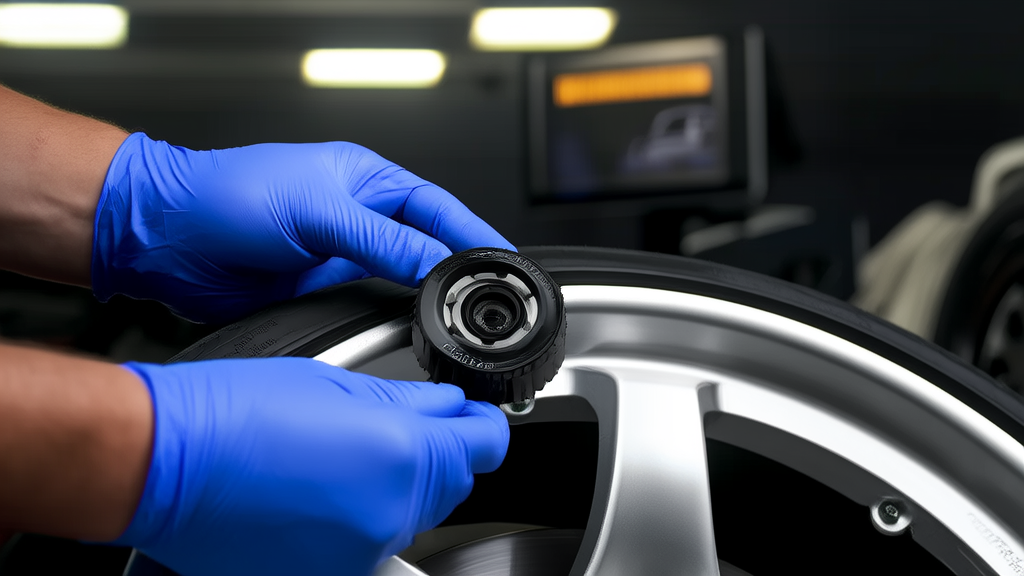
—
Understanding TPMS Relearn on the HAN DM-P
The HAN DM-P is a plug-in hybrid SUV sold under the BYD umbrella, sharing its TPMS architecture with other BYD, Denza, and Toyota models. Unlike older systems that required dealership-level programming, the DM-P supports multiple relearn methods. But “relearn” isn’t the same as “programming” – if you’re using a pre-programmed sensor like the BL-ST-062 | BH-Sens 433MHz TPMS Tire Pressure Sensor | Fits BYD, Denza, Fangchengbao, Toyota, Young | OE# 4260703011, SA3HE3609200B, SFH3609200B, you skip the OBD programming step and jump straight to the relearn.
Key fact: The DM-P’s TPMS runs on 433MHz, not the more common 315MHz. Always verify frequency before buying sensors. The BH-Sens BL-ST-062 matches this exactly, with OE cross-references including 4260703011, SA3HE3609200B, and SFH3609200B.
—
Method 1: Auto Relearn (Simplest, No Tools)
The auto relearn is the DM-P’s default method. It requires no special equipment – just a clear road and patience.
Steps:
- Inflate all tires to the pressure listed on your driver’s door jamb sticker (typically 35-38 psi for the DM-P).
- Start the engine and drive the vehicle above 25 mph (40 km/h) for 8-12 minutes without stopping.
- The TPMS warning light should flash for 60-90 seconds, then turn off solid, and finally go out entirely.
- If the light stays on, continue driving for another 5 minutes. Some DM-P units take longer on the first cycle.
When it works best: After a full sensor replacement where all four sensors are new. The system auto-detects the new sensor IDs during the drive cycle.
Limitations: This method can fail if you’re mixing old and new sensors, or if the battery in an existing sensor is low. It also won’t work if the vehicle has been sitting for days with the battery disconnected.
—
Method 2: OBD Relearn (Most Reliable, Requires Tool)
If auto relearn fails or you need immediate results, an OBD TPMS tool is your best bet. The Autel TS508, TS608, or ATEQ VT56 are all compatible with the HAN DM-P.
What you’ll need:
- OBD TPMS tool (ensure it supports BYD/Asian vehicles)
- The DM-P’s OBD2 port (located under the driver’s side dashboard, near the hood release)
Step-by-step OBD relearn:
- Turn the ignition to ON (engine off).
- Connect the TPMS tool to the OBD2 port.
- Select “BYD” > “HAN” > “DM-P” from the vehicle menu. If “DM-P” isn’t listed, choose “HAN” – the protocol is identical.
- Select “Relearn” or “Sensor ID Learning.”
- Follow the tool’s prompts. Most tools will ask you to trigger each sensor in a specific order (front-left, front-right, rear-right, rear-left).
- Trigger each sensor using the tool’s low-frequency activation feature – hold it against the tire sidewall near the valve stem. The tool will beep or flash when it reads the sensor.
- After all four sensors are triggered, the tool will write the IDs to the ECU. This takes 10-15 seconds.
- Turn the ignition off, wait 10 seconds, then start the engine. The TPMS light should be off.
Why use OBD? It’s the only method that guarantees success with aftermarket sensors like the BL-ST-062. The pre-programmed sensor already has the correct ID structure, but the OBD tool ensures the ECU “sees” them instantly.
—
Method 3: Stationary Relearn (No OBD Tool, But Requires Magnet)
Some HAN DM-P models (particularly 2021-2023) support a magnet-based stationary relearn. This is a fallback if you don’t own a TPMS tool.
What you’ll need:
- A strong magnet (neodymium bar magnet works best)
- Access to the vehicle’s TPMS menu (usually in the infotainment screen under “Vehicle Settings” > “Tire Pressure”)
Steps:
- Park the vehicle on level ground, engine running, and put the transmission in Park.
- Navigate to the TPMS menu on the center screen. Select “Relearn” or “Reset.”
- The horn will chirp once, and the left front turn signal will flash.
- Hold the magnet against the tire sidewall, directly opposite the valve stem (6 o’clock position on the tire). Move it slowly toward the valve stem until the horn chirps.
- The horn chirp confirms the sensor has been learned. The turn signal will move to the right front.
- Repeat step 4 for the right front, right rear, and left rear.
- After the final chirp (left rear), the horn will chirp twice. The system is now learned.
Important caveat: This method only works if the sensors are already transmitting their IDs. If the BL-ST-062 is properly pre-programmed, it will transmit immediately. If not, you’ll need to spin the tire or drive briefly to “wake” the sensor.
—
Comparison Table: Relearn Methods
| Method | Tools Needed | Time Required | Success Rate | Best For |
|---|---|---|---|---|
| Auto Relearn | None (just driving) | 10-15 minutes | 70% (varies) | Full sensor sets, no tools available |
| OBD Relearn | TPMS scan tool | 5-8 minutes | 98% | Any sensor change, guaranteed result |
| Stationary Relearn | Strong magnet | 5 minutes | 85% (if menu supported) | Quick relearn without OBD tool |
—
Choosing the Right Sensor: Why BL-ST-062 Fits
The HAN DM-P uses clamp-in sensors with a 433MHz frequency. The BL-ST-062 | BH-Sens 433MHz TPMS Tire Pressure Sensor | Fits BYD, Denza, Fangchengbao, Toyota, Young | OE# 4260703011, SA3HE3609200B, SFH3609200B is pre-programmed with the correct protocol for BYD, Denza, and Toyota systems – no manual ID copying required. This means you can install it and then use any of the three relearn methods above.
Fitment note: The BL-ST-062 replaces OE numbers 4260703011, SA3HE3609200B, SFH3609200B, SGH3609200B, and SGHA3609200B. If your old sensor has any of these numbers stamped on the housing, you have a direct match.
—
Common Mistakes During Relearn
- Wrong frequency: The DM-P uses 433MHz. Installing a 315MHz sensor will never work, even with OBD programming.
- Skipping the drive cycle for auto relearn: The system needs consistent speed above 25 mph. Stop-and-go traffic rarely works.
- Using a weak magnet: For stationary relearn, a fridge magnet won’t cut it. Use a neodymium magnet rated at least 20 lbs pull strength.
- Forgetting to wake new sensors: If you install a new BL-ST-062 and the vehicle doesn’t recognize it, spin the tire by hand for 10 seconds or drive 50 feet. The sensor wakes from transport sleep mode.
—
Recommended Part
For a hassle-free replacement, use the BL-ST-062 | BH-Sens 433MHz TPMS Tire Pressure Sensor | Fits BYD, Denza, Fangchengbao, Toyota, Young | OE# 4260703011, SA3HE3609200B, SFH3609200B. It’s a direct OE replacement, pre-programmed for the DM-P, and works with all three relearn methods described above. Order one set for a full replacement – don’t mix brands on the same vehicle, as different sensor brands may use slightly different transmission intervals.
—
FAQ
How do I know if my HAN DM-P needs a TPMS relearn?
If the TPMS warning light stays on solid after you’ve inflated tires to the correct pressure, a relearn is needed. Also, after replacing any TPMS sensor, a relearn is mandatory – even if the sensor is pre-programmed. The vehicle’s ECU must “learn” the new sensor’s unique ID to track its pressure data.
Can I use a universal TPMS sensor on the HAN DM-P?
Yes, but only if it’s 433MHz and clamp-in style. The BH-Sens BL-ST-062 is a universal aftermarket sensor that’s pre-programmed for BYD protocols. Avoid generic “multi-protocol” sensors unless they explicitly list BYD/HAN compatibility – many only cover North American vehicles.
How long do TPMS sensors last on the DM-P?
Factory sensors typically last 5-8 years, with battery life around 10 years. The BL-ST-062 uses a high-temperature battery rated for 8-10 years. If your DM-P is a 2020 or earlier model, you’re likely due for replacement. Low battery symptoms include intermittent TPMS warnings and delayed sensor readings.
What if the TPMS light stays on after the relearn?
First, verify all sensors are transmitting. Use an OBD tool to read sensor IDs – if any sensor shows “no ID” or “lost communication,” it may be defective or dead. Second, check for metal debris or corrosion on the valve stem – clamp-in sensors can lose signal if the mounting nut is loose. If all sensors are good and the light persists, the TPMS module itself may need diagnosis at a dealership.