
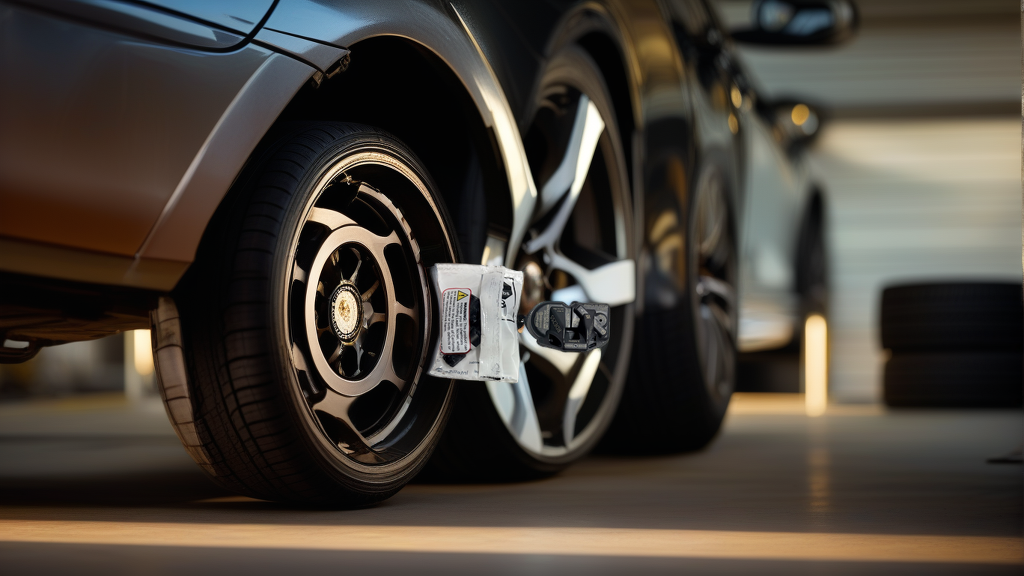
What Is the BH-Sens RDE255V26 TPMS Sensor?
The BH-Sens RDE255V26 is a clamp-in, pre-programmed TPMS sensor designed specifically for Tesla vehicles. It operates at 2.4GHz and uses OE-level quality from Baolong Technology (BH-Sens), a leading Chinese TPMS manufacturer that supplies many OEMs. This sensor eliminates the need for manual programming—it arrives ready to pair with your Model Y.
Which Tesla Model Y Years Are Compatible?
This sensor covers the 2020 through 2024 Model Y, including all trims (Long Range, Performance, Standard Range). Tesla introduced the Model Y in early 2020, and the TPMS system remained consistent through these model years. If you own a 2025 Model Y, double-check the sensor ID—Tesla sometimes updates components mid-cycle.
OE Part Number Cross-Reference
The RDE255V26 replaces multiple Tesla OE numbers. Use this table to confirm yours:
| Tesla OE Part Number | Compatible? | Notes |
|---|---|---|
| 149070100B | Yes | Common early Model Y |
| 149070100C | Yes | Mid-2021 revision |
| 149070100D | Yes | Late 2022 |
| 149070100E | Yes | 2023-2024 |
| 149070101B | Yes | Also used on Model 3 |
| 149070101C | Yes | Current production |
| 149070101D | Yes | Slight housing change |
| 149070101E | Yes | Latest revision |
All sensors listed above are functionally identical in frequency and protocol.
How to Verify Fitment Before Buying
Don’t rely solely on model year. Follow these three steps:
- Check the valve stem: Remove the valve cap. If the sensor has an OE number printed on the metal housing (e.g., “149070101C”), match it to the cross-reference table above.
- Use the Tesla touchscreen: Go to “Service” > “TPMS” > “Sensor IDs”. The ID format (e.g., “01020304”) doesn’t tell you the OE number, but it confirms your car reads sensors. If the screen shows “No sensors detected,” you need a compatible replacement.
- Call your local dealer (optional): Give them your VIN. They can confirm the exact OE sensor revision.
Installation and Pairing
The RDE255V26 is pre-programmed, meaning it auto-pairs with the Model Y’s receiver once installed. No cloning or OBD tool is required. Installation steps:
- Jack the car, remove the wheel, break the tire bead, and clamp the new sensor in place (torque to 35-40 in-lbs, check your service manual).
- Reinstall the wheel and drive above 20 mph for 2-5 minutes. The TPMS light will turn off once the sensors sync.
If the light stays on, verify the sensor’s frequency matches your car (2.4GHz only—some older Tesla models use 433MHz).
Recommended Part
For a direct, hassle-free replacement, use the RDE255V26 | BH-Sens 2.4GHz TPMS Tire Pressure Sensor | Fits Tesla | OE# 149070101B, 149070100B, 149070101C — it’s plug-and-play for 2020-2024 Model Y with OE numbers 149070101B, 149070100B, or 149070101C. Stock up for fleet maintenance or personal use.
FAQ
Can I use this sensor on a Tesla Model 3?
Yes. The RDE255V26 is also compatible with Model 3 (2017–2023) using the same OE numbers. Model S and X may require different sensors—check your car’s specific OE number.
Do I need to reprogram the sensor after installation?
No. The sensor is pre-programmed to 2.4GHz and will auto-learn with the Model Y’s TPMS module. No additional tools are needed.
What if my Model Y shows “TPMS Fault” after installation?
This usually indicates a sensor isn’t recognized. Confirm the sensor’s OE number matches your original. If it does, drive above 20 mph for 10 minutes—the system sometimes needs a full cycle.
How long do BH-Sens TPMS sensors typically last?
BH-Sens sensors have a battery life of 5–7 years under normal driving conditions. The RDE255V26 is designed for the same lifespan as OEM Tesla sensors.