
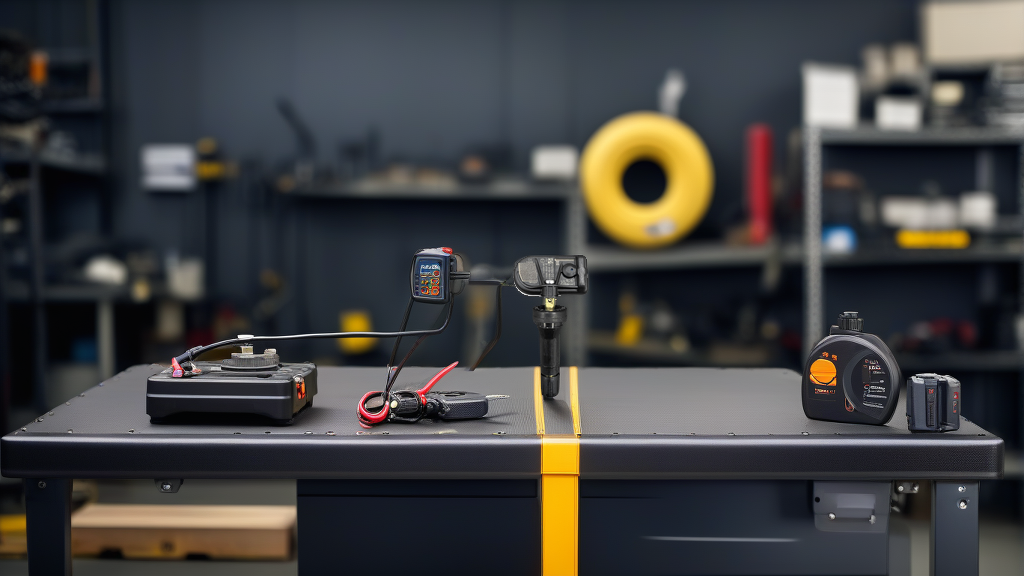
Understanding TPMS Relearn on BYD Vehicles
BYD uses both direct and indirect TPMS systems across its lineup. Most modern BYD models (2020+) use direct TPMS with individual sensors in each wheel. When you install a new sensor—especially a pre-programmed unit like the BL-ST-062—the vehicle’s ECU does not automatically recognize it. You must initiate a relearn to write the new sensor IDs into the system.
There are three common relearn methods for BYD vehicles: auto relearn, OBD relearn, and stationary relearn. Your choice depends on the specific model year, the TPMS tool you own, and whether the sensor is cloneable.
Tools You’ll Need
Before starting, gather these items:
| Tool | Purpose | Notes |
|---|---|---|
| TPMS activation tool (e.g., Autel TS508, Bartec, or ATEQ) | Triggers sensor to transmit ID and pressure data | Required for all methods except OBD relearn |
| OBD TPMS programmer (e.g., Autel MaxiTPMS, Launch X431) | Writes sensor IDs via OBD-II port | Needed for OBD relearn; also works for auto/stationary |
| Magnet (strong neodymium, 1-2 inch diameter) | Triggers stationary relearn on older BYD models | Check if your model uses this—common on 2015-2019 models |
| Tire pressure gauge | Verify final pressures after relearn | Not strictly required but recommended |
Method 1: Auto Relearn (Easiest, No Tools Required)
How it works: The vehicle automatically learns sensor IDs while driving. After a sensor replacement, drive at speeds above 25 mph (40 km/h) for 10–20 minutes. The ECU compares the new sensor signals with the stored IDs and updates them if a match is found.
When to use: This works on most BYD models from 2020 onward, especially those with the latest TPMS software. It is the default method if you have no TPMS tool.
Step-by-step:
- Install the new BL-ST-062 sensors in the correct wheel positions.
- Ensure all tires are inflated to the recommended pressure (check your driver’s door sticker).
- Start the engine and drive the vehicle on a clear road at a steady speed above 25 mph.
- Continue driving for 15–20 minutes. The TPMS warning light may blink initially—this is normal.
- The light should turn off after the IDs are learned. If it stays on, try an OBD or stationary relearn.
Limitations: Not all BYD models support auto relearn. If the light remains on after 30 minutes of driving, proceed to Method 2 or 3.
Method 2: OBD Relearn (Fastest, Requires TPMS Tool)
How it works: A TPMS programmer connects to the vehicle’s OBD-II port and directly writes the new sensor IDs into the ECU. This is the most reliable method and works on virtually all BYD models.
Step-by-step:
- Connect your OBD TPMS tool to the vehicle’s OBD-II port (usually under the dashboard, driver’s side).
- Select “BYD” from the vehicle menu. If your tool does not list BYD explicitly, try “Chinese” or “Asia” make—then select the specific model (e.g., BYD Atto 3, Han, Tang, Dolphin).
- Choose “TPMS Relearn” or “Sensor Programming” from the tool’s menu.
- Activate each sensor using the tool’s trigger function. Hold the tool near the valve stem (within 2 inches) until the tool displays the sensor ID. Repeat for all four wheels.
- Follow the tool’s on-screen prompts to write the IDs to the ECU. This usually takes 30–60 seconds.
- Confirm the relearn was successful. The TPMS light should turn off, and live pressure data should appear on the dashboard.
Important: The BL-ST-062 sensor is pre-programmed with a fixed ID. You do not need to clone it—just trigger and write. If your tool supports cloning, you can also copy the old sensor’s ID to the new one, which sometimes bypasses the relearn entirely. But for most users, a standard OBD relearn is simpler.
Method 3: Stationary Relearn (Magnet-Based, Older Models)
How it works: A magnet is placed near the TPMS sensor location on the wheel to trigger a learning sequence. The vehicle’s ECU listens for the sensor signal and stores the ID while the vehicle is stationary.
When to use: Common on BYD models built before 2020 (e.g., early BYD Tang, Qin, Song). Some Denza and Fangchengbao models also use this method.
Step-by-step:
- Park the vehicle on a level surface. Turn the ignition to the ON position (do not start the engine).
- Locate the TPMS relearn button—on BYD models, this is often behind the glove box, under the steering column, or accessible after removing a small panel. If you cannot find it, consult the owner’s manual or check for a diagnostic port relearn option.
- Press and hold the relearn button until the horn chirps or the TPMS light blinks rapidly. This indicates the system is in learning mode.
- Starting with the left front wheel, hold a strong magnet against the valve stem area for 5–10 seconds. The horn will chirp once to confirm the sensor ID is learned.
- Repeat for the right front, right rear, and left rear wheels in that order. Each horn chirp confirms success.
- After the last wheel, the horn will chirp twice to indicate the relearn is complete. Turn off the ignition and start the engine. The TPMS light should be off.
Pro tip: Use a neodymium magnet—standard fridge magnets are too weak. Place it directly on the metal rim next to the valve stem, not on the tire rubber.
Recommended Part: BH-Sens BL-ST-062
For BYD, Denza, and Fangchengbao owners, the BL-ST-062 | BH-Sens 433MHz TPMS Tire Pressure Sensor | Fits BYD, Denza, Fangchengbao, Toyota, Young | OE# 4260703011, SA3HE3609200B, SFH3609200B is a direct-fit solution. It is a clamp-in, pre-programmed sensor operating at 433MHz, matching OE numbers like 4260703011 and SA3HE3609200B. Because it is pre-programmed, you do not need to copy IDs manually—just trigger and relearn. This sensor also fits certain Toyota and Young models, making it a versatile stock item for workshops.
Common Issues and Troubleshooting
- TPMS light stays on after relearn: Double-check that all sensors were triggered in the correct order. If using auto relearn, ensure you drove at a steady speed for at least 15 minutes. For OBD relearn, verify your tool supports BYD protocols—some generic tools may fail on Chinese vehicles.
- Sensor not detected by tool: Verify the sensor battery is not dead (BL-ST-062 sensors are new, so this is rare). Also confirm the tool is within 2 inches of the valve stem. If the sensor still does not respond, try a different activation tool.
- Multiple relearn attempts required: Some BYD models require two consecutive successful relearns. Repeat the process if the light returns after the first attempt.
FAQ
Can I use the BL-ST-062 sensor on a 2023 BYD Atto 3?
Yes. The BL-ST-062 operates at 433MHz and is compatible with most 2023 BYD models, including the Atto 3. Use the OBD relearn method for best results—auto relearn may also work but is less reliable on newer models.
Do I need to clone the old sensor ID?
No. The BL-ST-062 is pre-programmed and does not require cloning. However, if you prefer to avoid a relearn entirely, some TPMS tools allow you to clone the old sensor’s ID to the new sensor during installation. This is optional—the standard OBD relearn works fine.
What if my BYD model does not have a relearn button?
Many recent BYD models (2021+) do not include a physical relearn button. In that case, use the OBD relearn method with a compatible tool. If you do not have a tool, auto relearn may work—drive for 20 minutes at highway speed. If neither works, visit a professional shop with a BYD-compatible TPMS programmer.
How long does the BL-ST-062 sensor battery last?
Typical battery life for this sensor is 5–7 years, depending on driving habits and climate. The sensor is sealed and non-replaceable—replace the entire unit when the battery dies. Since the BL-ST-062 is pre-programmed, you can install it yourself without additional programming.