
Why Your Jetta’s TPMS Light is On
The Jetta uses a direct TPMS system. Each wheel has a sensor that measures pressure and temperature, then transmits data via a 433MHz radio signal to a receiver in the car. When that signal is weak, missing, or shows an abnormal reading, the warning light comes on.
Three things cause that light: low tire pressure, a dead or dying sensor battery, or signal interference. Let’s go through them one by one so you can diagnose the issue without wasting time or money.
Step 1: Eliminate the Obvious — Low Tire Pressure
Before blaming the sensor, check your tire pressures with a gauge. The TPMS warning light is legally required to come on when any tire is 25% below the recommended pressure (typically around 28-32 psi for Jetta models). If you find a low tire, inflate it and the light should go off after driving a few minutes.
If pressures are fine but the light stays on, move to the next step.
Step 2: Diagnose a Dead Sensor Battery
TPMS sensors are powered by a non-replaceable battery. Once that battery dies, the sensor stops transmitting. On a Jetta, sensor batteries typically last 5-7 years from the date of manufacture. If your car is 2015 or older, you’re likely dealing with dead batteries.
Symptoms of a dead sensor battery:
| Symptom | What You’ll See |
|---|---|
| Steady warning light | Light stays on solid after driving (not flashing) |
| Specific tire missing | On vehicles with individual tire pressure display, one tire shows “—” or no reading |
| Intermittent signal | Light comes on during cold starts, goes off after driving (battery voltage dips when cold) |
| No response to relearn | The sensor does not respond to a TPMS relearn tool |
If you have a Jetta with a multi-function display, scroll to the tire pressure menu. If you see “—” for any tire, that sensor is dead or not transmitting. This is the most common reason for TPMS warnings on older Jettas.
Step 3: Check for Signal Interference
TPMS sensors use a 433MHz radio frequency. Anything that blocks or scrambles that frequency can cause the light to come on even with good sensors and proper tire pressure.
Common interference sources on a Jetta:
- Metalized window tint — The metallic layer in high-end tint can block the 433MHz signal from reaching the receiver (usually located behind the glovebox or under the rear seat).
- Aftermarket dash cams or radar detectors — Poorly shielded electronics can emit radio noise that drowns out the weak sensor signal.
- LED interior lights — Cheap LED bulbs can produce radio frequency interference (RFI). If the light only comes on when the interior lights are on, this could be your problem.
- USB chargers in the 12V port — Some chargers generate enough noise to confuse the receiver.
How to test for interference: Remove any aftermarket electronics from the car (dash cam, charger, tint if possible). If the TPMS warning light goes off after a short drive, you found the culprit.
Step 4: When to Replace the Sensors
If you’ve confirmed the tire pressure is correct, there’s no interference, and one or more sensors show no reading—replace them. Do not try to replace the battery; it’s sealed inside the sensor. On a Jetta, you can replace individual sensors, but if three or more are from the same production batch, replace all four at once.
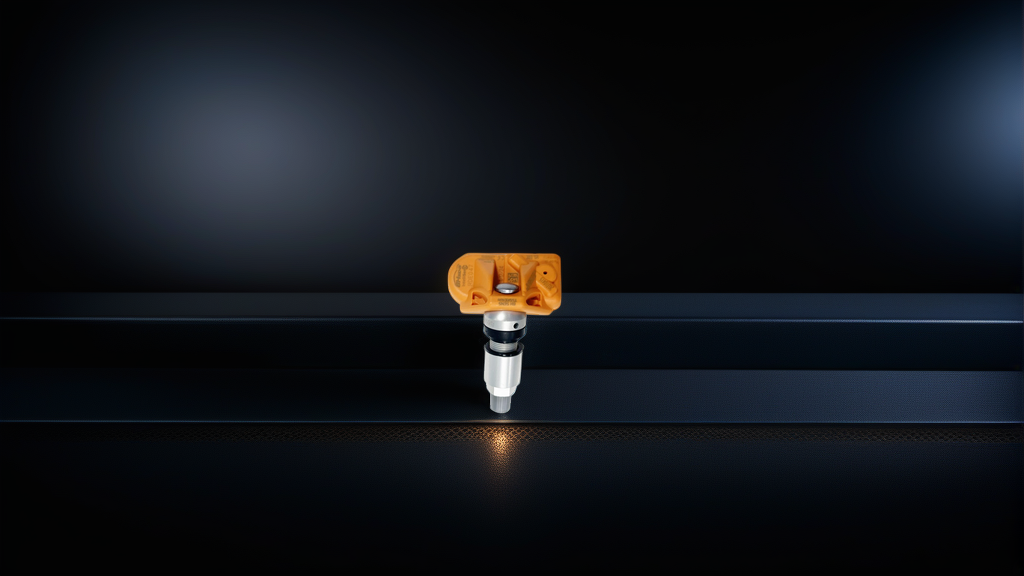
The correct replacement for most Jetta models (2014 and newer) is a 433MHz sensor that matches the OE part numbers. A reliable aftermarket option is the RDE047V21 | BH-Sens 433MHz TPMS Tire Pressure Sensor | Fits Audi, BMW, Bentley, Ferrari, Lamborghini & 8 More | OE# 2N0907275A, 314818, 36106798872 from BH-Sens (Baolong Technology). This sensor is a direct OE replacement for Jetta applications using the 5Q0907275 family of sensors, which covers many 2014-2020 models.
Recommended Part
When replacing TPMS sensors on your Jetta, choose a sensor that matches the original frequency (433MHz) and OE fitment. The RDE047V21 | BH-Sens 433MHz TPMS Tire Pressure Sensor | Fits Audi, BMW, Bentley, Ferrari, Lamborghini & 8 More | OE# 2N0907275A, 314818, 36106798872 fits Audi, BMW, Bentley, Ferrari, Lamborghini, and 8 more brands, but it is also a direct fit for Jetta models using OE numbers 5Q0907275, 5Q0907275B, or 5Q0907275F. Always verify compatibility by checking your existing sensor’s part number or consulting your vehicle manual.
FAQ
Can I drive with the TPMS light on in my Jetta?
Yes, you can drive, but the light means the system cannot monitor tire pressure. If a tire loses pressure while driving, you won’t get a warning. Check your tire pressures manually with a gauge until you replace the faulty sensor.
How do I know if my Jetta uses 433MHz sensors?
Most Jetta models from 2008 onward use 433MHz sensors. Check the label on your current sensor (it will say 433MHz), or look up your vehicle’s TPMS frequency in the owner’s manual. If your Jetta was built for the North American market, it almost certainly uses 433MHz.
Will a Jetta TPMS light reset itself after replacing a sensor?
Yes, usually. After installing a new sensor, drive the car above 15 mph for about 10 minutes. The TPMS system will automatically recognize the new sensor and clear the warning light. If the light stays on, you may need a TPMS relearn tool to force the car to read the new sensor ID.
Why does my TPMS light flash for 60 seconds then stay on?
A flashing TPMS light for the first 60 seconds after starting the engine indicates a system fault—usually a dead sensor that is not transmitting at all, or a receiver problem. This is different from a steady light (which indicates low pressure). You need to replace the non-responsive sensor.