
Why Your JOLION TPMS Light Comes On
The Tire Pressure Monitoring System (TPMS) in your JOLION uses direct sensors inside each wheel. These sensors transmit pressure and temperature data to the vehicle’s receiver. When the warning light illuminates, there are three root causes:
- Sensor battery depletion – the internal lithium battery is non-replaceable and typically lasts 5–7 years.
- Signal interference – external radio frequency (RF) noise blocks the sensor-to-receiver link.
- Actual low tire pressure – always rule this out first with a manual gauge.
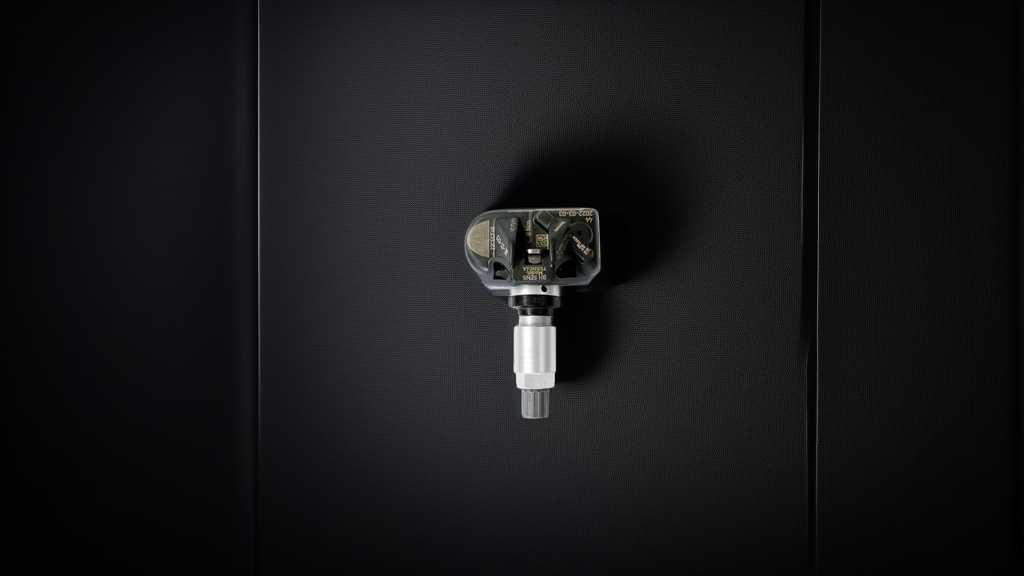
Because JOLION shares TPMS platforms with BAIC and other Chinese OEMs, many models use 433MHz sensors like the BL-ST-073 | BH-Sens 433MHz TPMS Tire Pressure Sensor | Fits BAIC, Baic Ev, GWM, Geely, Geometry & 8 More | OE# 01732445, 25M01A031A, 3641100XKR02A. Understanding the difference between a dead battery and interference saves you from replacing sensors unnecessarily.
Dead Sensor Battery Symptoms – What to Look For
A dying sensor battery doesn’t always give a sudden warning. Here are the telltale signs:
- Intermittent TPMS light – comes on during cold starts, goes off after driving 10–15 minutes (battery voltage recovers slightly with wheel rotation).
- “No sensor” or “– –” display – the dashboard shows dashes instead of tire pressures, meaning the sensor isn’t transmitting at all.
- All four sensors fail at once – if only one sensor is dead, you’ll see three good readings and one missing. If all four disappear, it’s unlikely all batteries died simultaneously – more likely a receiver issue or interference.
- Sensor age – if your JOLION is 5+ years old on the original sensors, battery failure is probable. After 7 years, it’s almost certain.
| Symptom | Likely Cause | Action |
|---|---|---|
| Single tire shows no data | Dead sensor battery | Replace that sensor |
| All tires show no data | Receiver fault or interference | Diagnose receiver, check for RF blockers |
| Light on/off with temperature | Weak battery near end of life | Replace soon |
| Intermittent data on multiple tires | Signal interference | Check for aftermarket electronics |
Signal Interference Diagnosis – Step by Step
Signal interference is trickier because it can mimic a dead battery. 433MHz TPMS sensors are vulnerable to:
- Aftermarket dashcams, LED light bars, or USB chargers plugged into the 12V socket
- Metal window tint (especially metallic or ceramic films with metal content)
- Driving near large metal structures, power lines, or radio towers
- Aftermarket keyless entry or remote start systems
How to Test for Interference
- Park in an open area – away from buildings, power lines, and other vehicles. If the TPMS light goes off after 5 minutes, your home or work parking spot may have interference.
- Unplug all aftermarket electronics – remove dashcam, phone charger, FM transmitter, and any USB accessories. Drive for 10 minutes. If the light stays off, one of those devices was the culprit.
- Check window tint – if you recently installed metallic tint, it can block the sensor signal. The TPMS receiver is usually behind the dashboard or near the center console. Even high-quality tint with low metal content can attenuate 433MHz signals.
- Use a TPMS scan tool – this is the definitive test. A tool like the Autel TS508 or LAUNCH X431 will show you:
- Sensor IDs and whether they match the vehicle
- Battery voltage (most sensors report 2.0V–3.2V; below 2.5V is critical)
- Signal strength and error codes
If the scan tool reads all four sensors clearly but the JOLION’s dashboard doesn’t, the vehicle receiver may be faulty. If the scan tool can’t find one sensor, that sensor’s battery is dead.
Recommended Fix for JOLION TPMS Issues
For JOLION models produced after 2018, the most compatible replacement is the BH-Sens 433MHz TPMS sensor (OE# 01732445, 25M01A031A, 3641100XKR02A). It’s pre-programmed and clamp-in, making installation straightforward:
- Remove the tire and old sensor
- Install new sensor with a new valve stem and torque the nut to the manufacturer’s specification (typically 4–6 Nm – check your manual)
- Relearn the sensor IDs using the vehicle’s TPMS relearn procedure (usually a magnet method or OBD tool)
The BL-ST-073 | BH-Sens 433MHz TPMS Tire Pressure Sensor | Fits BAIC, Baic Ev, GWM, Geely, Geometry & 8 More | OE# 01732445, 25M01A031A, 3641100XKR02A is a direct fit for JOLION as well as BAIC, GWM, Geely, and other Chinese brands. It’s manufactured by Baolong Technology, which supplies many OE TPMS systems, so you’re getting factory-grade quality without the dealer markup.
Important: Never mix 315MHz and 433MHz sensors on the same vehicle. JOLION uses 433MHz. Confirm your system frequency before purchasing.
FAQ
Can I replace just one TPMS sensor on my JOLION?
Yes. TPMS sensors are individually replaceable. However, if three sensors are already over 6 years old, consider replacing all four at once. The labor cost to mount and balance a tire is the same whether you do one or four. Replacing them in a set ensures even battery life and avoids another trip to the shop within a year.
How do I reset the TPMS light after replacing a sensor?
After installing a new sensor, you must perform a TPMS relearn. Most JOLION models use the magnet method: hold a strong magnet near the valve stem of each tire in a specific sequence (usually driver front → passenger front → passenger rear → driver rear) until the horn chirps. Some newer models require an OBD scan tool. Check your owner’s manual for the exact procedure.
Will aftermarket wheels cause my TPMS light to come on?
Only if the aftermarket wheels lack TPMS sensors, or if the sensors are incompatible. If you install new wheels and transfer the original sensors, ensure the sensors are properly torqued and the valve stem seals are intact. Also, deep-dish or large-diameter wheels sometimes create RF shadowing, but this is rare with 433MHz sensors.