
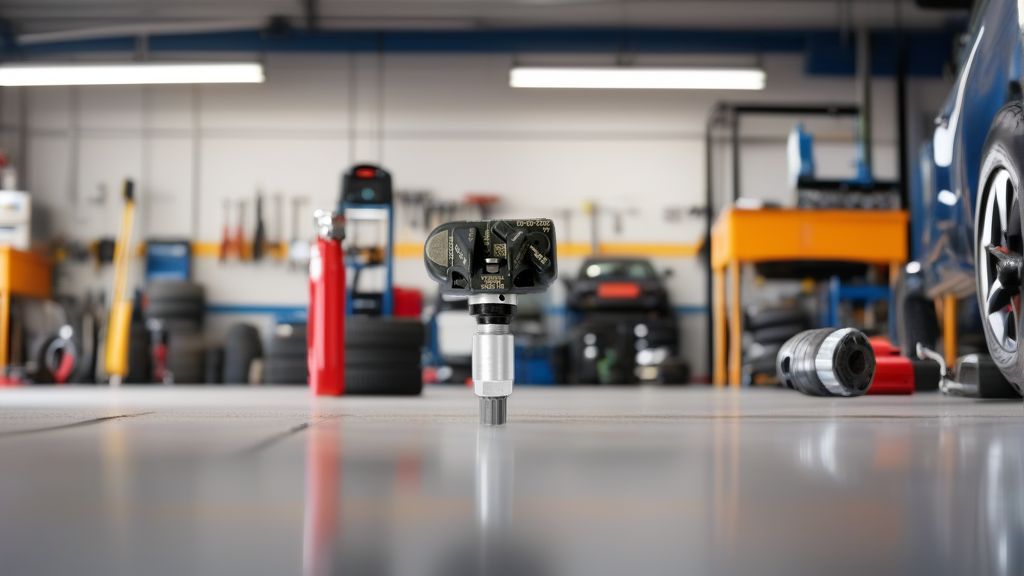
Understanding TPMS Relearn on VOLT Vehicles
When you replace a TPMS sensor on a VOLT (including BAIC EV, BAIC, and other Chinese-manufactured models), the vehicle’s ECU needs to “learn” the new sensor IDs. This is not optional—without a relearn, the TPMS light will stay on, and you won’t get accurate tire pressure readings.
VOLT vehicles, like many Chinese brands, use 433MHz sensors. The BH-Sens BL-ST-073 is a pre-programmed clamp-in sensor that fits multiple VOLT-compatible platforms. Because it comes pre-programmed with a unique ID, you still need to pair that ID with the vehicle’s system through a relearn process.
There are three main relearn methods for VOLT vehicles. Which one works depends on the model year and the TPMS module version.
Method 1: Auto Relearn (Drive to Learn)
This is the most hands-off method. It requires no tools other than your VOLT vehicle and a clear road.
How It Works
The vehicle automatically detects sensor IDs while driving. The ECU continuously listens for signals from each sensor as the tires rotate.
Step-by-Step:
- Park safely and ensure all tires are inflated to the correct pressure (check your door jamb sticker).
- Start the engine and drive at a steady speed above 25 mph (40 km/h) for 10–20 minutes.
- Avoid sharp turns, hard braking, or long stops during this period.
- The TPMS light should turn off after the drive cycle if all sensors are transmitting.
- If the light remains on, the auto relearn did not complete—try a different method.
Best For:
- VOLT models from 2018 onward that support automatic ID registration.
- Situations where you have no access to a scan tool or TPMS trigger tool.
Limitations:
- Not all VOLT models support auto relearn—some require a manual trigger.
- It can take multiple drive cycles. If the light doesn’t turn off after 30 minutes total driving, move to another method.
Method 2: OBD Relearn (Scan Tool Method)
This is the fastest and most reliable method for VOLT vehicles. You’ll need an OBD2-compatible TPMS tool.
Tools Needed:
- A TPMS scan tool (Autel TS508, ATEQ VT55, or similar)
- The BH-Sens BL-ST-073 sensors (pre-programmed, but the tool still reads their IDs)
Step-by-Step:
- Turn the ignition on (engine running or accessory mode, depending on tool instructions).
- Connect the OBD2 scan tool to the vehicle’s diagnostic port (usually under the dashboard near the steering column).
- Select “TPMS Relearn” or “Sensor ID Programming” on the tool.
- Choose the correct vehicle make (VOLT, BAIC, etc.) and model year.
- The tool will read the current sensor IDs stored in the ECU.
- Activate each sensor using the tool’s “Trigger” function. Hold the tool near the tire sidewall (within 2 inches) at the valve stem location.
- The tool will display each sensor’s ID as it detects it. Repeat for all four tires.
- Follow the tool’s on-screen prompts to write the new IDs to the ECU.
- Disconnect the tool and turn the ignition off for 10 seconds, then start the engine.
- Drive for a few minutes to confirm the TPMS light is off.
Best For:
- Quickest method—usually under 5 minutes.
- VOLT models from 2015 onward that support OBD programming.
- Fleets or shops that do frequent sensor replacements.
Important Notes:
- The BL-ST-073 sensor is pre-programmed, but the OBD tool still needs to “introduce” it to the ECU. The tool reads its factory-stored ID.
- Some older VOLT models (pre-2015) may not support OBD relearn—use the stationary method instead.
Method 3: Stationary Relearn (Manual Trigger)
This method uses a TPMS activation tool at each wheel but does not require an OBD connection. It’s useful when you don’t have a scan tool or the vehicle doesn’t support OBD programming.
Tools Needed:
- A TPMS trigger tool (such as the ATEQ Quickset or a universal 433MHz activator)
- The vehicle’s user manual (for the specific horn honk sequence)
Step-by-Step:
- Turn the ignition to “ON” (engine off).
- Locate the TPMS relearn button (sometimes behind a panel under the steering column) or use a menu option in the dashboard settings—some VOLT models have a “TPMS Relearn” option in the infotainment system.
- Activate the relearn mode. The vehicle will usually honk the horn or flash the turn signals once to confirm.
- Starting with the left front tire, hold the TPMS trigger tool against the tire sidewall near the valve stem.
- Press the trigger button for 2–3 seconds. The vehicle will honk or flash when it recognizes the sensor.
- Repeat for the right front, right rear, and left rear tires in that order.
- After the fourth sensor is learned, the vehicle will honk twice to confirm the process is complete.
- Turn the ignition off and then start the engine. The TPMS light should be off.
Best For:
- VOLT models without OBD support (common on older BAIC EV and BAIC vehicles).
- DIYers who already own a TPMS trigger tool.
Common Pitfalls:
- Incorrect wheel order will fail the relearn. Always follow LF → RF → RR → LR.
- If the horn doesn’t honk, the sensor battery may be dead or the trigger tool is not compatible with 433MHz sensors.
Which Method Should You Use?
| Method | Speed | Tools Required | Best For |
|---|---|---|---|
| Auto Relearn | 10–30 minutes | None | Newer VOLT models, no-tool option |
| OBD Relearn | 2–5 minutes | TPMS scan tool | Fastest, most reliable |
| Stationary Relearn | 5–10 minutes | TPMS trigger tool | Older models, no scan tool |
For most VOLT owners, the OBD method is recommended because it’s quick and leaves no room for error. The stationary method is a solid backup if you only have a trigger tool.
Recommended Part: BH-Sens BL-ST-073
If you’re replacing sensors on your VOLT, the BL-ST-073 | BH-Sens 433MHz TPMS Tire Pressure Sensor | Fits BAIC, Baic Ev, GWM, Geely, Geometry & 8 More | OE# 01732445, 25M01A031A, 3641100XKR02A is a direct-fit option. It’s a pre-programmed clamp-in sensor operating at 433MHz, compatible with BAIC, BAIC EV, GWM, Geely, Geometry, and 8 other brands. OE cross-references include 01732445, 25M01A031A, and 3641100XKR02A. No programming is required before installation—just install the sensor and run the relearn procedure.
Final Tips for a Successful Relearn
- Check sensor compatibility: The BL-ST-073 works on 433MHz systems. If your VOLT uses a different frequency (some older models use 315MHz), you’ll need a different sensor.
- Battery condition: Sensor batteries last 5–7 years. If you’re doing a relearn and it fails, the sensor battery may be dead.
- Tire pressure: Inflate all tires to spec before starting any relearn. Low pressure can interfere with signal transmission.
- Reset after rotation: If you rotate tires without moving sensors, you may need a relearn. Some VOLT models auto-detect position after rotation, but many require a manual relearn.
FAQ
How do I know if my VOLT supports auto relearn or OBD relearn?
Check your vehicle’s owner manual under “TPMS” or “Tire Pressure Monitoring System.” If the manual mentions a “drive to learn” function, auto relearn is supported. If it references a “diagnostic tool” or “scan tool,” OBD relearn is supported. For most VOLT models built after 2018, both methods work. For pre-2015 models, you’ll likely need the stationary method.
Can I use any generic TPMS tool for the OBD relearn on VOLT?
Not all tools are compatible. You need a tool that specifically supports Chinese brands (BAIC, VOLT, Geely). Most modern Autel and ATEQ tools work, but cheaper generic tools may not have the correct database. The BH-Sens sensors are standard 433MHz, so the tool must support that frequency and the relearn protocol used by VOLT.
How long does a stationary relearn take on a VOLT?
Expect 5–10 minutes total. The process requires honking and flashing at each wheel, so it’s not instant. If the horn doesn’t honk within 3–5 seconds of triggering, move the tool slightly or check that the sensor is transmitting. Dead sensor batteries are the most common reason for failure.
What if the TPMS light stays on after the relearn?
First, confirm all four sensors are transmitting by using a TPMS tool to read their IDs. If one sensor fails to respond, it may be dead or incompatible. Check the sensor part number against your vehicle’s OE requirements. If all sensors are functional, the ECU may need a power cycle—disconnect the battery for 10 minutes, then retry the relearn. If the light persists, there may be a fault in the TPMS module itself.