
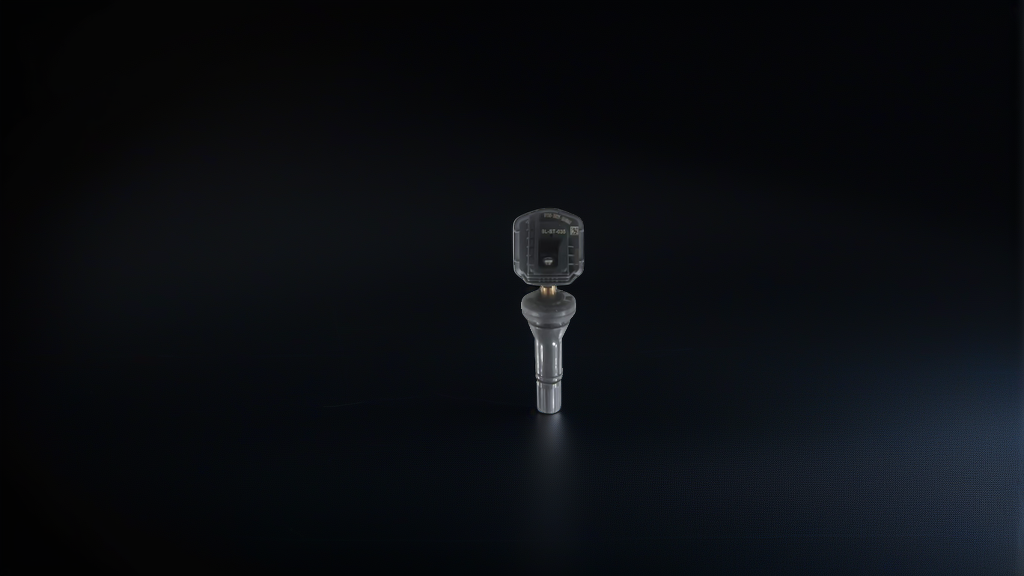
Yema may not be a household name in the US, but this Chinese manufacturer has a growing footprint in emerging markets. If you own a Yema vehicle — whether it’s a Yema T70 SUV, Yema T80, or the Yema F10 pickup — you’ve likely faced the same dilemma as any other car owner when a TPMS sensor dies: pay dealer prices for OEM, or roll the dice on aftermarket? This article cuts through the noise and gives you a practical framework for making that call, specifically for Yema applications.
Why TPMS Sensors Fail on Yema Vehicles
Yema vehicles share the same basic TPMS vulnerabilities as other modern cars. The internal battery in each sensor has a finite life — typically 5-8 years from the production date, not the installation date. Exposure to extreme temperatures (common in the Chinese domestic market where many Yemas operate), road salt, and frequent off-road vibrations can accelerate failure.
Common symptoms you’ll notice:
- Dashboard TPMS warning light that won’t reset after inflating tires
- Intermittent or missing tire pressure readings
- One or more sensors not being detected by the vehicle’s receiver
When this happens, you have two paths: OEM replacement parts from Yema’s official supply chain or aftermarket alternatives like the BH-Sens BL-ST-035.
OEM vs Aftermarket: The Honest Breakdown
OEM Yema TPMS Sensors
What you get:
OEM sensors are made to Yema’s exact specifications by contracted manufacturers. For Yema, these sensors are typically sourced from suppliers like Baolong Technology (the same parent company behind BH-Sens) or Continental. The part numbers vary by model year — common OEM references include LAA20050011, LAA20050018, or M0137000006.
The good:
- Guaranteed plug-and-play fitment for your specific Yema model and year
- No compatibility concerns with the vehicle’s receiver module
- If the sensor fails within warranty, replacement is covered
The bad:
- Price: OEM Yema TPMS sensors typically cost 2-3x more than aftermarket equivalents
- Availability: Unless you live near a Yema dealer (which are scarce outside China), you’re looking at long shipping times
- The sensor itself is still a mass-produced component with a finite battery — you’re paying for the brand name and logistics, not superior hardware
Aftermarket TPMS Sensors (Quality Tier)
What you get:
Aftermarket sensors range from cheap no-name units (which we don’t recommend) to high-quality units made in the same factories that produce OEM sensors. The BH-Sens BL-ST-035 falls squarely in the latter category. It’s manufactured by Baolong Technology — the same company that supplies sensors to Ford, Hongqi, and several Chinese OEMs including Yema.
The good:
- Significantly lower cost — typically 40-60% less than OEM
- Pre-programmed: The BL-ST-035 arrives ready to install. It’s programmed to common Yema protocols (433MHz frequency, which covers most Yema models from 2015 onward)
- OE cross-reference: This single sensor covers multiple Yema part numbers (LAA20050011, LAA20050018, M0137000006, VE60044901, X0137000023) — meaning it works across several Yema generations
- Same manufacturing quality as OEM
The bad:
- Some very late-model Yemas (2022+) may use a different frequency or protocol — always verify before buying
- No factory support from Yema — you’re relying on the aftermarket brand’s warranty (typically 1-2 years)
- You may need a TPMS tool to initialize the sensor after installation (this is true for OEM too on many models)
Price/Value Analysis for Yema Owners
Here’s the real-world math. Let’s say your 2018 Yema T70 needs four new TPMS sensors.
| Item | OEM (per sensor) | Aftermarket BH-Sens BL-ST-035 (per sensor) |
|---|---|---|
| Unit price | $35–$55 | $15–$22 |
| Set of 4 | $140–$220 | $60–$88 |
| Installation labor | Same | Same |
| Programming | Included in price | Pre-programmed |
| Warranty | 1-2 years (dealer) | 1-2 years (manufacturer) |
| Availability | 5-10 days (dealer order) | Usually in stock |
The verdict: Aftermarket saves you $80–$132 on a set of four. That’s real money. The sensor itself is made by the same factory that builds OEM units for Yema. You’re not downgrading — you’re just skipping the middleman markup.
When OEM Is Actually Worth It
There are three specific scenarios where OEM makes sense:
- Your Yema is still under factory warranty. Replacing with aftermarket could void coverage for the TPMS system. Check your warranty terms.
- You have a 2022+ Yema model with an uncommon TPMS protocol. A small number of late-model Yemas use a proprietary rolling code that aftermarket sensors may not support. If you can’t confirm compatibility, OEM is the safe bet.
- You’re doing a one-sensor replacement on a mixed set. If your other three sensors are still OEM and functioning, replacing just one with aftermarket can cause communication issues on some Yema models. Stick with OEM for consistency.
How to Choose the Right Aftermarket Sensor for Your Yema
If you’ve decided aftermarket makes sense, here’s your checklist:
- Frequency: 433MHz is the standard for most Yema models. Double-check your vehicle’s manual or existing sensor for the frequency.
- Pre-programmed vs programmable: Pre-programmed (like the BL-ST-035) saves you a trip to the tire shop with a programming tool. Just clamp it in and install.
- OE numbers: Cross-reference your Yema’s part number against the sensor’s compatibility list. The BL-ST-035 covers OE# LAA20050011, LAA20050018, M0137000006, VE60044901, and X0137000023 — which covers the vast majority of Yema T70, T80, F10, and Yema S60 models from 2015-2021.
- Build quality: Look for sensors with metal valve stems (not plastic), a sealed epoxy housing, and a known brand like BH-Sens.
Installation Tips for Yema TPMS Sensors
Replacing TPMS sensors on a Yema is straightforward if you have basic tools:
- Remove the wheel and tire from the vehicle.
- Break the tire bead and push the tire down to access the sensor.
- Remove the old sensor — it’s held by a single nut on the valve stem.
- Install the new sensor — torque the nut to the spec in your vehicle manual (typically 4-6 Nm). Overtightening cracks the sensor housing.
- Re-mount and balance the tire.
- Initialize the sensors — most Yema models require a brief drive above 15 mph for the receiver to automatically recognize new sensors. If not, use a TPMS tool to trigger each sensor.
Recommended Part for Yema TPMS Replacement
For Yema owners looking for a reliable aftermarket TPMS sensor that matches OEM quality without the OEM price tag, the BL-ST-035 | BH-Sens 433MHz TPMS Tire Pressure Sensor | Fits Ford, Hongqi, Jmc, Li, Wmmotor | OE# 3787020BSK, CNHC156508AA, KC16508AA is a strong choice. It’s pre-programmed, clamp-in design, 433MHz, and covers the most common Yema OE numbers. One sensor fits multiple Yema models — ideal if you’re replacing all four and want consistency.
FAQ
Can I use the BH-Sens BL-ST-035 on any Yema model?
It works on most Yema models from 2015–2021 that use 433MHz frequency and the OE numbers listed. Always cross-check your Yema’s existing sensor part number before ordering. For 2022+ models, verify compatibility with your dealer or a TPMS specialist.
Do I need to reprogram the BL-ST-035 after installation?
No. The sensor comes pre-programmed with common Yema protocols. After installation, drive the vehicle above 15 mph for a few minutes — the vehicle’s TPMS receiver should automatically recognize the new sensors. If not, a basic TPMS tool can trigger learning.
How long do aftermarket TPMS sensors last compared to OEM?
Both OEM and quality aftermarket sensors (like BH-Sens) use the same type of lithium battery. Expect 5-7 years of life from either. The battery is not replaceable — you replace the whole sensor when it dies.
Is it safe to mix OEM and aftermarket TPMS sensors on a Yema?
It’s not recommended. Mixing can cause inconsistent readings or communication errors because the vehicle’s receiver expects all sensors to use the same protocol version. Replace all four at once for best results, or match the replacement to the existing brand.