
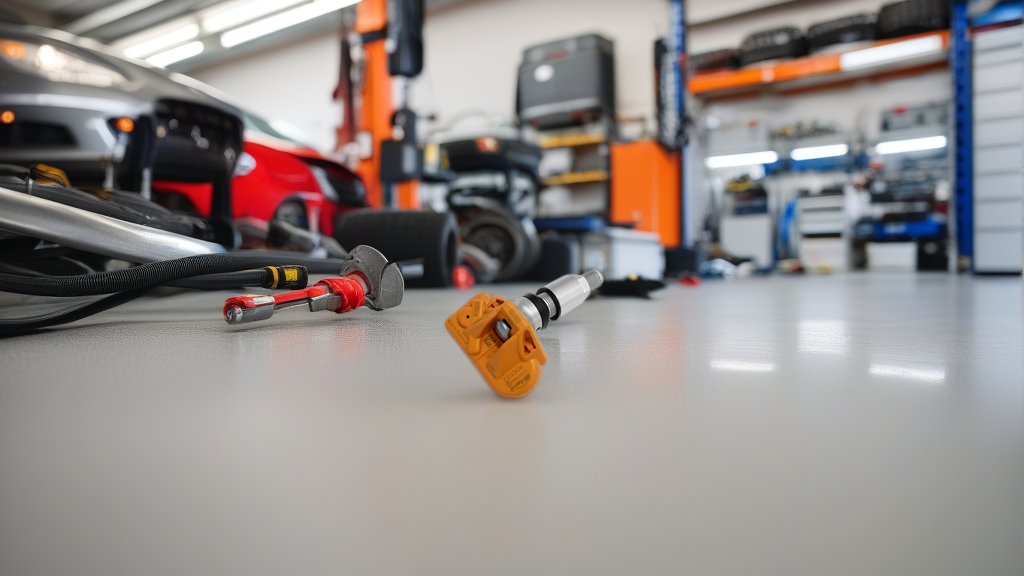
Why Your DBX TPMS Light Turns On
The DBX uses a direct TPMS system. Each wheel has a sensor mounted inside the tire that transmits pressure and temperature data via 315MHz radio frequency to the vehicle’s receiver. When the warning light illuminates, it’s not just a generic alert — the system can differentiate between low pressure, no signal, and sensor malfunction.
Most DBX owners encounter this light after replacing tires, swapping wheels, or when the car has been sitting for a while. The diagnosis depends on how the light behaves.
Common TPMS Warning Light Patterns
| Light Behavior | Most Likely Cause | Action Required | |||
|---|---|---|---|---|---|
| Solid on after tire pressure check | Dead sensor battery or failed sensor | Replace sensor (e.g., [RDE022V21 | BH-Sens 315MHz TPMS Tire Pressure Sensor | Fits Aston Martin, Audi, BMW, Bentley, Ferrari & 5 More | OE# 249363, 290569, 4F0907275A](https://risensauto.com/product/bh-sens-315mhz-tpms-tire-pressure-sensor-fits-aston-martin-audi-bmw-bentley-ferrari-5-more-oe-249363-290569-4f0907275a-rde022v21/)) |
| Flashing for 60-90 seconds, then solid | No signal from one or more sensors | Sensor not recognized or dead | |||
| Light comes on only in specific locations (parking garages, near power lines) | Signal interference | Move vehicle; if persistent, check for aftermarket electronics | |||
| Light comes on after wheel rotation | Sensor not re-learned or damaged during tire change | Re-learn TPMS sensors or inspect valve stem |
Dead Sensor Battery Symptoms on DBX
TPMS sensors in the DBX are powered by internal lithium batteries that last 7–10 years depending on driving conditions and ambient temperature. Once the battery dies, the sensor stops transmitting. You’ll notice:
- Intermittent alert first — the light may come on briefly during cold starts, then turn off as the car warms up. This is the battery voltage dropping below threshold.
- One or two sensors fail before the others — batteries wear unevenly. A single corner showing “—” on the display is a dead sensor, not interference.
- No pressure reading at all — if your DBX displays individual tire pressures (most models do), a blank reading for one wheel confirms a dead battery.
What to do: You cannot replace the battery in a sealed TPMS sensor. The entire sensor must be replaced. The BH-Sens RDE022V21 (315MHz) is a direct OE replacement for the DBX, covering Aston Martin, Audi, BMW, Bentley, and Ferrari — including the DBX platform. It is clamp-in style, pre-programmed to OE frequencies, and requires no additional programming on most DBX models.
Signal Interference Diagnosis for DBX
Signal interference is uncommon but possible. The 315MHz frequency can be blocked or distorted by:
- Metallic window tint (especially ceramic or metalized films)
- Aftermarket LED light bars or wiring near the antenna modules
- Onboard chargers or inverters plugged into the 12V socket
- Nearby radio towers or high-voltage power lines (temporary only)
How to confirm: If the TPMS light only activates in specific locations (e.g., your garage, a certain parking lot) and clears when you drive away, it’s likely interference. If the light stays on regardless of location, it’s a hardware failure.
Quick test: Drive the DBX to a different area — at least 1-2 miles away. If the light turns off after a few minutes of driving, the system re-learned and the previous location caused interference. If the light remains, inspect sensors.
Other Causes: Valve Stem Damage, Low Pressure, and Relearn Issues
- Damaged valve stems — The DBX uses metal clamp-in sensors. If a tire shop used a rubber valve stem cap or overtightened the sensor, the seal can fail slowly. Check for corrosion around the base of the valve.
- Low pressure but not flat — A slow leak (1-2 PSI per month) can trigger the light. Always check pressures when tires are cold.
- Sensor position mismatch — After tire rotation, the DBX may show the wrong wheel location until you perform a TPMS relearn. Most DBX models do a stationary relearn after 10-20 minutes of driving above 15 mph.
Recommended Part
When you need to replace a failed TPMS sensor on your DBX, the RDE022V21 | BH-Sens 315MHz TPMS Tire Pressure Sensor | Fits Aston Martin, Audi, BMW, Bentley, Ferrari & 5 More | OE# 249363, 290569, 4F0907275A is a direct fit. It matches OE specifications for 315MHz systems, covers multiple luxury brands (Aston Martin, Audi, Bentley, BMW, Ferrari, Lamborghini, Porsche, Rolls-Royce), and is pre-configured with OE numbers 249363, 290569, 4F0907275A, and others. No cloning or additional programming needed on most DBX models — simply install and drive.
FAQ
How do I know if my DBX TPMS sensor battery is dead vs. a bad sensor?
If the battery is dead, the sensor will not transmit at all — you’ll see no pressure reading for that wheel on the dashboard. If the sensor is faulty but has battery power, you may see erratic readings (e.g., 0 PSI then 35 PSI within seconds) or the light will flash and stay on. A dead battery is more common after 7+ years of use.
Can I replace just the battery in a DBX TPMS sensor?
No. TPMS sensors are sealed units. Attempting to open them damages the housing and the pressure sensing element. You must replace the entire sensor assembly. The BH-Sens RDE022V21 is a cost-effective OE replacement.
Why does my DBX TPMS light flash for 90 seconds then turn solid?
This is the standard “no signal” warning. It means one or more sensors failed to communicate with the receiver during startup. It typically indicates a dead battery, a sensor that lost its programming, or a damaged antenna. Check the sensor condition first; if the tires are new, the installer may have damaged the sensor during mounting.
Could aftermarket wheels cause TPMS signal interference on my DBX?
Yes, if the aftermarket wheels have metal valve stems that are not compatible with the DBX’s sensor design, or if the wheel material (e.g., carbon fiber with metallic mesh) blocks the RF signal. Most cast aluminum or forged alloy wheels do not cause interference. If you switched wheels and the light came on, swap the sensors from the original wheels or check for metallic debris inside the wheel barrel.