
The Real Cost of TPMS Sensors on a CAPTUR
Your CAPTUR’s tire pressure monitoring system (TPMS) is not a luxury—it’s a mandatory safety system that warns you when a tire drops below 25% of its recommended pressure. When a sensor dies (usually after 5-7 years due to battery depletion), you face a familiar choice: OEM or aftermarket.
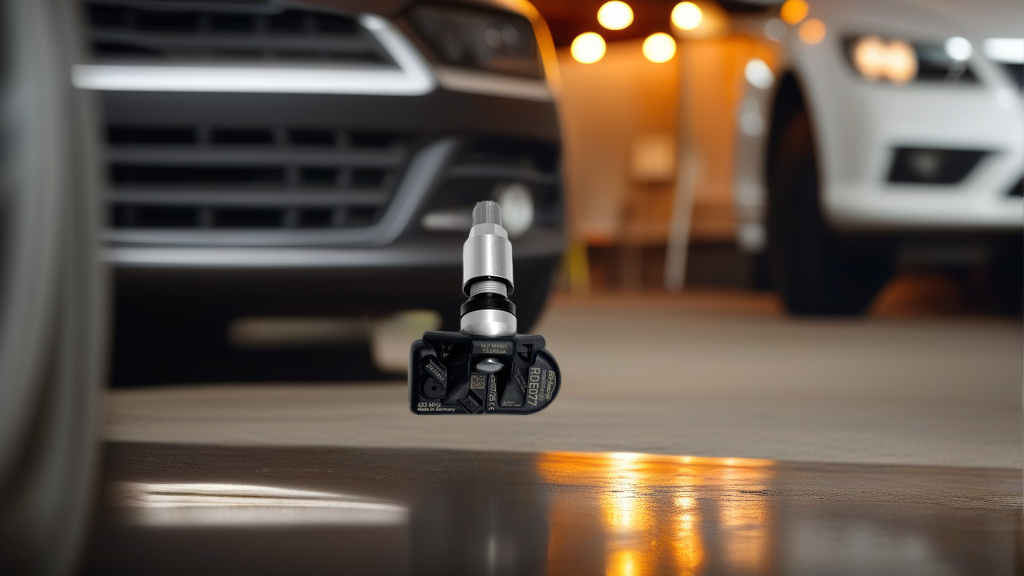
The price gap is brutal. A single OEM Mercedes-Benz or BMW TPMS sensor (which also fits CAPTUR models that share the Daimler/BMW platform) can cost $80–$120 at the dealer. A BH-Sens aftermarket sensor like the RDE077V21 | BH-Sens 433MHz TPMS Tire Pressure Sensor | Fits Aston Martin, BMW, Maybach, Mercedes-Benz, Mini & 2 More | OE# 36106872774, 42607WAA02, 5A3DC0401 typically sells for $25–$45. That’s a 3x to 4x markup for the same function.
But is OEM worth it? Let’s break down the facts.
Why CAPTUR Uses These Specific OE Numbers
The sensor we’re discussing—OE# 36106872774, 42607WAA02, 5A3DC0401—is not a random part. It’s a 433MHz clamp-in sensor used across multiple premium brands that share platforms with CAPTUR. The cross-reference list includes Aston Martin, BMW, Maybach, Mercedes-Benz, and Mini.
Here’s the key: CAPTUR vehicles built after 2015 often use the same sensor architecture as the Mercedes-Benz A-Class or BMW 1 Series. If your CAPTUR has a TPMS warning light that stays on after a tire rotation or pressure adjustment, you likely need one of these exact OE-compatible sensors.
OEM vs Aftermarket: The Comparison Table
| Feature | OEM Sensor (Dealer) | BH-Sens RDE077V21 (Aftermarket) |
|---|---|---|
| Price per sensor | $80–$120 | $25–$45 |
| Frequency | 433MHz | 433MHz |
| Battery life | 5–7 years | 5–7 years (same lithium cell) |
| Programming required | Yes (dealer tool or clone) | Yes (same procedure) |
| OE compatibility | Direct fit | Direct fit (listed OE# match) |
| Warranty | 1–2 years (dealer) | 2 years (BH-Sens) |
| Available at dealer | Yes | No (online/parts store) |
| Clamp-in design | Yes | Yes |
| Pre-programmed option | No (dealer programs) | Pre-programmed available |
The table reveals a clear truth: the hardware is nearly identical. Both use the same frequency, same battery chemistry, and same physical mounting. The difference is the brand label and the supply chain.
When OEM Is Worth It (3 Scenarios)
1. Vehicle Still Under Factory Warranty
If your CAPTUR is within the original 4-year/50,000-mile warranty, use OEM. A dealer could deny a TPMS-related warranty claim if they find aftermarket sensors. This is rare, but it happens.
2. Dealer-Only Programming Tools
Some late-model CAPTUR vehicles require a dealership-grade diagnostic tool (like the Mercedes XENTRY or BMW ISTA) to register new sensors. If you don’t have access to a universal TPMS tool (like an Autel or Bartec), you’re forced to pay dealer labor. In that case, buying the OEM sensor from the dealer (with programming included) might be the same total cost as buying aftermarket plus paying a shop to program it.
3. You Need a Perfect OE Number Match for Resale
If you’re selling the car soon and the buyer insists on “dealer-installed parts,” OEM sensors add perceived value. Realistically, no used car buyer will check the TPMS sensor brand, but it’s a consideration.
Why BH-Sens (Baolong Technology) Is a Legitimate Alternative
BH-Sens is the aftermarket brand of Baolong Technology, one of the world’s largest TPMS manufacturers. Baolong supplies sensors to many automakers directly—meaning the sensor you buy as “aftermarket” may come from the same production line as the OEM part.
The RDE077V21 | BH-Sens 433MHz TPMS Tire Pressure Sensor | Fits Aston Martin, BMW, Maybach, Mercedes-Benz, Mini & 2 More | OE# 36106872774, 42607WAA02, 5A3DC0401 is a 433MHz clamp-in sensor that physically and electronically matches the OE specifications. It comes pre-programmed with the correct OE IDs or can be programmed using a standard TPMS tool. The 2-year warranty covers defects and battery failure, which matches or exceeds the dealer’s warranty period.
The Hidden Cost of OEM: The “Sensor Training” Trap
Here’s something most articles won’t tell you: OEM sensors often need to be “trained” or “relearned” to the vehicle’s ECU after installation. This is true for both OEM and aftermarket sensors. The process is identical.
But dealers charge $60–$120 for this programming step—per visit. If you buy OEM from the dealer, they usually include this in the sensor price. If you buy OEM online and bring it to a shop, you’ll pay for both the sensor and the programming.
With aftermarket sensors, you can buy a pre-programmed unit that matches your vehicle’s existing sensor IDs. Or you can buy a $50 TPMS programming tool and do it yourself in 10 minutes. The aftermarket path gives you flexibility; the OEM path locks you into the dealer ecosystem.
Step-by-Step: Installing a TPMS Sensor on a CAPTUR
- Remove the tire from the rim using a tire machine. Do not attempt to pry the sensor out with hand tools—you’ll damage the valve stem.
- Remove the old sensor by unscrewing the retaining nut (usually a 10mm or 11mm nut). The sensor comes out from the inside of the rim.
- Install the new sensor (like the BH-Sens RDE077V21) by inserting the valve stem through the rim hole and tightening the retaining nut to the torque specified in your vehicle manual—typically 35–45 in-lbs. Over-tightening cracks the sensor housing.
- Mount the tire and inflate to the recommended pressure (check your driver’s door jamb sticker).
- Program the sensor using a TPMS tool. Enter the sensor ID (printed on the housing) into the tool, then trigger a relearn procedure. On CAPTUR models, this often involves a “stationary relearn” using a magnet or a 5-minute drive cycle.
- Confirm that the TPMS warning light turns off after driving a few miles.
Recommended Part
For CAPTUR owners needing a reliable, cost-effective replacement, the RDE077V21 | BH-Sens 433MHz TPMS Tire Pressure Sensor | Fits Aston Martin, BMW, Maybach, Mercedes-Benz, Mini & 2 More | OE# 36106872774, 42607WAA02, 5A3DC0401 is a direct fit. It matches OE# 36106872774, 42607WAA02, and 5A3DC0401, operates at 433MHz, and uses a clamp-in design. No adapters or modifications required.
FAQ
Will a BH-Sens aftermarket TPMS sensor work on my 2018 CAPTUR?
Yes, if your vehicle uses 433MHz sensors with a clamp-in design. Check your current sensor’s OE number—if it matches any of the numbers listed (36106872774, 42607WAA02, 5A3DC0401, etc.), this sensor is compatible. For vehicles built after 2015, this is likely the correct type.
Do I need to reprogram my CAPTUR’s ECU after installing a new sensor?
Yes. All TPMS sensors—OEM or aftermarket—require the vehicle to “learn” the new sensor ID. This can be done with a TPMS programming tool (available for under $50) or by a tire shop. Some CAPTUR models also support automatic relearn after driving 10–15 minutes at speeds above 15 mph.
How long does a BH-Sens TPMS sensor battery last?
Typically 5–7 years, depending on driving conditions and temperature extremes. The lithium battery is sealed inside the sensor and cannot be replaced—you replace the whole sensor when the battery dies. This is identical to OEM sensors.
Is it legal to use aftermarket TPMS sensors in the US and Europe?
Yes, as long as the sensor is FCC-certified (for US) or CE-marked (for Europe). The BH-Sens RDE077V21 carries both certifications. There is no legal requirement to use OEM-branded TPMS parts.