
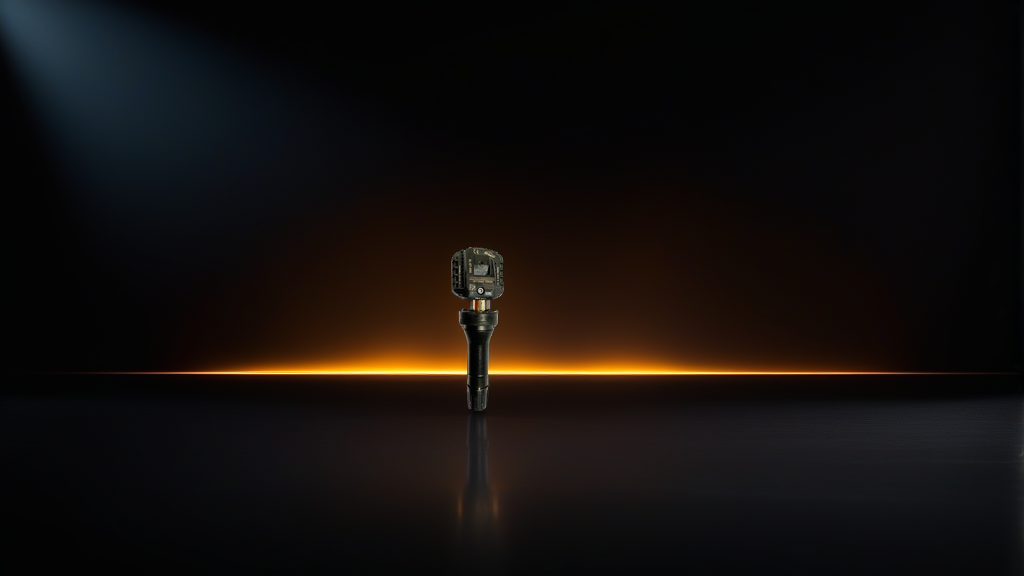
Understanding the EHS TPMS System
Your EHS uses direct TPMS sensors mounted inside each tire, transmitting pressure and temperature data at 433MHz to the vehicle’s receiver. Unlike indirect systems that rely on ABS wheel speed sensors, direct sensors give you actual pressure readings—but they also introduce failure points you can diagnose yourself.
The most common EHS TPMS issues fall into three categories: battery exhaustion, radio frequency interference, and sensor failure. Each presents slightly different symptoms.
Dead Sensor Battery Symptoms
TPMS sensor batteries are sealed non-replaceable units designed to last 5-7 years. Your EHS likely left the factory with sensors installed around 2017-2020, so if you’re reading this in 2025, battery replacement is overdue.
Key symptoms of a dead battery:
- The TPMS light comes on immediately at startup and stays solid (does not flash)
- One specific tire shows no pressure reading on the dashboard display
- The reading for that tire drops to “—” or “0” after driving a few minutes
- Cold weather makes the symptom worse—weak batteries fail first in low temperatures
How to confirm: Use a handheld TPMS trigger tool (about $30-50) pointed at each sensor. If the tool doesn’t wake the sensor within 2-3 inches, the battery is dead. No trigger tool? Swap the suspected sensor wheel with a known-good wheel—if the problem follows the wheel, it’s the sensor.
Signal Interference Diagnosis
433MHz is a shared frequency band in many regions. Your EHS can experience interference from:
- Aftermarket dash cameras with wireless transmitters
- LED headlight drivers (especially cheap units)
- Phone chargers plugged into the 12V socket
- Third-party remote start systems
- Metal window tint or metallic tire repair patches
Interference symptoms vs. dead battery:
| Symptom | Dead Battery | Signal Interference |
|---|---|---|
| Light behavior | Solid on, then steady | Flashing, then solid |
| Reading pattern | One wheel consistently missing | All wheels drop randomly |
| Location dependency | Same wheel always | Changes with driving location |
| Aftermarket electronics | No effect | Removing device fixes issue |
Test for interference: If the TPMS light flashes for 60-90 seconds at startup then stays on, that’s a communication error—likely interference. Drive your EHS to a different parking lot away from buildings and transmission towers. If the light goes out, you have an external interference source, not a sensor problem.
Sensor Failure vs. Battery Death
Sometimes the sensor itself fails even with good battery voltage. You’ll see:
- Erratic pressure readings that jump 10+ psi while driving
- Temperature readings stuck at 0°C or 255°C
- Sensor never responds to the trigger tool even after battery replacement
In these cases, the sensor’s internal pressure transducer or RF module has failed. The BL-ST-068 | BH-Sens 433MHz TPMS Tire Pressure Sensor | Fits Im, MG, Rising, Roewe | OE# 10290600, 10625492, 10718213 (BH-Sens BL-ST-068) is a direct replacement for EHS models using OE# 10290600, 10625492, 10718213. It’s pre-programmed and clamp-in, meaning no additional programming tool is needed for basic installation—just install and drive.
Step-by-Step EHS TPMS Diagnosis
- Check tire pressures manually with a gauge. Inflate all tires to the pressure listed on your driver’s door jamb (typically 32-38 psi for EHS models). If the light goes out after 10 minutes of driving, you just had low pressure.
- Observe the warning light pattern:
- Flashing 60-90 seconds, then solid → Signal loss or interference
- Solid immediately at startup → Low pressure or flat tire
- No reading on display → Dead sensor or failed module
- Test each wheel with a trigger tool or by swapping wheels. Mark the problem wheel.
- Check for aftermarket electronics. Unplug dash cameras, phone chargers, and USB adapters. Drive the car for 15 minutes. If the light clears, you’ve found the interference source.
- Inspect sensor condition if the wheel is off. Look for corrosion around the valve stem, cracked rubber, or loose mounting. BH-Sens sensors use stainless steel housings that resist corrosion better than some OEM units.
Recommended Part
For EHS owners with a dead or failed TPMS sensor, the BL-ST-068 | BH-Sens 433MHz TPMS Tire Pressure Sensor | Fits Im, MG, Rising, Roewe | OE# 10290600, 10625492, 10718213 is a cost-effective replacement. It’s 433MHz, clamp-in design, and pre-programmed to match EHS protocol. No dealership visit required for basic installation—though you will need a tire shop to mount and balance the wheel.
FAQ
How do I know if my EHS TPMS sensor battery is dead?
Use a TPMS trigger tool. If the tool doesn’t activate the sensor within 2-3 inches, the battery is dead. Alternatively, if one tire consistently shows “—” on the dashboard while others work, that sensor has likely failed.
Can a phone charger cause my TPMS light to come on?
Yes. Poorly shielded 12V USB chargers can emit RF noise at 433MHz, interfering with TPMS signals. Unplug all chargers and accessories, then test drive. If the light goes out, replace the charger with a better-shielded unit.
How long do EHS TPMS sensor batteries last?
Typically 5-7 years from the vehicle’s manufacture date. EHS models built in 2018-2020 are now entering the replacement window. Cold climates can shorten battery life by 6-12 months.
Do I need to reprogram the BL-ST-068 sensor after installation?
No. The BL-ST-068 is pre-programmed for EHS fitment. It will auto-learn once installed and driven above 15 mph for 2-3 minutes. No TPMS programming tool is required for basic operation.