
What Is a TPMS Relearn and Why Does Your REGAL GS Need It?
After installing new TPMS sensors—whether from a tire rotation, seasonal swap, or sensor failure—the vehicle’s ECU must “relearn” each sensor’s unique ID and position (LF, RF, RR, LR). Without this step, the low-tire-pressure light will stay on and the system won’t monitor pressure correctly. The REGAL GS typically requires a relearn after any sensor replacement or wheel rotation.
Three Ways to Perform a TPMS Relearn on the REGAL GS
1. Auto Relearn (Drive Method)
Most 2012-2020 REGAL GS models support auto relearn. Here’s how:
- Inflate all tires to the pressure listed on the driver’s door jamb.
- Start the engine and drive the vehicle above 20 mph (32 km/h) for 10-20 minutes.
- The system learns sensor IDs automatically as the wheels rotate. The TPMS light should turn off after a few minutes of continuous driving.
- Tip: This works best on straight, steady-speed roads. Stop-and-go traffic may delay the process.
2. OBD Relearn (Tool Required)
For faster, guaranteed results, use a TPMS programming tool (e.g., Autel TS508, ATEQ Quickset, or Bartec). Steps:
- Connect the OBD tool to the vehicle’s diagnostic port (under the dash).
- Select “REGAL GS” and choose “TPMS Relearn” or “Program Sensors.”
- Follow the tool’s prompts—it will send the sensor IDs to the ECU wirelessly.
- Some tools also allow you to copy sensor IDs from old sensors to new ones, which is useful if you’re using aftermarket sensors like the BL-ST-059 | BH-Sens 433MHz TPMS Tire Pressure Sensor | Fits BAIC, Baic Ev, Buick, Cadillac, Chevrolet & 15 More | OE# 13516165, 13522631, 13540603.
3. Stationary Relearn (Magnet or Deflation Method)
If you don’t have an OBD tool and the auto relearn isn’t working, try the stationary method:
- Start the engine and turn on hazard lights (some models require this).
- Use a TPMS activation tool or a strong magnet to trigger each sensor in order: LF, RF, RR, LR.
- Alternatively, deflate each tire briefly (5-10 seconds) in the same order—the horn will chirp once per sensor.
- Wait for the horn to chirp twice to confirm completion. This method works on 2010-2015 models but is less common on newer ones.
TPMS Relearn Method Comparison for REGAL GS
| Method | Tools Needed | Time Required | Best For |
|---|---|---|---|
| Auto Relearn | None (just driving) | 10-20 minutes | Routine rotations, no tools on hand |
| OBD Relearn | TPMS programming tool | 2-5 minutes | Quick, guaranteed results; sensor replacement |
| Stationary Relearn | Magnet or deflation tool | 5-10 minutes | Older models (pre-2016) or when OBD tool unavailable |
Recommended Part: BH-Sens BL-ST-059 (433MHz)
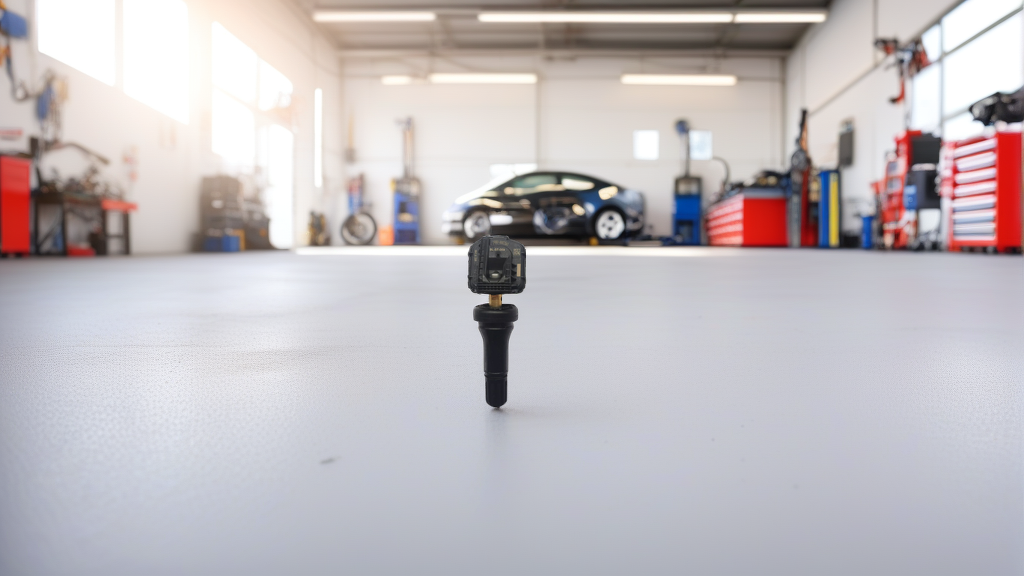
If you’re replacing sensors on your REGAL GS, the BH-Sens BL-ST-059 (SKU: BL-ST-059) is a direct OE replacement. It operates at 433MHz and fits 2010-2020 Buick Regal GS models, plus dozens of other GM vehicles (Buick, Cadillac, Chevrolet, etc.). OE cross-references include 13516165, 13522631, and 13540603. Use BL-ST-059 | BH-Sens 433MHz TPMS Tire Pressure Sensor | Fits BAIC, Baic Ev, Buick, Cadillac, Chevrolet & 15 More | OE# 13516165, 13522631, 13540603 with the OBD relearn method for a seamless installation.
FAQ
Can I reuse old TPMS sensors on my REGAL GS after a tire rotation?
Yes, but you must perform a relearn to update the sensor positions. If the sensors are original and over 5-7 years old, consider replacing them, as battery life is typically 5-8 years.
How do I know which relearn method works for my REGAL GS year?
Check your owner’s manual or look for a TPMS menu in the driver information center. For 2012-2016 models, stationary relearn is common. For 2017-2020, auto relearn or OBD is standard. If unsure, use an OBD tool—it works on all years.
Do I need to reprogram the sensor itself, or just relearn the IDs?
If the sensor is brand new, it usually comes pre-programmed with a standard ID that the vehicle can learn. No reprogramming is needed—just a relearn. If you’re cloning old sensor IDs, an OBD tool can copy them directly.
What if the TPMS light stays on after a relearn?
Double-check tire pressures first. If pressures are correct, the sensor may be faulty or the battery may be dead. Try the OBD relearn method again; if it fails, replace the sensor with a compatible unit like the BL-ST-059.