
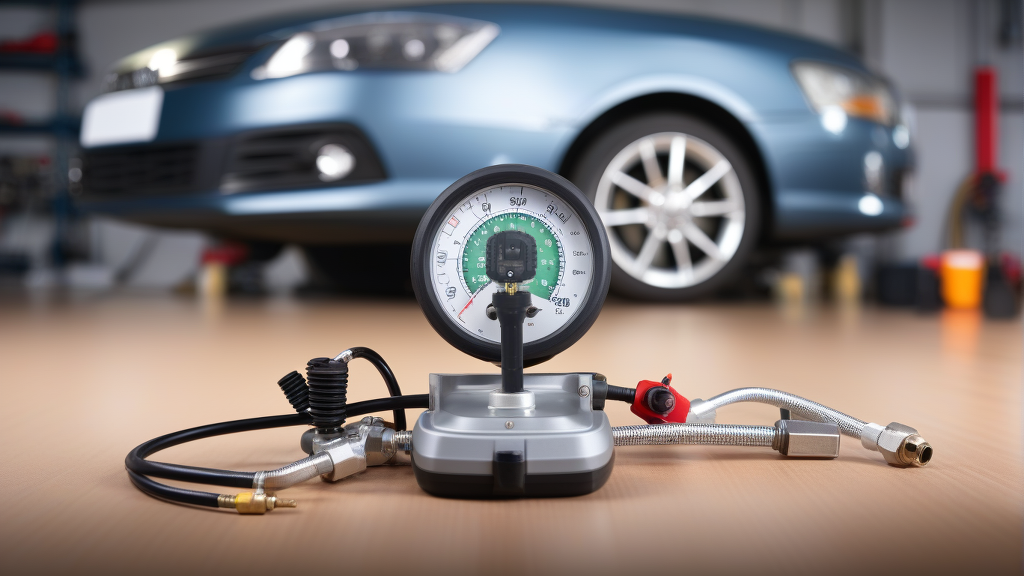
Understanding Peugeot TPMS Relearn Basics
Peugeot has used direct TPMS sensors across most models since around 2008. When you replace a sensor, rotate tires, or swap between summer and winter wheels, the car’s ECU needs to “learn” each sensor’s unique ID and position. Skipping this step means the TPMS warning light stays on, and you get no pressure readings.
The relearn procedure varies by generation. Newer Peugeot models (2014+) typically support auto relearn, while older ones may require a manual stationary relearn with a tool. The key is knowing which method your specific Peugeot uses.
Relearn Methods for Peugeot Vehicles
1. Auto Relearn (Drive Cycle)
This is the simplest method and works on most Peugeot models from 2014 onward. No tools needed—just drive.
Procedure:
- Inflate all tires to the correct pressure (check your door sticker).
- Start the engine and drive the vehicle above 25 km/h (15 mph) for at least 10 minutes.
- The system automatically detects the new sensor IDs and assigns wheel positions.
- The TPMS light should turn off after the drive cycle.
Note: Some Peugeot models require a specific driving pattern—straight roads, gentle turns, and minimal braking. If the light stays on after 15 minutes of driving, try a different route or move to the stationary method.
2. Stationary Relearn with a TPMS Tool
This method is required for older Peugeot models (pre-2014) and some newer ones that do not support auto relearn. You need a TPMS activation tool like the Autel TS508, Bartec, or ATEQ.
Procedure:
- Set the parking brake and turn the ignition on (engine off).
- Use your TPMS tool to activate each sensor in sequence:
- Left Front → Right Front → Right Rear → Left Rear
- After activating all four sensors, the tool will display “Relearn Successful” or similar.
- Turn the ignition off, then start the engine. The TPMS light should go out.
Critical detail: The activation order matters. Peugeot systems are position-sensitive—they learn which sensor is at which corner, not just the IDs. Activating in the wrong order will fail the relearn.
3. OBD Relearn with Diagnostic Software
This method uses an OBD2 interface and software like Diagbox (Peugeot’s official tool), Autel, or Launch. It is the most reliable for models that require ECU-level programming.
Procedure:
- Connect your OBD tool to the vehicle’s diagnostic port.
- Select TPMS → Relearn / Programming.
- Follow the on-screen prompts to enter new sensor IDs (if sensors are not pre-programmed) or trigger an automatic learn.
- Some tools will guide you through activating each sensor with a handheld trigger.
- Complete the procedure and clear any DTCs.
When to use OBD: If you are installing sensors that are not pre-programmed to the vehicle, or if the auto relearn fails repeatedly. Pre-programmed sensors like the BH-Sens BL-ST-079 eliminate this step because they already carry the correct OE IDs.
TPMS Tools Compatible with Peugeot
| Tool Brand | Model Examples | Works with Peugeot? | Notes |
|---|---|---|---|
| Autel | TS508, TS608, MaxiTPMS | Yes | Supports auto, stationary, and OBD methods |
| Bartec | TPMS-200, TPMS-300 | Yes | Professional-grade, covers most Peugeot models |
| ATEQ | Quickset, VT55 | Yes | Good for stationary relearn on older models |
| Launch | X431, TPMS501 | Yes | OBD relearn with live data |
| Diagbox | Peugeot OEM tool | Yes | Full dealer-level functionality |
When to Use a Pre-Programmed Sensor
If you are replacing a single faulty sensor or doing a full set, using a pre-programmed sensor saves significant time. The Peugeot Peugeot TPMS sensors (like the BH-Sens BL-ST-079) come with the OE ID already loaded, matching the original sensor’s frequency and protocol.
Benefits of pre-programmed:
- No need to clone or manually enter IDs via OBD.
- Works immediately with auto relearn (drive cycle) on most 2014+ models.
- Compatible with all four Peugeot sub-brands: Aeolus, Citroen, DS, and Peugeot itself.
If you are using blank sensors, you must program them with the correct ID before installation—either by cloning the old sensor or using an OBD tool to write the ID. This adds 10–15 minutes per sensor.
Vehicle Fitment Example
The BH-Sens BL-ST-079 fits 28 OE applications across the PSA group. Here is a partial reference:
| Model | Year Range | Notes |
|---|---|---|
| Peugeot 208 | 2012–2019 | Auto relearn works from 2014 |
| Peugeot 308 | 2013–2021 | Stationary relearn needed for 2013–2014 |
| Peugeot 3008 | 2016–2024 | Auto relearn only |
| Peugeot 5008 | 2017–2024 | Auto relearn |
| Citroen C3 | 2016–2023 | Auto relearn |
| Citroen C4 Picasso | 2013–2020 | Stationary relearn for early models |
| DS 3 | 2010–2019 | Stationary relearn required |
| DS 7 Crossback | 2017–2024 | Auto relearn |
Always verify your exact model year and tire size before ordering. The BL-ST-079 is a clamp-in sensor with a standard 433MHz frequency, but some older Peugeot models (pre-2008) used 315MHz—double-check your OE part number.
Step-by-Step: Installing and Relearning with BL-ST-079
Here is the full workflow if you are replacing sensors on a 2016–2020 Peugeot 308 (auto relearn capable):
- Remove the old sensor from each wheel. Note the valve stem orientation.
- Install the new BL-ST-079 sensor with a new metal valve stem nut. Torque to the manufacturer specification (typically 4–6 Nm for clamp-in).
- Mount and balance the tire.
- Inflate all tires to the pressure listed on the door pillar (usually 2.3–2.5 bar for most Peugeot models).
- Perform auto relearn: Drive the car above 25 km/h for 10 minutes on a straight road. The TPMS light should turn off within that drive.
- If the light remains on: Stop safely. Use a TPMS tool to do a stationary relearn (activate LF, RF, RR, LR in that order).
- Verify: Check each tire pressure reading on the dashboard display. All four should show correct values within 1–2 minutes of driving.
Recommended Part
For a direct-fit, pre-programmed TPMS sensor that works with Peugeot’s auto relearn system, use the BL-ST-079 | BH-Sens 433MHz TPMS Tire Pressure Sensor | Fits Aeolus, Citroen, Ds, Peugeot | OE# 9802003680, 9811536380, ZQ81238680. This BH-Sens sensor matches OE numbers 9802003680, 9811536380, and ZQ81238680, making it a reliable replacement for most 2010–2024 Peugeot, Citroen, DS, and Aeolus models. It is clamp-in style with a 433MHz frequency, and it requires no additional programming if you follow the correct relearn procedure for your vehicle.
FAQ
Does a Peugeot TPMS relearn require a special tool?
Not always. If your Peugeot is 2014 or newer, the auto relearn (drive cycle) usually works without any tool. For older models or if the auto relearn fails, you will need a TPMS activation tool (Autel TS508 or similar) for stationary relearn, or an OBD tool like Diagbox for manual ID entry. Pre-programmed sensors like the BL-ST-079 reduce the need for OBD tools.
How long does a Peugeot TPMS relearn take?
The auto relearn takes about 10–15 minutes of driving above 25 km/h. A stationary relearn with a tool takes 2–3 minutes once you are at the vehicle. OBD relearn with ID entry takes 5–10 minutes depending on the tool. The installation itself adds 20–30 minutes per wheel.
Can I use aftermarket TPMS sensors on my Peugeot?
Yes, as long as the sensor matches the frequency (433MHz for most Peugeot models) and the OE protocol. Aftermarket sensors like the BH-Sens BL-ST-079 are designed to be fully compatible. Avoid generic universal sensors that require manual programming—they often fail to communicate with Peugeot’s system. Stick to sensors with documented OE fitments.
Why does my TPMS light stay on after swapping winter wheels?
If you swapped wheels with existing sensors, the car needs a relearn because the sensor IDs have moved to different corners. Perform a stationary relearn with a TPMS tool, or drive the car for 10 minutes above 25 km/h (auto relearn). If the sensors in the winter set are not programmed to the vehicle, you must program them first using an OBD tool or install pre-programmed sensors.