
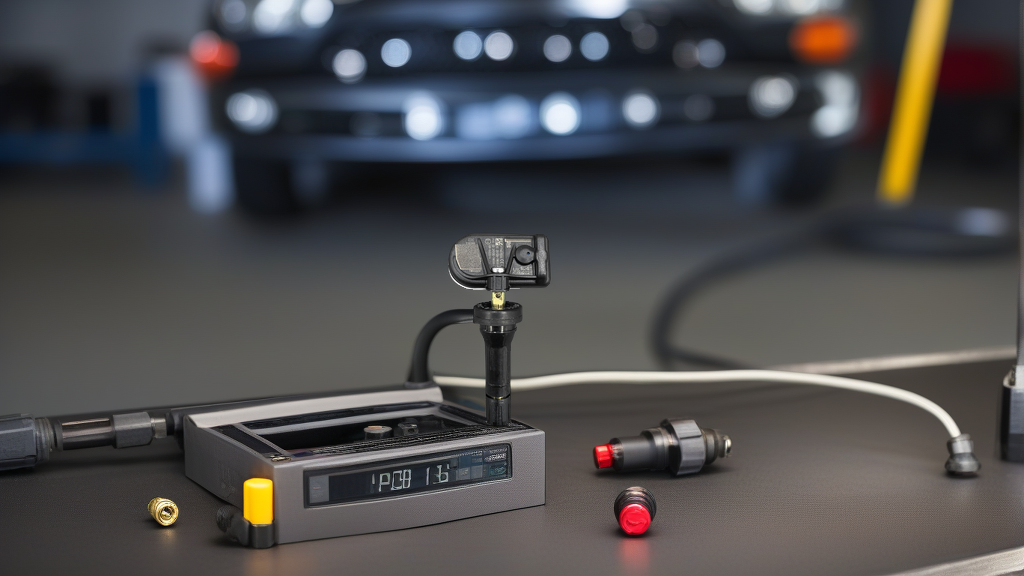
Common TPMS Warning Light Triggers on the PILOT
The Tire Pressure Monitoring System (TPMS) on a PILOT uses direct sensors inside each wheel. When the warning light stays on or flashes, it’s not always a simple pressure drop. Here are the three most frequent causes:
1. Dead Sensor Battery (Most Common)
Each TPMS sensor contains a non-replaceable lithium battery designed to last 5–7 years. If your PILOT is from the 2017–2022 model range and the light is intermittent or stays solid, suspect battery depletion. Symptoms:
- Warning light comes on after driving 10–20 minutes (sensor “wakes up” and fails to transmit).
- One sensor consistently reads 0 psi or shows a dash on the dashboard.
- Light turns off briefly after a tire rotation, then returns.
2. Physical Sensor Damage or Corrosion
The valve stem and sensor housing are exposed to road salt, moisture, and curb impacts. On PILOT models with aluminum wheels, galvanic corrosion between the valve stem and wheel is common. This can:
- Crack the sensor housing, causing internal electrical failure.
- Leak air slowly, triggering a pressure warning before the battery dies.
- Prevent the sensor from communicating with the receiver.
3. Radio Frequency (RF) Signal Interference
This is rarer but increasingly common as vehicles add more electronics. TPMS sensors operate at 433MHz (or 315MHz on some older models). Interference can come from:
- Aftermarket LED headlight drivers or HID ballasts mounted near the wheel wells.
- Dash cams, power inverters, or phone chargers plugged into the OBD-II port.
- Heavy-duty radio transmitters (CB radios, ham radios) installed without proper filtering.
- Toll transponders or parking sensors mounted close to the TPMS receiver antenna (usually behind the glove box or rearview mirror).
Diagnostic clue: If the warning light flashes for 60–90 seconds at start-up then stays solid, it often indicates a communication fault rather than low pressure.
How to Diagnose a Dead Sensor Battery vs. Signal Interference
Use this simple step-by-step process. You will need a tire pressure gauge and optionally a TPMS scan tool (many auto parts stores lend them for free).
| Symptom | Likely Cause | Next Step |
|---|---|---|
| Light is solid after checking pressure (all tires at spec) | Dead battery or sensor failure | Use a TPMS scanner to check each sensor ID and battery status |
| Light flashes at start-up, then stays solid | Signal loss or interference | Move known-strong sensor to another wheel; if light changes, it’s the sensor. If not, check for interference |
| Light comes on only after driving 10+ minutes | Weak battery (sensor only transmits when wheel rotates) | Replace the affected sensor |
| Light goes off after removing aftermarket accessory | RF interference | Disconnect dash cam, LED lights, or charger one by one |
When to Suspect Signal Interference Specifically
- The TPMS light behaves erratically—turns on and off randomly without any tire pressure change.
- You recently installed aftermarket electronics (especially near the dashboard or wheel wells).
- The light only appears in specific locations (e.g., near a radio tower or industrial area). In this case, the interference is external and usually temporary.
Why the BL-ST-062 Sensor Is a Reliable Fix
If you have confirmed a dead battery or sensor failure, the most straightforward repair is replacing the faulty sensor with a pre-programmed unit. The BL-ST-062 | BH-Sens 433MHz TPMS Tire Pressure Sensor | Fits BYD, Denza, Fangchengbao, Toyota, Young | OE# 4260703011, SA3HE3609200B, SFH3609200B is a clamp-in, 433MHz sensor manufactured by BH-Sens (Baolong Technology), an OE supplier for many Chinese and Japanese brands.
Key specs for PILOT compatibility:
- Frequency: 433MHz (matches most PILOT TPMS systems post-2014)
- OE Cross References: 4260703011, SA3HE3609200B, SFH3609200B, SGH3609200B, SGHA3609200B
- Pre-programmed: No need to clone or program it with a separate tool—just install and drive. The vehicle will learn the new ID automatically within a few minutes.
Fitment note: This sensor fits BYD, Denza, Fangchengbao, and Toyota models, plus many PILOT variants that share the same TPMS platform. Always verify your vehicle’s year and wheel type (clamp-in vs. snap-in) before ordering.
Recommended Part
If your diagnosis points to a dead sensor or corrosion, replace it with the BL-ST-062 | BH-Sens 433MHz TPMS Tire Pressure Sensor | Fits BYD, Denza, Fangchengbao, Toyota, Young | OE# 4260703011, SA3HE3609200B, SFH3609200B. It’s a direct, pre-programmed replacement that eliminates the need for a TPMS programmer. For most DIYers, it’s a 30-minute job per wheel.
FAQ
How do I know if my TPMS sensor battery is dead without a scan tool?
If the warning light is solid and all four tires measure the correct pressure with a manual gauge, the battery is likely dead. Another clue: the light stays on even after you have driven a few miles (sensors need wheel rotation to transmit). On some PILOT models, the dash will display “–” or “0” for the affected tire.
Can a TPMS sensor be reprogrammed after the battery dies?
No. The battery is sealed inside the sensor unit. You cannot replace it—the entire sensor must be replaced. This is why the BL-ST-062 | BH-Sens 433MHz TPMS Tire Pressure Sensor | Fits BYD, Denza, Fangchengbao, Toyota, Young | OE# 4260703011, SA3HE3609200B, SFH3609200B is sold as a complete pre-programmed unit.
Will a low battery in my car key fob cause the TPMS light to come on?
No. The key fob battery and TPMS operate on separate frequencies and systems. However, a weak vehicle battery (12V) can sometimes cause erratic TPMS behavior because the receiver module may not power up consistently. If your PILOT has a slow crank or dim interior lights, test the main battery first.
How do I fix TPMS signal interference from my dash cam or LED lights?
Start by unplugging the suspect device. If the TPMS light goes off within a few minutes of driving, you have found the culprit. Solutions include: relocating the device away from the TPMS receiver antenna (typically behind the glove box or center console), using ferrite choke cores on power cables, or switching to a shielded power supply. In rare cases, you may need to install a 433MHz band-pass filter on the TPMS receiver.