
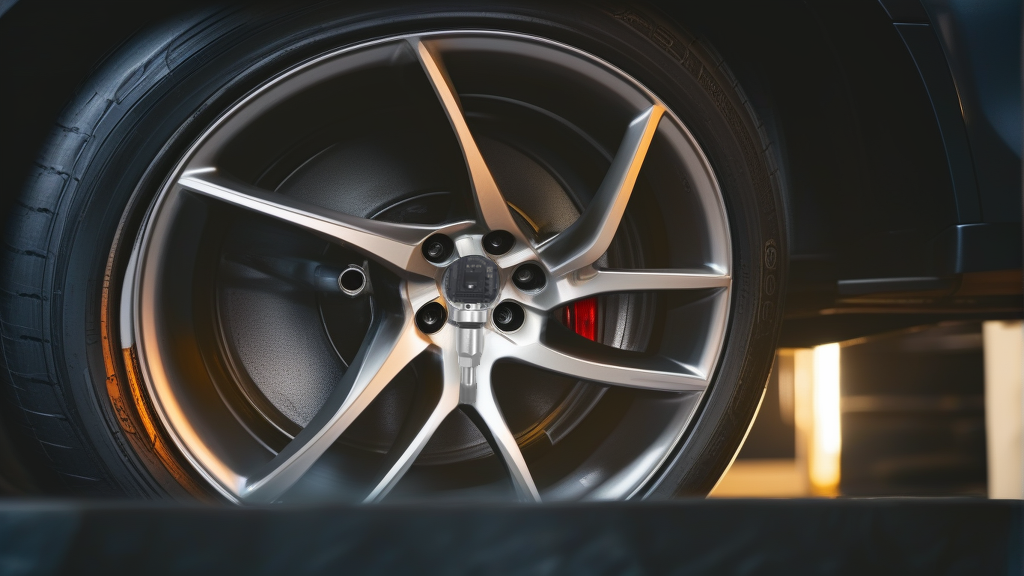
Understanding Your CRUZE Tire Pressure Monitoring System
The Chevrolet CRUZE uses direct TPMS sensors mounted inside each wheel. These sensors measure actual tire pressure and temperature, then transmit that data wirelessly to a receiver module in the vehicle. The system is designed to alert you the moment pressure drops 25% below the recommended value—or when the sensor itself fails to communicate.
Every TPMS sensor contains a non-replaceable lithium battery. When that battery dies, the sensor goes silent. The CRUZE’s system is programmed to expect a signal from each corner every 60–90 seconds while driving. Miss enough signals, and the warning light illuminates.
Dead Sensor Battery Symptoms on a CRUZE
A dead TPMS sensor battery presents predictable symptoms. Here’s what to watch for:
- Solid TPMS light after 5–10 minutes of driving – The system initializes at startup, then waits for all four sensors to report. If one sensor is dead, the light turns solid after a short delay.
- Intermittent “Check Tire Pressure” message – As the battery voltage drops below the transmission threshold, the sensor may work sporadically. You might see a warning on cold mornings but nothing after the tire warms up.
- One tire reading “—“ or “0” on the dashboard display – If your CRUZE has a pressure readout, a dead sensor will show a blank or zero for that position.
- No response from a relearn procedure – When you try to trigger a sensor with a TPMS tool and get no activation, the battery is likely dead.
Battery Life Expectancy
Most CRUZE TPMS sensors last 5–7 years from the vehicle’s build date. If your car is 2016 or older and you’ve never replaced sensors, expect at least one to be dead or dying. Driving conditions matter little here—the battery drains on a fixed timeline regardless of mileage.
Signal Interference: The Underdiagnosed Problem
Signal interference is less common but equally frustrating. The CRUZE’s TPMS operates on 433MHz, a frequency shared with many other devices. When something nearby transmits on or near that frequency, it can drown out the sensor’s weak signal.
How to Spot Interference on Your CRUZE
| Symptom | Dead Battery | Signal Interference |
|---|---|---|
| Warning light behavior | Solid after driving | Flashing for 60–90 seconds, then solid |
| Which tires affected | Usually one specific wheel | Random or multiple wheels |
| Pattern | Consistent, every drive | Intermittent—works some days, fails others |
| Dashboard readings | One tire readout blank | All readings present but light stays on |
Common Interference Sources in a CRUZE
- Aftermarket LED headlight or fog light ballasts – Poorly shielded ballasts radiate RF noise that can block TPMS signals. This is particularly common on earlier CRUZE models (2011–2015) where owners retrofit LED bulbs.
- USB phone chargers in the 12V socket – Cheap chargers generate broad-spectrum electrical noise. Unplug them and see if the TPMS light clears.
- Dash cams with wireless features – Wi-Fi or Bluetooth dash cams transmit continuously and can overlap with 433MHz harmonics.
- Nearby wireless transmitters – Parking near a cell tower, radio antenna, or another vehicle with malfunctioning TPMS sensors can cause cross-talk.
Testing for Interference
- Unplug all aftermarket electronics – Remove phone chargers, dash cams, radar detectors, and LED upgrades. Drive for 10 minutes.
- Check the warning light pattern – Flashing light strongly suggests interference. Solid light points to a dead sensor.
- Swap wheel positions – If the warning follows a specific wheel, it’s a sensor issue. If it stays on the same corner of the car, the receiver or interference is the culprit.
When Replacement Is the Only Fix
If the battery is dead, there is no service option. The sensor must be replaced. On a CRUZE, you have two choices:
- Dealer replacement – You pay for the sensor plus labor for mounting, balancing, and relearn.
- Aftermarket pre-programmed sensor – A cost-effective option that matches the original frequency and fitment.
For CRUZE owners looking for a direct replacement, the BL-ST-074 | BH-Sens 433MHz TPMS Tire Pressure Sensor | Fits Chery, Chery Ev, Cowin | OE# 11652AWARDKS, 802000012AA works on compatible Chery, Chery Ev, and Cowin models using the same 433MHz system. It’s a clamp-in, pre-programmed unit that pairs with your vehicle without additional configuration—ideal if you’re replacing a failed sensor from a dead battery.
CRUZE-Specific TPMS Relearn
After replacing a sensor on a CRUZE (2011–2019), you must perform a relearn. The process varies by model year:
- 2011–2015 CRUZE: Auto relearn after driving above 20 mph for 10 minutes. Some require a TPMS tool to trigger each sensor.
- 2016–2019 CRUZE: Requires a scan tool or TPMS activation tool to complete the relearn.
Always verify the procedure in your owner’s manual. Skipping the relearn will leave the warning light on even with a new sensor.
Recommended Part
If you’ve confirmed a dead sensor on your CRUZE or a compatible vehicle, the BL-ST-074 | BH-Sens 433MHz TPMS Tire Pressure Sensor | Fits Chery, Chery Ev, Cowin | OE# 11652AWARDKS, 802000012AA is a reliable drop-in replacement. It’s pre-programmed to 433MHz, uses the clamp-in design standard on most CRUZE wheels, and matches OE specifications.
FAQ
How do I know if my CRUZE TPMS sensor battery is dead vs. just low pressure?
Low tire pressure will show a specific pressure reading below the threshold (usually 25–30 PSI depending on your CRUZE model). A dead sensor shows no reading at all—just a blank or “—” on the display. If you check the tire with a gauge and it’s properly inflated, the sensor is dead.
Can I replace just the battery in a CRUZE TPMS sensor?
No. TPMS sensor batteries are sealed inside the unit and are not replaceable. Attempting to open the sensor will destroy the seal and the electronics. The entire sensor must be replaced.
Why does my CRUZE TPMS light flash for a minute then stay on?
That’s the classic symptom of a sensor that’s not communicating. The flashing indicates the system is in “learn mode,” trying to detect the missing sensor. After 60–90 seconds of no signal, it gives up and the light stays solid. This can be a dead battery or severe signal interference.
Will disconnecting the car battery reset the TPMS light on a CRUZE?
No. Disconnecting the battery clears temporary codes but does not fix a dead sensor or interference. The light will return as soon as the system completes a self-check while driving. You must address the root cause—dead sensor replacement or interference removal.