
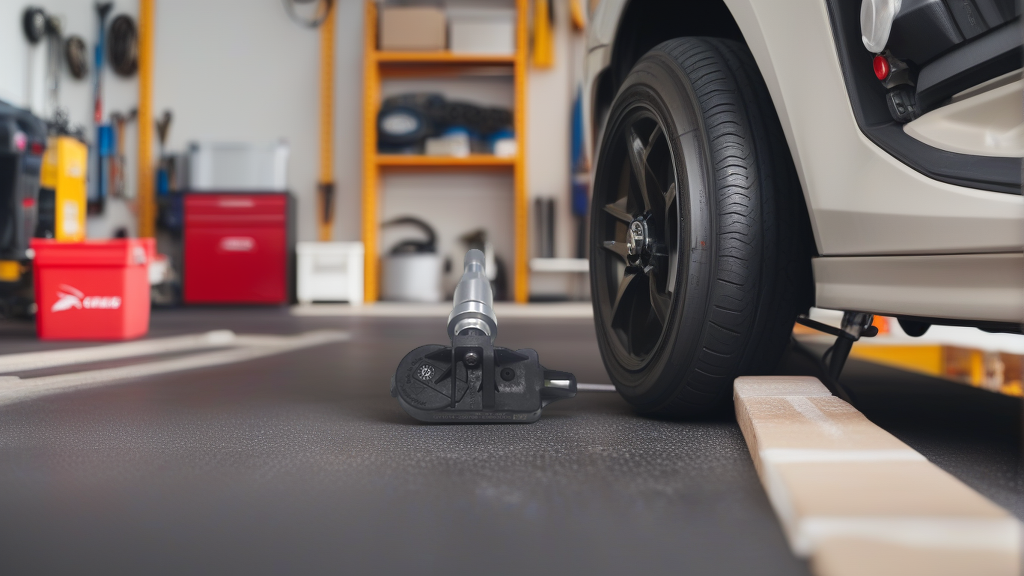
Understanding the BL-ST-087 Sensor and GWM Compatibility
The BL-ST-087 (BH-Sens brand, Baolong Technology) is a pre-programmed 433MHz TPMS sensor that fits 9 specific vehicle applications under Buick and Chevrolet, with OE number 26670584. While this sensor was not originally designed for GWM (Great Wall Motors) vehicles, many aftermarket buyers ask whether it can work on GWM models like the Haval, Ora, or GWM Ute.
The short answer: it may work, but only if your GWM vehicle uses a 433MHz TPMS system and the sensor physically matches your valve stem and mounting design. GWM vehicles are known to use both 315MHz and 433MHz systems depending on the model year and market region. Let’s break down exactly what you need to check.
Step 1: Identify Your GWM Vehicle’s TPMS Frequency
GWM does not use one universal frequency across its lineup. Here’s a general guideline:
| GWM Model Series | Typical TPMS Frequency | Notes |
|---|---|---|
| Haval H6 (2017+) | 433MHz (most markets) | Also 315MHz in some North American exports |
| Haval Jolion (2021+) | 433MHz | Consistent across Asia-Pacific |
| GWM Ute / Cannon (2020+) | 433MHz | Check under-hood label |
| Ora Good Cat (2021+) | 433MHz | Electric models |
| Haval H9 (2015-2020) | 315MHz (early), 433MHz (later) | Verify by VIN |
| GWM Steed (older models) | 315MHz | Rarely compatible with 433MHz sensors |
How to confirm your frequency:
- Look at the original TPMS sensor currently installed. The frequency is usually printed on the sensor body (e.g., “433MHz” or “315MHz”).
- Check your owner’s manual under the TPMS section.
- Use a TPMS scan tool (like Autel or Bartec) to read the sensor ID and frequency from your vehicle’s module.
If your GWM uses 315MHz, the BL-ST-087 (433MHz) will not communicate with the car’s receiver. Do not buy it.
Step 2: Verify the Sensor Type – Clamp-in vs. Snap-in
The BL-ST-087 is a clamp-in sensor, meaning it uses a metal nut to secure the sensor to the valve stem hole in the rim. Most GWM vehicles from 2015 onwards use clamp-in sensors, but some older models (pre-2015) or certain budget trims may use snap-in rubber valve stems.
Check your current sensor:
- Clamp-in: A metal hexagonal nut visible around the valve stem base. The sensor body is usually black plastic with a metal core.
- Snap-in: A rubber valve stem that presses into the rim hole. No metal nut.
If your GWM has snap-in sensors, the BL-ST-087 will not physically fit. You would need an adapter kit (not recommended) or a different sensor.
Step 3: Cross-Reference the OE Number 26670584
The OE number 26670584 corresponds to GM vehicles (Buick, Chevrolet). GWM does not use GM parts, so this number will not appear in GWM catalogues. However, some aftermarket sensors are interchangeable if they share the same protocol and programming.
What this means:
- The BL-ST-087 is pre-programmed with the protocol used by GM’s 433MHz TPMS system.
- If your GWM uses a compatible universal protocol (like Schrader or Siemens VDO 433MHz), the sensor may still work after learning.
- But if your GWM uses a proprietary protocol (e.g., Huf or Continental specific to GWM), the BL-ST-087 will not pair.
How to test without buying:
Take your existing GWM sensor to a tire shop and ask them to read the sensor ID and protocol type with a TPMS tool. Then compare that to the BL-ST-087’s specifications. If the protocol matches, proceed.
Step 4: Physical Dimensions and Valve Stem Position
Even if the frequency and protocol match, the sensor must physically fit inside your wheel. The BL-ST-087 has a standard design, but GWM wheels (especially on Haval H6 or GWM Ute) may have limited clearance.
Check these dimensions:
- Sensor body diameter: ~20mm (standard)
- Valve stem length: ~30mm from rim surface
- Angle of valve stem: The BL-ST-087 has a straight valve stem. Some GWM models use a bent/angled stem for clearance.
If you have aftermarket wheels, the sensor body may hit the inside of the wheel barrel. Measure the gap between the original sensor and the wheel barrel, then compare to the BL-ST-087 dimensions (available from the seller).
Step 5: Programming and Relearning
The BL-ST-087 is pre-programmed, meaning it comes with a fixed ID and protocol. It cannot be reprogrammed to a different vehicle. For a GWM, you have two options:
- Auto-learn: Some GWM models can learn new sensor IDs automatically after driving at 15-20 mph for 10 minutes. This works if the sensor protocol matches.
- Manual learn with a TPMS tool: A shop can force the car to accept the new sensor ID using a tool like Autel MX-Sensor or Bartec TPMS.
Note: If the BL-ST-087’s ID is not accepted after three attempts, the sensor is incompatible. Do not force it.
Recommended Part for GWM Owners
If you drive a GWM vehicle and need a reliable TPMS sensor, the BH-Sens BL-ST-087 (SKU: BL-ST-087) is a solid choice—but only if your vehicle meets the conditions above (433MHz frequency, clamp-in type, compatible protocol). Many GWM owners in Asia-Pacific markets report successful fitment on Haval H6 and GWM Ute when using this sensor.
BL-ST-087 | BH-Sens 433MHz TPMS Tire Pressure Sensor | Fits Buick, Chevrolet | OE# 26670584
Before buying, contact the seller with your VIN number and ask them to confirm compatibility. Some suppliers can check against a database of GWM applications.
Table: Quick Compatibility Checklist for BL-ST-087 on GWM
| Check Point | What to Look For | Pass/Fail |
|---|---|---|
| Frequency | 433MHz (printed on old sensor) | Must be 433MHz |
| Sensor type | Clamp-in with metal nut | Must be clamp-in |
| Protocol | Read by TPMS tool (Schrader, Siemens VDO, etc.) | Must match GM protocol |
| Physical fit | No interference with wheel barrel or brake caliper | Measure clearance |
| Programming | Auto-learn or tool-based learn | Must be possible on your model |
If any of these fail, look for a GWM-specific TPMS sensor instead (e.g., Huf 315MHz or 433MHz with GWM protocol).
FAQ
Can I install a BL-ST-087 sensor on a GWM Haval H6 myself?
Yes, if the frequency and protocol match, you can install it yourself using a standard tire machine. However, you will still need a TPMS relearn tool or a drive cycle to pair the sensor with the car. Without proper pairing, the TPMS warning light will stay on.
What happens if the frequency is wrong (315MHz vs 433MHz)?
The sensor will physically install, but the car’s TPMS receiver will never detect it. The warning light will remain illuminated, and you will have no pressure readings. This is the most common mistake—always verify frequency first.
Are there any GWM models that definitely use 433MHz?
Yes. Most 2020+ Haval H6, GWM Ute, Ora Good Cat, and Haval Jolion models use 433MHz sensors in global markets. Older GWM models (2015-2019) and some Chinese-market variants may use 315MHz. Always check the original sensor or your manual.
Can a tire shop program the BL-ST-087 to my GWM?
No, because the BL-ST-087 is pre-programmed and cannot be reflashed. However, a shop can use a TPMS tool to teach your car to accept the sensor’s existing ID, provided the protocol is compatible. If the tool fails, the sensor is not compatible.