
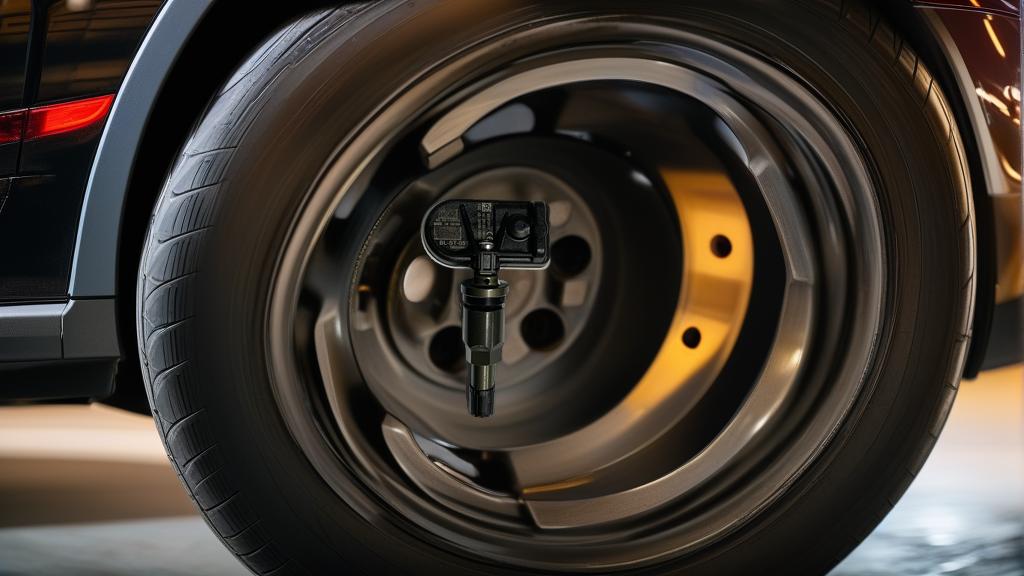
Understanding Onvo TPMS Requirements
Onvo, a sub-brand of Nio, uses the same TPMS system architecture as certain Nio models. The critical factor is the 433MHz frequency—this is non-negotiable. Your Onvo will not accept 315MHz sensors. The factory-fit sensors are typically clamp-in type, pre-programmed, and utilize Baolong Technology internals, often branded as BH-Sens.
What to Check Before Ordering
1. Frequency and OE Number Match
Every Onvo TPMS sensor carries an OE number stamped on the housing. The common numbers for Onvo include:
- P0242518
- P0302230
- P0385734
If your sensor shows any of these, the replacement must match. A mismatch will cause the TPMS light to stay on or the sensor to not register.
2. Sensor Type: Clamp-in vs. Snap-in
Onvo vehicles use clamp-in sensors exclusively. These have a metal valve stem secured by a nut. Snap-in rubber stem sensors are not compatible. Check your current sensor—if it has a metal stem and a hex nut, it’s clamp-in.
3. Programming Status
Pre-programmed sensors (like the BL-ST-051) arrive ready to install. They already contain the correct protocol and ID format for Onvo. You do not need a TPMS tool to program them—just install and drive. For B2B buyers, this eliminates the need for on-site programming equipment.
Fitment Table for Onvo TPMS
| Vehicle Model | Approximate Year | OE Number | Sensor SKU |
|---|---|---|---|
| Onvo L60 | 2024–Present | P0242518, P0302230 | BL-ST-051 |
| Onvo (other models) | 2024+ | P0385734 | BL-ST-051 |
Note: Always confirm your specific year and trim. Onvo model availability may vary by market.
B2B Bulk Buying Notes
When purchasing TPMS sensors for Onvo fleets or service shops, keep these points in mind:
- Batch consistency: Ensure all sensors in a bulk order share the same firmware version. BH-Sens sensors from the same production batch are identical, but mixing batches can cause rare ID conflicts.
- Packaging: Pre-programmed sensors must be stored in anti-static bags. Bulk orders without individual packaging risk damage or signal interference.
- Warranty check: BH-Sens sensors typically carry a 2-year warranty from the manufacturer. Confirm this with your supplier, especially for B2B quantities over 50 units.
- Bridging Nio/Onvo: Since Onvo shares TPMS components with Nio models (e.g., Nio ES6, ET5), stocking the BL-ST-051 covers both brands—reducing inventory complexity.
Recommended Part
For direct replacement, the BL-ST-051 | BH-Sens 433MHz TPMS Tire Pressure Sensor | Fits Nio, Onvo | OE# P0242518, P0302230, P0385734 (BH-Sens 433MHz TPMS, SKU: BL-ST-051) fits Onvo vehicles with OE numbers P0242518, P0302230, or P0385734. It’s pre-programmed and clamp-in, matching factory specs exactly.
FAQ
Can I use a Nio TPMS sensor on my Onvo?
Yes, many Nio sensors are physically identical to Onvo units. The BL-ST-051 is designed for both. However, verify the OE number on your current sensor—if it matches P0242518, P0302230, or P0385734, it’s the same part.
Do I need to reprogram the sensor after installation?
No. The BL-ST-051 is pre-programmed. After installation, drive the vehicle above 25 km/h (15 mph) for about 10 minutes. The TPMS system will auto-learn the new sensor IDs.
What if my Onvo has 315MHz sensors?
All Onvo models use 433MHz. If you find a 315MHz sensor on your vehicle, it was likely replaced with an incorrect aftermarket unit. Replace it immediately with a 433MHz sensor like the BL-ST-051.
How many sensors do I need for a bulk order?
One sensor per wheel position. Onvo vehicles have four wheels plus a spare—if the spare is monitored, order five. B2B orders often require 20–100 units for fleet servicing; confirm with your supplier that all sensors are from the same production lot.