
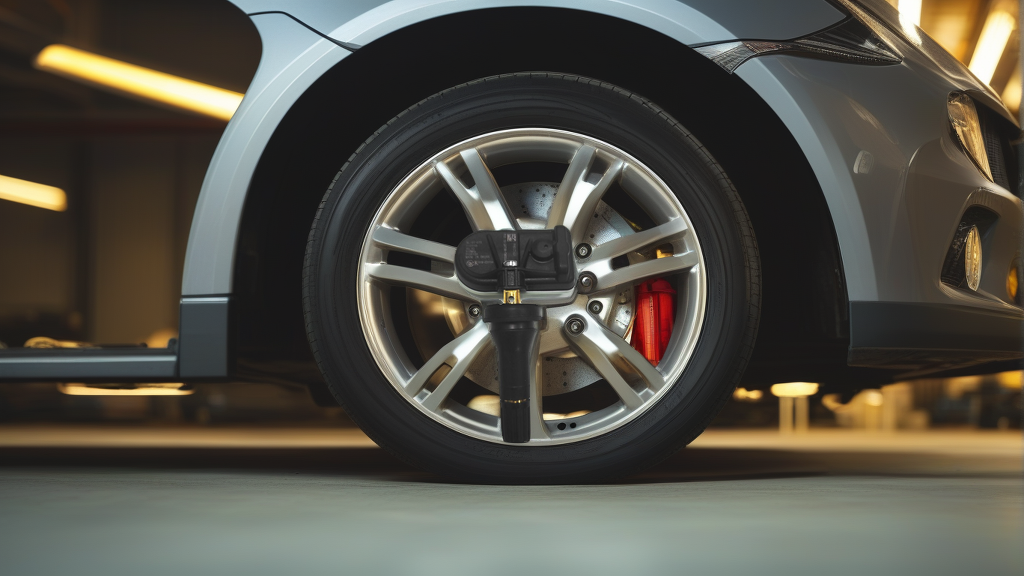
Why Your ENCLAVE TPMS Light Comes On – Common Causes
The TPMS (Tire Pressure Monitoring System) warning light on an ENCLAVE is designed to alert you when tire pressure drops below 25% of the recommended level, but it can also illuminate for other reasons. Understanding those triggers helps you decide whether to add air, replace a sensor, or check for external interference.
1. Low Tire Pressure (Most Common)
Before assuming a sensor failure, always check the actual tire pressure with a gauge. A slow leak, temperature drop, or punctured tire will trigger the light. If pressure is low in just one tire, your sensor is working – the system is doing its job. Top off the tire and reset the system (refer to your owner’s manual for the reset procedure – typically holding the TPMS reset button or driving above 25 mph for 10 minutes).
2. Dead or Dying Sensor Battery
Each TPMS sensor contains a non-replaceable lithium battery rated for 5–10 years of normal use. Over time the battery drains, causing the sensor to stop transmitting. On the ENCLAVE, a dead battery usually triggers a solid or flashing TPMS light (depending on model year). Symptoms include:
- The light stays on even after correcting tire pressures.
- The light flashes for 60–90 seconds upon startup, then stays solid – this is a common GM diagnostic pattern indicating a sensor fault.
- The tire pressure display shows dashes or very low/erratic readings for one specific wheel.
Sensor batteries are sealed. Once dead, the entire sensor must be replaced. You cannot swap the battery.
3. Signal Interference
TPMS sensors operate on radio frequencies (typically 315 MHz on North American vehicles, 433 MHz in some markets). External RF interference can cause the receiver module to lose signal from one or more sensors. On the ENCLAVE, interference is less common than dead batteries but can be frustrating to diagnose.
Common interference sources:
- Aftermarket LED headlights or DRLs with poorly shielded power supplies.
- USB chargers, phone mounts, or dashcams placed near the TPMS receiver module (usually behind the glovebox or under the center console).
- RFID readers, toll transponders, or aftermarket remote starters.
- Metal tire valve stem caps (rare, but possible if they disrupt the antenna inside the sensor).
- High-power CB radios or amateur radio transmitters installed in the cabin.
Interference symptoms: TPMS light illuminates intermittently, often while driving on the highway, then goes off after a few miles. The affected tire may show a normal pressure reading one minute and “–” the next. Resetting the system often temporarily clears it, but the problem returns.
4. Sensor Damage or Corrosion
Valve stem corrosion, impact damage (curb, pothole), or improper tire mounting can physically break a sensor. This triggers a permanent fault. On the ENCLAVE, a damaged sensor will typically not respond to a TPMS relearn tool. Visually inspect the valve stem area for cracks or rust.
Dead TPMS Sensor Battery – Symptoms and Diagnosis
Symptoms Table
| Symptom | Likely Cause | Immediate Action |
|---|---|---|
| Light flashes on startup, then stays solid | Sensor fault or dead battery | Use a TPMS scan tool to read each sensor ID and battery status. |
| Tire pressure shows dashes on one tire | No signal from that sensor | Replace or relearn? Check battery age first. |
| All tires show good pressure but light is on | One sensor battery is marginal but still transmitting low voltage | Replace all sensors if they are >5 years old. |
| Light comes on only during cold weather | Battery voltage drops in cold; weak battery fails below threshold | Sensors typically need replacement. |
How to Confirm a Dead Battery
You will need a TPMS diagnostic tool (such as an Autel TS508 or similar). Most aftermarket scan tools can read the sensor’s battery voltage (in mV) and remaining life percentage. On the ENCLAVE:
- Put the tool into “Activate” mode.
- Hold it next to each tire’s valve stem (usually within 2 inches).
- The tool will display sensor ID, pressure, temperature, and battery status.
- If the battery level is below 1.8V (or the tool reports “low battery”), the sensor must be replaced.
Important: Do not replace just one sensor if the others are near the same age. TPMS sensors on the same vehicle age together. If one battery is dead, the others are likely within months of failing. Replacing all four at once saves labor costs and prevents a second visit.
Signal Interference – Diagnosis and Solutions
If you have confirmed all four sensors have good batteries and correct tire pressures, yet the TPMS light still comes on intermittently, suspect interference.
Step 1: Identify the Pattern
- Does the light trigger at the same location every time (e.g., near a certain cell tower or warehouse)? That points to external RF noise.
- Does it happen only when a specific accessory is turned on (e.g., headlights, heated seats, USB charger)? That points to vehicle-mounted interference.
Step 2: Eliminate Aftermarket Electronics
Temporarily remove or disconnect:
- Dashcams (especially those with GPS or WiFi).
- Tire pressure monitoring aftermarket add-ons (like TPMS for trailers).
- Any device plugged into the OBD-II port.
- USB chargers in the center console or 12V socket – these can emit broadband noise that drowns out the 315 MHz signal.
- Aftermarket LED bulbs – test by swapping back to stock halogen bulbs.
Step 3: Check Metal Valve Caps
Standard plastic valve caps are safe. However, some metal caps (especially chrome or aluminum) can detune the internal antenna of the TPMS sensor. Replace with OEM-style plastic caps.
Step 4: Relearn the Sensors
Sometimes interference is temporary. Perform a complete TPMS relearn using a tool (or the GM procedure with a magnet if your ENCLAVE supports it). A relearn forces the receiver to lock onto the sensor IDs and may reject stray signals.
Step 5: If All Fails – Replace Receiver Module
Rarely, the TPMS receiver module itself (located near the rear of the vehicle or under the dash) can become sensitive to interference after age or water damage. This is a dealership-level diagnosis. Before that, ensure the sensors are genuine or high-quality aftermarket units that comply with FCC standards.
Recommended Part
If your ENCLAVE uses 314.9 or 315 MHz TPMS sensors (which covers most 2008–2022 models), the BL-ST-072 | BH-Sens 314.9, 315MHz TPMS Tire Pressure Sensor | Fits Brilliance, Buick, Cadillac, Chevrolet, Gmc & 3 More | OE# 12768826, 13516164, 13540604 by BH-Sens (Baolong Technology) is a direct OE replacement. It matches the original GM part numbers listed (12768826, 13516164, 13540604, and many others). Every sensor is pre-programmed, programmable, or clone-ready – verify with your vehicle’s year before purchase. Replace all four at once to avoid staggered battery failures.
FAQ
Can I replace just one TPMS sensor on my Enclave?
Technically yes, if the other sensors are less than 3–4 years old and have healthy battery readings. However, if the vehicle is over 5 years old, the remaining sensors will likely fail soon. Replacing all four is more economical in the long run because you avoid repeated dismounting and tire balancing costs.
How do I know if my Enclave TPMS sensor is 315 MHz or 433 MHz?
Most North American ENCLAVEs use 315 MHz. To confirm, check the original sensor part number – if it ends in one of the OE numbers listed for the BL-ST-072 (like 13540604), it is 315 MHz. For post-2015 vehicles built for export, it could be 433 MHz. A TPMS scan tool will also display the frequency when activating the sensor.
Will a TPMS light reset by itself after I add air?
On some ENCLAVE models, the light turns off automatically after driving a few miles at speeds above 25 mph if the pressure is corrected. If it stays on after you have verified correct pressures, a manual reset or scan-tool relearn is required. Refer to your owner’s manual for the specific reset procedure.
Can a bad wheel bearing cause the TPMS light to come on?
No. The TPMS sensor is a standalone module inside the tire. A failing wheel bearing generates mechanical noise and vibration, but it cannot interfere with the radio signal from the sensor. However, a loose or damaged sensor due to wheel bearing play might break the sensor – that’s a separate mechanical issue.