
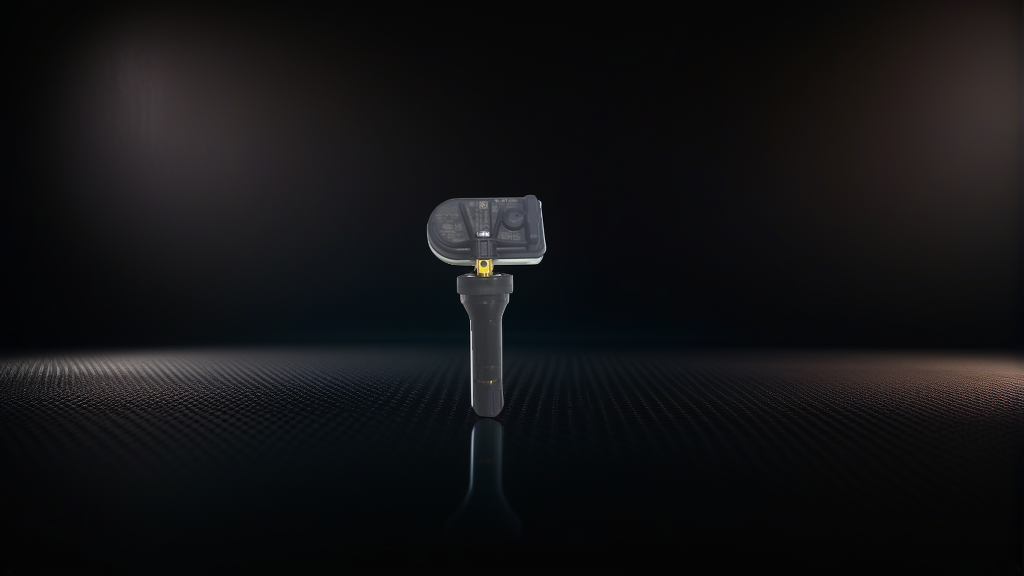
How the MACAN TPMS Actually Works
The MACAN uses a direct TPMS: a battery-powered sensor is clamped to each valve stem and transmits pressure and temperature data at 433 MHz to a receiver module. The light comes on when the module stops receiving usable data from one or more corners — or when a pressure reading crosses the threshold.
That distinction matters. The light is a communication fault as often as it is a pressure fault, and the two have completely different fixes.
Step One: Rule Out the Obvious
- Check all four tires with a quality gauge, cold. Inflate to the placard in the driver’s door jamb — not the number molded on the tire sidewall.
- Drive 5–10 minutes above roughly 15 mph. Sensors sleep when parked and wake on rotation, so a stationary car can show dashes for no real reason.
- If the light clears and stays clear, you had a pressure or temperature issue (cold snaps routinely drop pressure enough to trigger it).
If the light returns within a day or two, move to actual diagnosis.
Common Causes, Ranked by Frequency
| Cause | What You See | What It Means |
|---|---|---|
| Low pressure / cold weather | All corners reading, one or more low | Inflate, monitor for a slow leak |
| Dead sensor battery | One corner dashes out, later more follow | Replace the sensor |
| Sensor not relearned after tire work | Light after rotation or new tires | Re-register sensor IDs |
| Wrong frequency or protocol sensor installed | Sensor never registers at all | Use a correct 433 MHz unit |
| Signal interference | Intermittent, position-specific dropouts | Remove or relocate the source |
| Physical damage (pothole, careless tire change) | Broken stem, cracked housing, visible damage | Replace sensor and service kit |
| Receiver/module or antenna fault | All four corners dead, no sensor responds anywhere | Diagnose module and wiring |
Dead Sensor Battery Symptoms
TPMS batteries are sealed into the sensor and cannot be replaced separately. Expect 5–10 years of service depending on drive time and climate — heat shortens it, and short-trip driving shortens it further.
The failure progression is usually predictable:
- Early: the corner drops out intermittently in cold weather, then returns after 10 minutes of driving.
- Mid-stage: a scan tool reports a low-battery status flag even though the sensor still reads pressure.
- Late: that wheel shows a dash or “–” consistently; other original sensors typically follow within months since they were installed the same day.
- Final: permanent light, no live data from that corner, sensor will not respond to a wake tool.
One quirk worth knowing: because sensors sleep when stationary, a dead sensor and a sleeping sensor can look identical in your driveway. Always confirm while driving or with a TPMS tool at the valve stem.
Signal Interference vs. a Dead Sensor
Interference has a signature: it comes and goes, it favors one corner or one driving direction, and it correlates with something electrical you added. Usual suspects are dash cams and their power adapters, cheap USB chargers, FM transmitters, LED auxiliary lighting, metalized window tint, and external TPMS displays running on a nearby frequency.
A practical test: park in an open area away from buildings and other vehicles, switch off or unplug aftermarket electronics one at a time, then drive and watch the affected corner. If the same corner stays dead in every location with everything unplugged, it is the sensor — not interference.
Diagnosis Workflow (~20 Minutes)
- Verify pressures manually first.
- Note which corners are missing from the dash readout.
- Trigger each sensor at the valve stem with a 433 MHz TPMS tool — this reads the sensor ID, live pressure, temperature and battery status.
- Compare those IDs to the IDs stored in the module. A mismatch after tire service means a relearn, not a part.
- Drive to confirm live updates.
- If a sensor will not respond to a tool at two different positions, replace it. For a confirmed dead unit, the BL-ST-088 | BH-Sens 433MHz TPMS Tire Pressure Sensor | Fits Audi, Lamborghini, Polestar, Porsche, VW & 1 More | OE# 32134419, 3WA907255, 95C907255 is a direct 433 MHz clamp-in, pre-programmed replacement.
| Spec | Detail |
|---|---|
| Brand | BH-Sens (Baolong Technology) |
| Frequency | 433 MHz |
| Type | Clamp-in, pre-programmed |
| OE references | 32134419, 3WA907255, 95C907255 |
| Fits | Audi, Lamborghini, Polestar, Porsche, VW and more |
| SKU | BL-ST-088 |
Pre-programmed sensors still need their ID registered with a scan tool or an auto-relearn drive. Confirm fitment by VIN or by reading the number off the old sensor — the same model generation can run different sensor part numbers depending on model year and wheel option.
Recommended Part
If diagnosis points to a failed sensor: BL-ST-088 | BH-Sens 433MHz TPMS Tire Pressure Sensor | Fits Audi, Lamborghini, Polestar, Porsche, VW & 1 More | OE# 32134419, 3WA907255, 95C907255 — BH-Sens 433 MHz clamp-in TPMS sensor, pre-programmed, covering OE references 32134419, 3WA907255 and 95C907255. Order by VIN confirmation, and replace the service kit (valve core, nut, seal) at the same time.
FAQ
How long do MACAN TPMS sensor batteries last?
Typically 5–10 years. If one original sensor has died, the remaining three are on the same clock and usually fail within a year, so many owners replace all four at once rather than paying for repeated dismounts.
Can I drive with the TPMS light on?
Yes, if you have verified the pressures with a gauge and they are correct. The light itself is not a safety failure — an actually underinflated tire is. Check pressure within a day either way, since a slow leak is the most common cause of a light that keeps returning.
Will a TPMS warning fail an inspection?
In many jurisdictions with TPMS inspection requirements, yes — a steady warning light or stored TPMS fault can fail the test. Check your local rules before your test date.
Do I need a scan tool to install a new sensor?
Most pre-programmed 433 MHz sensors can be registered by entering the new ID with a TPMS scan tool, or in some cases by a relearn drive cycle. Confirm the procedure for your model year in the vehicle manual or with your installer.