
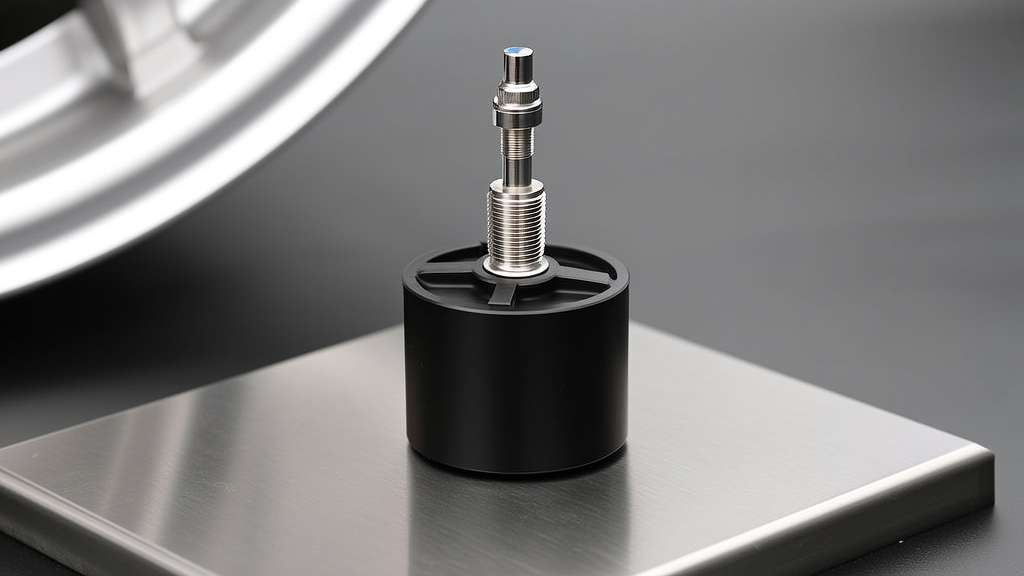
How the HAN DM-P TPMS Works
The HAN DM-P runs a direct TPMS system: four battery-powered sensors strapped to the valve stems, each broadcasting its own ID plus pressure and temperature on 433MHz. A receiver picks up those packets and the body control module decides whether to light the warning.
Two things matter for diagnosis. First, the sensors only transmit on a timer or when triggered by motion or a low-frequency initiator — so a sensor can be alive but silent at the moment you test. Second, the system is ID-based. If the module doesn’t recognize a sensor’s ID, it treats that corner as missing, even if the sensor is transmitting perfectly.
Read the Light Behavior Before You Touch Anything
The light tells you more than the scan tool in the first ten seconds.
| Light behavior | Most likely cause | First check |
|---|---|---|
| Steady ON after startup, pressures look fine | Slow leak, temperature drop, or dead sensor | Cold pressures against the door-jamb placard |
| Flashes ~1 minute, then stays ON | Sensor not transmitting, relearn fault, or missing ID | Scan each wheel for an ID response |
| Only in cold weather, clears when warm | Weak sensor battery | Sensor battery status via TPMS tool |
| Appears after rotation, wheel swap, or tire change | Sensors not relearned or registered in wrong positions | Run the auto-relearn drive cycle |
| Intermittent, comes and goes with location | RF interference, not a failed sensor | Retest in a different location |
Common Causes of the TPMS Warning Light
1. Actual low pressure or a leak
Start here because it’s free. A 10°F drop in ambient temperature can pull a tire down several PSI, which is enough to trip the light on a cool morning. Check all four cold, plus the spare if the vehicle monitors it. If one corner keeps losing pressure, you have a slow leak — a nail, a bead seal, or a corroded valve — not a sensor problem.
2. A dead or dying sensor battery
Sensor batteries are sealed and not serviceable; the whole sensor gets replaced. Typical service life is in the five-to-ten-year range depending on transmit cycles and climate. A HAN DM-P that’s had tires swapped repeatedly, or one that sat unused for long stretches, can lose sensors earlier than expected.
3. Signal interference
433MHz is a shared band. Dash cams, cheap USB chargers, wireless backup cameras, LED retrofit modules, gate remotes, and dense RF environments like parking structures or workshops can drown out a weak sensor packet. Interference produces the classic intermittent fault that disappears when the car moves.
4. Physical damage
Sensors get broken during tire mounting more often than owners realize — a snapped stem, a cracked housing, or a sensor knocked loose inside the wheel. If the light came on immediately after a tire service, suspect the sensor you just paid someone to work around.
5. Relearn and ID registration faults
After a rotation or replacement, the module may still be looking for IDs that are no longer on the vehicle, or it may have learned a sensor in the wrong corner. Pressure readings that show up on the wrong wheel are the giveaway.
Dead Sensor Battery Symptoms
Watch for this progression — it’s consistent across brands:
- Cold-weather failures first. A weak battery still transmits in summer but can’t handle the voltage sag at freezing temperatures. If the light is a winter-only problem, you’re on borrowed time.
- Intermittent dropouts. The corner disappears for a few drive cycles, then comes back. Many owners assume a glitch and ignore it.
- Slow wake-up. The light stays on longer after startup before pressures populate.
- No ID response at the wheel. A TPMS tool placed at the tire gets nothing back, or gets a response only when held very close.
- Permanent loss. Eventually the sensor goes silent and the light stays on.
One caveat: a sensor with a good battery but a bad internal seal can also go silent, and a sensor that’s been exposed to tire sealant often reads erratically before failing.
Diagnosing Signal Interference Properly
Work through this in order:
- Scan at each wheel individually with the vehicle stationary. If all four respond normally in a quiet location but one drops out near your usual parking spot, you have an interference issue, not a hardware failure.
- Move the vehicle at least a few hundred feet, ideally away from buildings, chargers, and other vehicles, and rescan.
- Unplug aftermarket electronics — dash cam, OBD dongles, inverters — and retest. This is the single most common fix.
- Swap sensor positions if you have a spare. If the fault follows the sensor, replace it. If it stays with the corner, look at the receiver, wiring, or a shielding issue.
- Drive the relearn cycle as specified for your vehicle, typically a short drive above a set speed. Auto-relearn sensors handle this without a programming tool.
Replacement: What Actually Fits
If a sensor is confirmed dead, matching frequency and protocol matters more than the badge on the box.
| Spec | Value |
|---|---|
| Frequency | 433 MHz |
| Protocol | 0x022A |
| Relearn | Auto relearn — no programming tool |
| Fitment | BYD 2025+ (34 models) — verify against your VIN |
| OE references | EUEA3609200B, 110964, BLST096 |
| SKU | BL-ST-096 |
For a HAN DM-P with a confirmed dead sensor, BL-ST-096 | BH-Sens 433MHz TPMS Tire Pressure Sensor | Fits BYD (2025+) | OE# EUEA3609200B, 110964, BLST096 is an OEM-equivalent 433MHz option that self-registers on the drive cycle, so you avoid a shop visit just for programming. Replace sensors in sets when they’re the same age — the second one usually follows within a season.
Recommended Part
BL-ST-096 | BH-Sens 433MHz TPMS Tire Pressure Sensor — fits BYD 2025+ including the HAN DM-P, auto relearn, OE# EUEA3609200B / 110964 / BLST096. BL-ST-096 | BH-Sens 433MHz TPMS Tire Pressure Sensor | Fits BYD (2025+) | OE# EUEA3609200B, 110964, BLST096
FAQ
Why does my HAN DM-P TPMS light flash and then stay on?
A flash followed by a solid light means the module lost communication with one or more sensors — it’s not a pressure warning. Scan each wheel for an ID response. If a wheel doesn’t answer, the sensor is dead, damaged, or not registered.
Can I replace just one TPMS sensor on a HAN DM-P?
Yes. Each sensor carries its own ID and the system relearns individually. That said, if the remaining sensors are the same age and one has already failed, replacing all four at once usually saves you a second dismount and balance within the year.
How do I know if it’s a dead battery or signal interference?
Interference is location-dependent and intermittent; a dead battery is permanent and typically starts in cold weather. Scan the wheels in a quiet area away from chargers and dash cams. A sensor that responds there but not at home is being drowned out, not dying.
Do I need a programming tool after installing a new sensor?
Not with an auto-relearn sensor. Once the correct frequency and protocol are matched, the module picks up the new ID during a normal drive cycle. Confirm the relearn procedure in your owner’s manual, since drive speed and duration vary.