
Check Pressure Before You Blame the Sensor
Set all four tires (and the spare, if it’s monitored) to the placard pressure on the door jamb while the tires are cold. A 4–5 PSI drop from a slow bead leak or a leaking valve core is the single most common trigger. Drive 10–15 minutes above roughly 25 mph so the sensors wake up, and follow the relearn procedure in your owner’s manual before assuming a part has failed.
What Each Warning Pattern Tells You
| Symptom | Most Likely Cause | Quick Test |
|---|---|---|
| Light on solid, no flashing | Low pressure, slow leak, temperature drop | Cold pressure check, soapy water on bead and valve |
| Flashes ~60–90 s at start, then solid | One sensor not transmitting / not registered | Scan tool: look for a missing sensor ID |
| Light returns days after reset | Dying sensor battery or corroded valve stem | Check sensor age, inspect stem for cracks |
| One wheel always reads wrong or erratic | Damaged sensor, water ingress, poor seat | Swap that sensor to another wheel and recheck |
Dead Sensor Battery Symptoms
TPMS sensors are sealed units with a non-replaceable cell, and most last somewhere in the 5–10 year range depending on how much the car is driven. Before failure you’ll typically see the light come and go for weeks, readings that freeze at the last value, or the sensor vanishing from the scan tool’s live data list. Cold weather accelerates the drop — a sensor that reports fine in summer and disappears in the first cold snap is on its way out. There’s no repair: the sensor gets replaced.
Diagnosing 433MHz Signal Interference
These systems run at 433MHz, and interference is rarer than a bad sensor but real. Look for:
- Aftermarket electronics — dash cams, LED drivers, phone chargers, or a USB adapter with a cheap switching regulator mounted near the wheels or under the dash.
- A second 433MHz device in the car, such as a wireless TPMS display or a garage remote left in the cabin.
- Physical issues — a sensor fitted with the wrong stem angle, a bent valve, or heavy corrosion in the wheel well blocking transmission.
Test by moving the car away from the suspected source and rechecking live data; if the same wheel still drops out with the electronics unplugged, the sensor is the problem. Swapping the suspect sensor to a different wheel confirms it — a fault that follows the sensor is the sensor.
Recommended Part
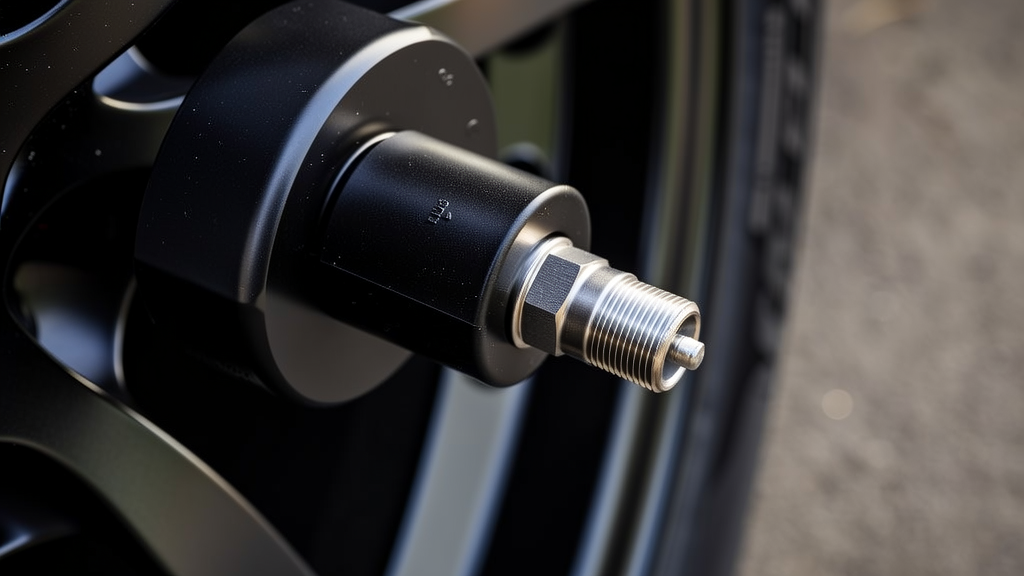
If diagnostics point to a failed sensor, the BL-ST-059 | BH-Sens 433MHz TPMS Tire Pressure Sensor | Fits BAIC, Baic Ev, Buick, Cadillac, Chevrolet & 15 More | OE# 13516165, 13522631, 13540603 covers this platform: BH-Sens (Baolong Technology) construction, 433MHz, and OE cross-references including 13516165, 13522631 and 13540603. Confirm fitment against your VIN before ordering — Senova models share hardware with several BAIC and GM applications.
FAQ
How long do Senova TPMS sensors usually last?
Typical service life is 5–10 years, driven mainly by mileage and climate. Once one sensor fails on a car past that age, expect the others to follow within a year or two.
Can I just ignore the TPMS light?
No. A flashing light means the system can’t warn you about a pressure loss at all, and a solid light may be hiding a slow leak that will eventually damage the tire or wheel.
Do I have to reprogram a new sensor?
Yes — new sensors must be activated and their IDs registered to the vehicle, either by the scan tool relearn procedure or by cloning the old sensor’s ID where supported. Check your manual or a workshop before fitting.
Could a bad wheel bearing or ABS fault trigger the TPMS light?
On vehicles that derive pressure indirectly, yes — ABS wheel speed faults can set a TPMS warning. Read the codes first so you don’t replace a sensor that’s working fine.