
Read the Display Before You Touch a Gauge
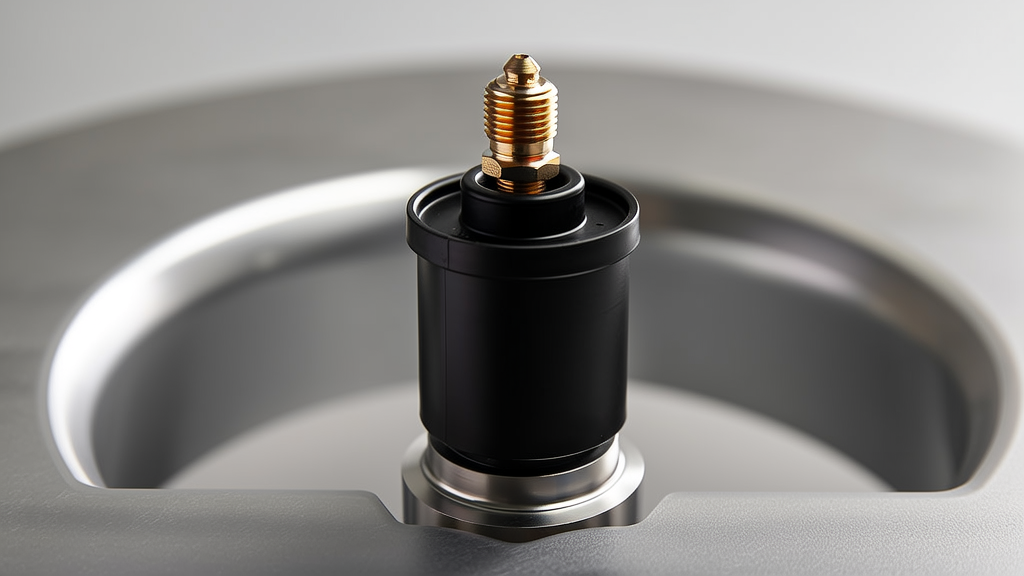
Porsche uses a direct TPMS system — a battery-powered sensor strapped or clamped to each valve stem transmits pressure and temperature to a receiver, which displays all four corners in the instrument cluster. That display is your best diagnostic tool.
- All four pressures normal, light still on: the system isn’t happy about configuration or communication, not pressure.
- One corner showing dashes or a stale value: that sensor is asleep, dead, or out of range.
- One corner low: start with the tire — nail, bead leak, leaking valve core, or a cracked clamp-in nut.
- All four low after a cold night: normal physics. Pressure drops roughly 1 psi per 10°F. If the light clears after a few miles of driving, there’s no fault.
The Common Causes, In the Order Worth Checking
1. Real pressure loss. Slow punctures, corroded valve cores, and leaking clamp-in seals account for a large share of “false” TPMS warnings. Soapy water on the valve and bead finds them in a minute.
2. Dead sensor battery. The battery is potted inside the sensor and is not serviceable. When it goes, you replace the whole unit.
3. Sensor not learned after a wheel swap. Fitting a second set of wheels without programming the new sensor IDs leaves the module listening for sensors that aren’t on the car anymore.
4. Wrong wheel-set setting in the cluster. Porsche requires you to select tire type, size, and load condition in the vehicle menu after a change. Get that wrong and the system can flag a warning even though every tire is correct.
5. Receiver or antenna fault. Less common, but a corroded connector or water ingress at the antenna will drop one or more corners.
6. RF interference. Covered in detail below.
| Symptom | Most likely cause | First check |
|---|---|---|
| One corner reads dashes, others fine | Sensor battery, sensor not learned, or that corner’s signal | Trigger the sensor with a TPMS tool; check stored IDs |
| Light returns days after every reset | Failing sensor battery or slow leak | Compare cold pressures over a week |
| Warning only on cold mornings | Battery voltage sag or end-of-life sensor | Check battery/charging voltage; note sensor age |
| All four drop out together | Receiver, antenna, or interference | Remove aftermarket electronics and retest |
| Light after wheel swap | New sensor IDs not learned | Relearn procedure or trigger tool |
Dead Sensor Battery Symptoms
A dying sensor rarely fails cleanly. Watch for these patterns:
- Cold-soak dropouts. The sensor reports fine on a warm afternoon and disappears on a 35°F morning. Cold reduces battery voltage, so a marginal cell fails first thing in the day.
- Intermittent dashes on one corner that come and go over weeks.
- The light returns after every reset — usually within days.
- Age. Original sensors on a 2012–2016 vehicle are at or past their typical service life. Five to ten years is the realistic window.
If the fault follows the sensor when you swap that wheel to another corner, the sensor is the problem. If it stays with the corner, look at the antenna, wiring, or receiver.
Signal Interference Diagnosis
Porsche TPMS runs at 433 MHz on most European and rest-of-world models; some North American applications use 315 MHz. Confirm the frequency on the sensor you’re replacing — a 433 MHz sensor will never talk to a 315 MHz receiver, and no amount of relearning will fix it.
Common interference sources on these cars:
- Plug-in dash cams, radar detectors, and cheap USB chargers left in the 12V socket
- Aftermarket LED or HID retrofit bulbs and their ballasts
- Third-party alarms, trackers, and phone signal boosters
- Foil-based tire sealants coating the sensor
- Metal valve caps that shield the antenna
Test method: strip the cabin of aftermarket electronics, drive 15–20 minutes above roughly 20 mph so the sensors wake and report, and see whether the warning clears. Then add devices back one at a time. If the fault persists with everything removed, pull codes and check which corner the module says it lost — that tells you whether to chase a sensor, a wheel-arch antenna, or a module.
Also verify system voltage. Low battery voltage makes modules drop communications in ways that look exactly like RF problems.
A Note on Cross-Brand Fitment
Frequency matching is not fitment. A 433 MHz clamp-in sensor still has to carry the right OE number and protocol for the vehicle. For example, BL-ST-087 | BH-Sens 433MHz TPMS Tire Pressure Sensor | Fits Buick, Chevrolet | OE# 26670584 — the BH-Sens (Baolong Technology) 433 MHz clamp-in, pre-programmed sensor with OE 26670584 — is a Buick and Chevrolet part, not a Porsche part. Shops running mixed fleets order both, and mixing them up is one of the most common causes of a “new sensor that won’t learn.”
| Spec | BL-ST-087 |
|---|---|
| Brand | BH-Sens (Baolong Technology) |
| Frequency | 433 MHz |
| OE number | 26670584 |
| Type | Clamp-in, pre-programmed |
| Compatible brands | Buick, Chevrolet (9 dedicated applications) |
Recommended Part
If your shop also services GM vehicles, keep BL-ST-087 | BH-Sens 433MHz TPMS Tire Pressure Sensor | Fits Buick, Chevrolet | OE# 26670584 in stock — a pre-programmed 433 MHz clamp-in sensor that covers nine Buick and Chevrolet applications with no bench programming. For the Porsche itself, match the OE number and frequency off the sensor you remove before ordering.
FAQ
Can I reset the Porsche TPMS light myself?
Yes, in most cases. Correct the pressures, confirm the wheel-set and load settings in the vehicle menu, then drive for 15–20 minutes above roughly 20 mph. The system relearns on its own. If the light returns within a few days, the fault is real — a leaking tire, a weak sensor battery, or a signal problem.
How long do Porsche TPMS sensors last?
Expect five to ten years depending on climate and mileage. Hot climates and frequent short trips shorten life. Because the battery is sealed inside, end of life means replacing the sensor, not the battery.
Why does the light come on only in cold weather?
Two reasons. Cold air lowers tire pressure roughly 1 psi per 10°F, which can trip the threshold. And cold reduces voltage in a marginal sensor battery, so a sensor that reports fine in summer drops out on a frosty morning. Check pressures cold first, then sensor age.
Can I drive with the TPMS light on?
If pressures are correct and the light is a communication fault, yes — you just lose warning coverage. If any tire is actually low, fix it before driving. A TPMS light is not a substitute for checking pressures with a gauge.