
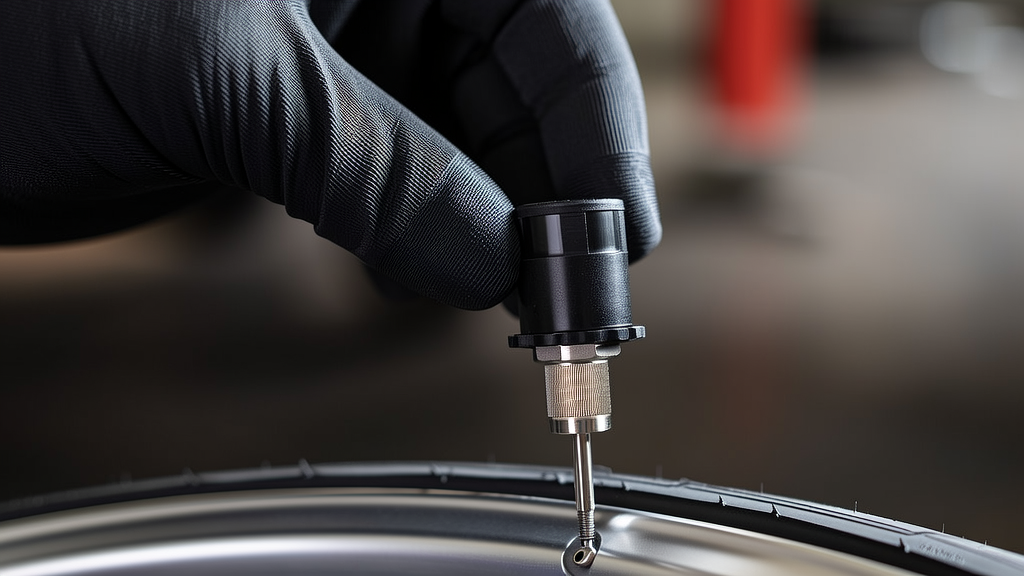
Why Fangchengbao Fitment Confuses Buyers
Fangchengbao is BYD’s off-road and performance sub-brand, and it launched with the Bao 5 before expanding into the Bao 8 and Tai 3. Because the brand is young and the volume is still small compared to BYD’s main lineup, aftermarket catalog data is patchy. Many listings simply say “fits BYD” and leave it there.
That is a mistake. Fangchengbao vehicles share TPMS architecture with BYD and Denza — same 433MHz protocol, same clamp-in valve stem design, same pre-programmed sensor approach — but that does not mean every 433MHz sensor sold for a BYD will work. What matters is the OE number family and the sensor type. The BL-ST-062 sits inside the correct family, which is why it covers Fangchengbao, Denza and a slice of the Toyota and Young ranges at the same time.
What the BL-ST-062 Actually Is
| Spec | Detail |
|---|---|
| Brand | BH-Sens (Baolong Technology) |
| Frequency | 433MHz |
| Type | Clamp-in valve stem, pre-programmed (no programming tool needed) |
| OE references | 4260703011, SA3HE3609200B, SFH3609200B, SGH3609200B, SGHA3609200B |
| Compatible brands | BYD, Denza, Fangchengbao, Toyota, Young |
| Relearn | Standard OBD/activation relearn — no manual ID entry on most models |
“Pre-programmed” is the key phrase here. The sensor already carries the correct vehicle protocol and a triggerable ID. You install it, activate it with a TPMS tool or a short drive cycle, and the vehicle picks it up. No bench programming, no cloning from the old sensor — though cloning is still an option if you prefer to keep the original IDs.
The clamp-in design also matters. Clamp-in sensors bolt through the valve hole with a nut and washer rather than pressing in like a rubber snap-in. They are the standard fitment on heavier wheels and off-road-oriented platforms, and they survive vibration and pressure cycling better. Fangchengbao wheels take clamp-in — a snap-in sensor will physically fit the hole on some rims but is not the correct part.
Fangchengbao and Cross-Brand Coverage
Use this as a starting map, not a guarantee. Year ranges and trim splits vary by market, so the OE number on your original sensor always wins.
| Brand | Typical models | Notes |
|---|---|---|
| Fangchengbao | Bao 5, Bao 8, Tai 3 | 433MHz clamp-in; confirm the OE stamp on the old sensor |
| BYD | Dynasty and Ocean series SUVs/sedans using the same sensor family | Many share the 4260703011 reference |
| Denza | D9, N7, N8 and related | Same protocol family as BYD |
| Toyota | Selected models using 433MHz clamp-in sensors | Verify by OE number, not by brand |
| Young | Selected models | Confirm via OE cross-reference |
The honest caveat: “Toyota” on a compatibility list is not a promise. Toyota uses multiple TPMS generations and both 315MHz and 433MHz depending on market and year. The BL-ST-062 fits Toyota applications that specifically call for one of the five OE references above.
How to Verify Fitment Before You Order
1. Read the number off the old sensor
This is the fastest, most reliable check. The OE number is molded or laser-etched on the sensor body or on the valve stem collar. Pull the wheel or look through the spokes with a light. If you see 4260703011, SA3HE3609200B, SFH3609200B, SGH3609200B or SGHA3609200B, the BL-ST-062 is the right part.
2. Cross-check by VIN with a parts catalog
Give the VIN to any dealer parts counter or a VIN-based catalog and ask for the TPMS sensor part number. Cross-reference the result against the list above. This catches mid-cycle changes that a “fits 2023–2025” listing will miss.
3. Confirm frequency and type
433MHz, clamp-in. If your vehicle uses 315MHz, this sensor will not communicate no matter what the listing says. If your wheel takes a snap-in rubber stem, you have a different part.
4. Count your sensors
Order four for a full set, five if you run a full-size spare with a monitored sensor. Mixing one new sensor with three tired ones is fine electrically, but battery age mismatch means you will be back under the car sooner than you want.
5. Check the relearn path
Most BYD-family vehicles relearn through the body control module via OBD or an activation tool. Confirm your shop or your own tool can trigger 433MHz sensors before installation — this is the step where DIY installs stall.
Installation Notes That Save Time
Replace the valve nut, washer and core with the sensor — reused hardware is the most common cause of slow leaks after a TPMS job. Torque the nut to the specification in your vehicle manual or the sensor manufacturer’s sheet; do not guess. Inflate to placard pressure, then run the relearn before you lower the car if you have a tool, or drive a few minutes above the activation threshold if you do not. If a sensor refuses to register, check that the tool is set to the correct vehicle make and 433MHz band — a wrong-band trigger is the usual culprit.
Recommended Part
For Fangchengbao, BYD, Denza and compatible Toyota/Young applications calling for the OE references above, the direct fit is BL-ST-062 | BH-Sens 433MHz TPMS Tire Pressure Sensor | Fits BYD, Denza, Fangchengbao, Toyota, Young | OE# 4260703011, SA3HE3609200B, SFH3609200B — 433MHz, clamp-in, pre-programmed, sold with the correct valve hardware.
FAQ
Does the BL-ST-062 fit every Fangchengbao model?
It covers Fangchengbao models that use the 4260703011 / SA3HE3609200B / SFH3609200B / SGH3609200B / SGHA3609200B sensor family, which includes the Bao 5, Bao 8 and Tai 3 in most configurations. Because trim and market variations exist, confirm against the OE number on your original sensor or a VIN lookup before ordering.
Can I replace just one sensor instead of all four?
Yes. The sensor is pre-programmed and registers individually, so a single replacement works. Just expect the remaining originals to fail on their own schedule — if they are already several years old, replacing the set saves you a second dismount-and-relearn bill.
Do I need a programming tool to make it work?
No programming, but you do need an activation or OBD relearn. The sensor ships with the correct protocol already loaded. A TPMS scan tool set to the right make and 433MHz band, or a drive cycle above the activation speed, will wake it and let the vehicle learn the ID.
What if my old sensor has a different OE number?
Then stop and re-check. A different number may indicate a different frequency, a different valve type, or a protocol this sensor does not carry. Match the number first — it is a two-minute check that prevents a wasted mounting and balancing job.