
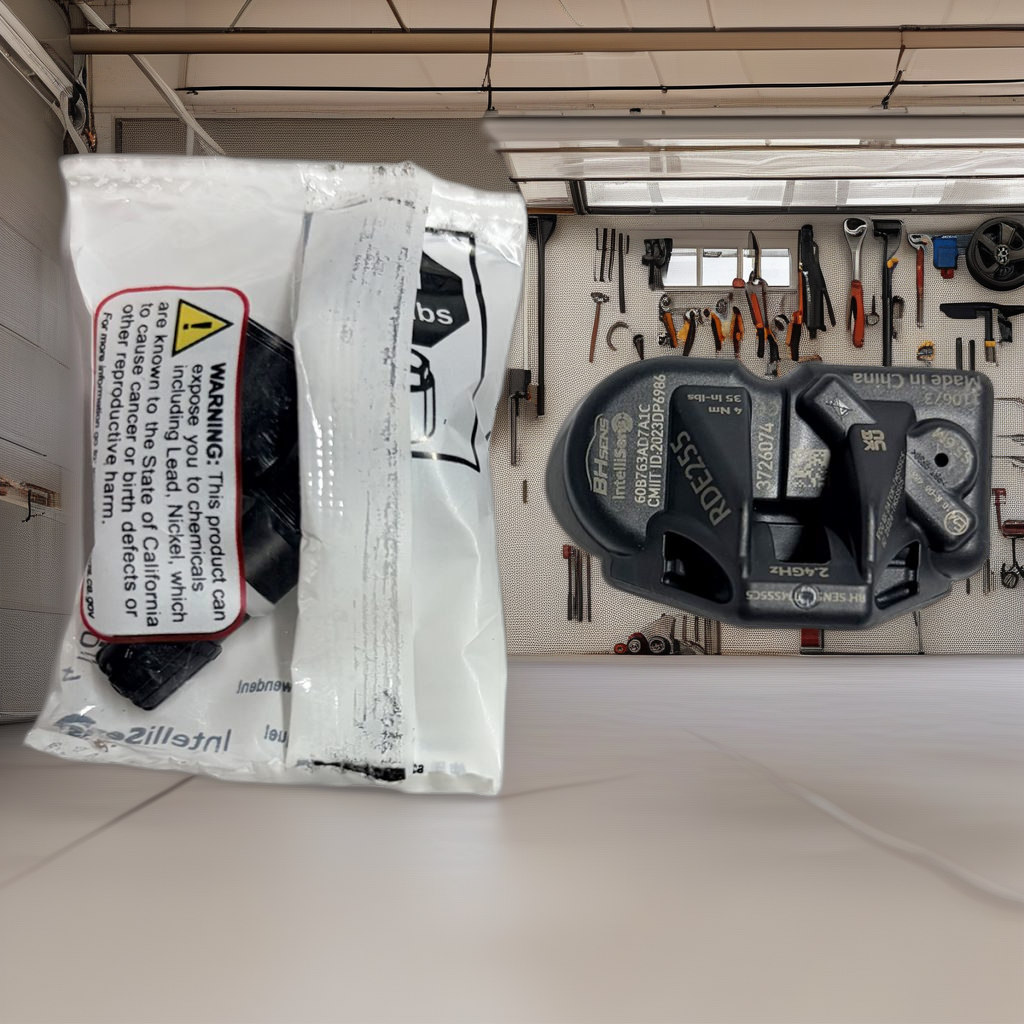
Why Your Tesla Needs the Correct TPMS Sensor
Tesla vehicles use a direct TPMS system that monitors individual tire pressure via sensors mounted inside each wheel. Using the wrong sensor—wrong frequency, wrong programming, or wrong valve type—will trigger a dashboard warning light and may disable traction control systems. The BH-Sens RDE255V26 is a common replacement for Tesla models, but you must confirm fitment before buying.
Key Specifications to Check Before Ordering
Frequency: 2.4GHz vs. 315MHz vs. 433MHz
All Tesla models from 2015 onward use 2.4GHz TPMS sensors. Older or non-Tesla vehicles may use 315MHz or 433MHz. If you order a 315MHz sensor for a Tesla, it will not communicate with the vehicle’s receiver.
Sensor Type: Clamp-in vs. Snap-in
Tesla factory sensors are clamp-in type, secured with a nut and washer. Snap-in sensors are not compatible with Tesla wheels. The RDE255V26 is clamp-in, matching the original design.
Pre-programmed vs. Programmable
| Feature | Pre-programmed (RDE255V26) | Programmable |
|---|---|---|
| Setup | No programming tool needed | Requires TPMS tool to clone IDs |
| Ease of install | Install and drive—auto-learn | Must copy OE sensor IDs |
| Best for | DIY owners, fleets, quick shops | Shops with programming tools |
| Cost | Slightly higher per unit | Lower per unit + tool cost |
For most buyers, pre-programmed sensors save time. The RDE255V26 ships ready to pair with your Tesla during the auto-learn process.
Fitment: Which Tesla Models Use This Sensor
The BH-Sens RDE255V26 is compatible with:
- Tesla Model S (2012–2020)
- Tesla Model 3 (2017–2023)
- Tesla Model X (2015–2020)
- Tesla Model Y (2020–2023)
Always double-check your vehicle’s production month and year. Tesla has updated sensor designs at times—if your car was built after mid-2023, contact our support team to confirm compatibility.
B2B Bulk Buying Notes for Tesla TPMS Sensors
1. Batch Consistency
When ordering in bulk (50+ units), request sensors from the same production batch. TPMS sensors can have slight firmware variations between batches. Same-batch sensors ensure uniform performance across your fleet or inventory.
2. OE Number Cross-Reference
The RDE255V26 covers multiple Tesla OE numbers: 149070100B, 149070100C, 149070100D, 149070100E, 149070101B, 149070101C, 149070101D, 149070101E. If your customer’s Tesla has a number outside this range, verify compatibility before ordering large quantities.
3. Storage & Shelf Life
TPMS sensors have a finite battery life (typically 5–7 years). For bulk orders, store sensors in a cool, dry place (below 25°C) and rotate stock using first-in-first-out. Do not order more than 12 months of inventory unless you have high turnover.
4. Programming Confirmation
Pre-programmed sensors like the RDE255V26 do not require cloning, but ensure your customer’s vehicle supports auto-learn. Tesla’s auto-learn procedure is triggered by driving above 25 km/h for 10 minutes after installation.
Recommended Part
For a reliable, drop-in replacement Tesla TPMS sensor, choose the RDE255V26 | BH-Sens 2.4GHz TPMS Tire Pressure Sensor | Fits Tesla | OE# 149070101B, 149070100B, 149070101C. It covers the widest range of OE numbers and is ready to install without programming.
FAQ
Can I use a 433MHz TPMS sensor on my Tesla?
No. Tesla’s TPMS system operates exclusively at 2.4GHz. Using a 433MHz sensor will not communicate with the vehicle’s receiver, and the TPMS light will remain on.
How do I know if my Tesla needs a pre-programmed or programmable sensor?
If you have a TPMS programming tool (like an Autel TS508 or Bartec), you can use programmable sensors. If you don’t own a tool or want the simplest install, choose pre-programmed sensors. The RDE255V26 is pre-programmed.
What is the auto-learn procedure for Tesla after installing new sensors?
After installing the sensors and reinflating tires to the correct pressure, drive the car above 25 km/h (15 mph) for 10–15 minutes. The system will automatically detect and register the new sensor IDs. No manual reset is needed.
Can I mix old and new TPMS sensors on a Tesla?
It is not recommended. Mixing sensors with different battery ages or firmware versions can cause intermittent signal loss or a persistent warning light. Replace all four sensors at once for best reliability.