
Why the Mini’s TPMS System Matters in Winter
Mini vehicles have used direct TPMS (Tire Pressure Monitoring System) since the early 2000s, with most models after 2007 running a 433MHz system. Unlike indirect systems that rely on ABS wheel speed sensors, Mini’s direct sensors measure actual pressure and temperature inside each tire. In winter, cold temperatures stiffen the tire rubber and reduce air volume, causing the pressure warning light to trigger prematurely — often when the car hasn’t moved and the tires are simply cold.
Ignoring this can lead to underinflation, uneven tread wear, and reduced grip on snow or ice. Knowing how to handle the sensors during a seasonal swap saves you a trip to the dealer and avoids sensor damage.
Pressure Changes with Temperature: The 1 PSI Rule
For every 10°F (5.5°C) drop in ambient temperature, tire pressure decreases by roughly 1 PSI. This is not a leak — it’s physics. Mini recommends checking pressures when tires are cold (car stationary for at least 3 hours or driven less than 1 mile). In winter, a Mini parked overnight at 20°F will show 4-5 PSI lower than when it was filled at 70°F in the shop.
Practical steps for winter pressure adjustment on a Mini:
- Use the door jamb pressure as a baseline (typically 32-35 PSI front, 30-33 PSI rear for most Minis).
- Increase by 3 PSI above that spec for winter driving (this compensates for cold-soak pressure loss).
- Never exceed the tire’s max sidewall pressure (printed on the tire itself).
- Recheck pressures after the first hard freeze — if the warning light comes on, it’s usually just the cold, not a puncture.
Step-by-Step: Winter Tire Swap with TPMS
1. Identify Your Mini’s TPMS Type
Most Minis from 2007 to 2020 use 433MHz direct sensors. If your car has aftermarket wheels or previously replaced sensors, confirm frequency. A simple way: look for a metal valve stem with a small nut (clamp-in design) — that’s a direct sensor. If you see a rubber snap-in valve, it’s likely an aftermarket or universal sensor.
2. Handling Existing Sensors
- Reusing sensors: If the sensors are less than 5-7 years old and the battery is still good (sensor transmits data on startup), you can swap them to the winter wheels. Mini sensors use a CR2032 or similar lithium battery that cannot be replaced — the whole sensor unit is replaced.
- Sensor condition check: Before mounting winter tires, inspect the valve stem for cracks or corrosion. If the rubber seal around the valve base is brittle, replace the sensor.
- Torque caution: When mounting tires, use a torque wrench on the valve stem nut. Over-tightening (common with impact guns) cracks the sensor housing. Spec is usually 4-5 Nm (35-44 in-lb) — check your tire shop knows this.
3. Programming Sensors to Winter Wheels
If your winter wheels are a separate set, the sensors must be “learned” to the Mini’s ECU. Many Minis after 2014 support auto-relearn: drive above 15 mph for 10 minutes and the system detects new sensor IDs. For older models (R56, R60), a TPMS tool is needed to trigger each sensor in sequence. If you’re unsure, a tire shop with a programmable tool can do this in under 10 minutes.
4. Storage Tips for Spare Sensors and Wheels
- Sensors not in use: Keep them in a plastic bag or container, away from metal tools that could short the battery terminal. Room temperature is fine — avoid garages that freeze solid, as extreme cold can accelerate battery drain.
- Wheels stored with sensors: If you store winter wheels in a garage with tires mounted, deflate the tires to about 20-25 PSI. This relieves stress on the tire sidewall and sensor seal. Do not store fully deflated — the tire bead can unseat.
- Ozone and UV: Keep wheels away from direct sunlight and ozone sources (like electric motors) that degrade rubber. A wheel bag or simple tarp works.
Recommended Part for Mini TPMS Replacement
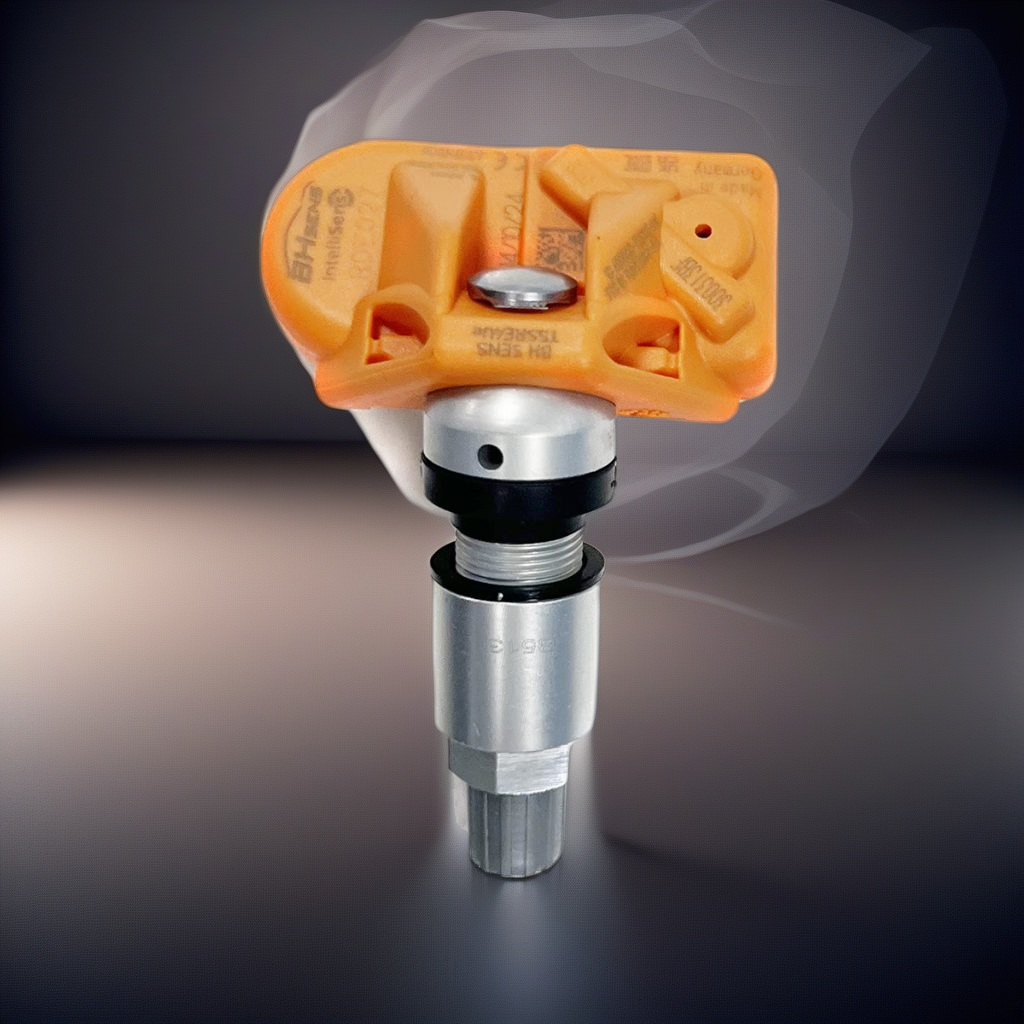
If your current sensors are failing or you need a pre-programmed set for winter wheels, the BH-Sens 433MHz sensor (SKU: RDE027V21) is a direct plug-and-play option for Minis. It uses the same OE fitment as the original BMW/Mini sensors (OE# 36106856209, 36106881890, 6855539) and is pre-programmed to broadcast the correct 433MHz signal. No cloning or programming needed — your Mini will recognize it as factory equipment. It’s a clamp-in design with a metal valve stem, meaning it’s durable for winter road salt and ice.
Compatibility Table for BH-Sens RDE027V21
| Mini Model | Year Range | Notes |
|---|---|---|
| Mini Cooper (R50, R53) | 2007-2013 | Requires TPMS tool for relearn |
| Mini Cooper S (R56) | 2007-2013 | Direct replacement for 433MHz |
| Mini Countryman (R60) | 2011-2016 | Works with original TPMS module |
| Mini Clubman (R55) | 2008-2014 | Same sensor as Cooper S |
| Mini Hardtop (F56) | 2014-2020 | Auto-relearn supported |
| Mini Countryman (F60) | 2017+ | Check frequency: should be 433MHz |
Also fits Alpina and BMW models with the same OE numbers. Always verify your vehicle’s TPMS frequency before purchase — if your Mini uses 315MHz (rare, mostly in some early North American models), this sensor will not work.
The Bottom Line
Winter tire swaps on a Mini are straightforward if you plan for TPMS. Don’t ignore the cold-pressure drop — it’s normal. Reuse or replace sensors based on age, not just function. Store spare sensors and wheels properly to extend their life. If you need a reliable, pre-programmed 433MHz sensor, the RDE027V21 | BH-Sens 433MHz TPMS Tire Pressure Sensor | Fits Alpina, BMW, Mini | OE# 36106856209, 36106881890, 6855539 is a cost-effective factory-fit option that saves you dealer programming fees.
FAQ
How do I know if my Mini’s TPMS sensor battery is dead?
The easiest sign is a persistent tire pressure warning light that stays on even after inflating tires to correct pressure. If the light blinks for 60-90 seconds at startup before staying solid, that’s a sensor communication error — likely a dead battery or sensor failure. Mini TPMS sensors typically last 5-10 years; if yours are older than 7 years, replace them proactively during a tire swap.
Can I use winter tires without TPMS sensors on my Mini?
Technically yes, but the warning light will stay on constantly, and you’ll lose the low-pressure alert. In many regions (EU, parts of the US), driving without functioning TPMS is illegal or can fail a vehicle inspection. Also, Mini’s stability control systems use tire pressure data — running without sensors may disable some safety features. It’s safer to install sensors even on a spare set of winter wheels.
What happens if I install a 433MHz sensor in a Mini that needs 315MHz?
The sensor will not transmit data, and the TPMS light will flash or stay solid. The car’s receiver cannot decode the wrong frequency. Always check your Mini’s build date or the old sensor’s part number. Most Minis sold globally use 433MHz; only early North American models (2007-2009) sometimes used 315MHz. If in doubt, remove the old sensor and read the frequency printed on its label.