
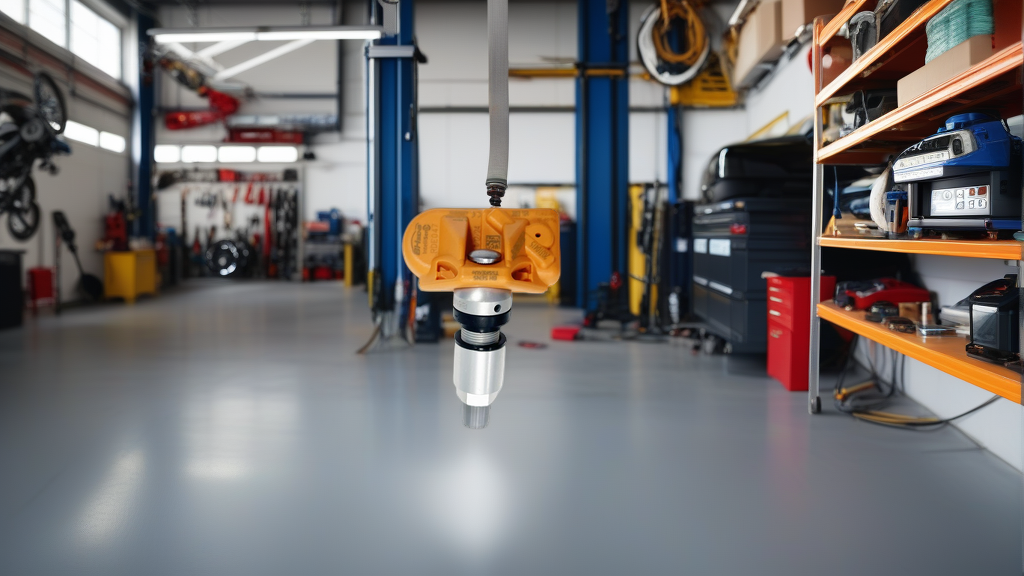
Why Winter Tire Swaps Are a High-Risk Moment for TPMS Sensors
Every winter, shops see a spike in broken TPMS sensors. The cause is almost always the same: a tire technician rushing the swap, pinching a sensor against the rim, or cracking the valve stem. Your UNI-K IDD uses a direct TPMS system, meaning each wheel has a physical sensor mounted inside. That sensor is fragile, especially its aluminum or brass stem.
When you switch to winter tires, you are either:
- Moving your summer alloy wheels (with sensors) to storage and mounting winter wheels (with or without sensors), or
- Swapping the sensors from your summer wheels into your winter wheels.
Either way, the sensor is coming off the rim. That’s where damage happens.
Temperature and Pressure: The Physics Your UNI-K IDD Can’t Ignore
Cold air is denser. For every 10°F drop in ambient temperature, tire pressure drops roughly 1–2 PSI. If you set your cold tire pressure at 35 PSI in 70°F garage, and then drive outside in 20°F weather, you will see 31–33 PSI on your dash. That is normal. The system will trigger a low-pressure warning if it drops below the threshold (typically 25% below recommended pressure).
Do not overinflate your tires in the warm garage to “compensate” for expected cold. That leads to overinflation when the tires warm up from driving, which reduces traction and increases wear. Instead, check pressure monthly during winter and top off as needed when tires are cold (driven less than 1 mile or parked for 3+ hours).
Storage Tips for Summer Wheels with TPMS Sensors
If you store your UNI-K IDD’s summer wheels with sensors still mounted, follow these steps:
- Store indoors – Avoid unheated sheds or garages that drop below freezing for extended periods. TPMS sensor batteries are lithium-based; extreme cold accelerates self-discharge and can shorten life by 20–30%.
- Remove the sensor if possible – If your summer wheels have reusable sensors (most BH-Sens units are serviceable), unscrew them from the rim and store separately in a climate-controlled area. This prevents the rubber grommet from cold-cracking and the battery from deep discharge.
- Keep tires inflated – Store wheels at around 20–25 PSI to prevent sidewall flat-spotting. Do not store fully deflated.
- Label each wheel – Mark the position (LF, RF, LR, RR) so you can reinstall them in the same corner. Some UNI-K IDD models learn sensor positions automatically after a short drive, but labeling saves you a relearn cycle.
Which TPMS Sensor Works on the UNI-K IDD?
The UNI-K IDD uses a 433MHz TPMS sensor. Many aftermarket options exist, but not all are compatible. The RDE047V21 | BH-Sens 433MHz TPMS Tire Pressure Sensor | Fits Audi, BMW, Bentley, Ferrari, Lamborghini & 8 More | OE# 2N0907275A, 314818, 36106798872 from BH-Sens (Baolong Technology) is a direct fit for this vehicle. It covers OE part numbers like 2N0907275A, 314818, and 36106798872, which are commonly used on VW/Audi/BMW platforms—and the UNI-K IDD shares the same sensor architecture.
This sensor is pre-programmed to 433MHz, so no cloning is required. It auto-learns after installation. If you are replacing a dead sensor during your winter swap, this is a straightforward drop-in.
Fitment Table: BH-Sens RDE047V21 Compatibility
| Vehicle Brand | Model Example | OE Number Reference |
|---|---|---|
| UNI-K IDD | 2023–2025 | 2N0907275A, 5Q0907275 |
| Audi | A3, A4, Q5, Q7 | 5Q0907275B, 5Q0907275F |
| BMW | 3 Series, 5 Series, X3 | 36106798872 |
| Bentley | Continental, Flying Spur | 2N0907275A |
| Ferrari | 488, Portofino | 314818 |
| Lamborghini | Urus, Huracán | 777770 |
| VW | Golf, Tiguan, Passat | 5Q0907275 |
| Porsche | Cayenne, Panamera | 9J1907275 |
| Skoda/SEAT | Octavia, Leon | 5Q0907275F |
Always confirm your vehicle’s model year and sensor position. The UNI-K IDD uses a 433MHz system, not 315MHz.
Step-by-Step: Winter Tire Swap with TPMS Sensors
- Check sensor health before the swap – Use a TPMS diagnostic tool to read battery voltage and signal strength. If a sensor is low on battery, replace it now.
- Use a plastic guard on the tire machine – Tell the technician to use a sensor-safe adapter or plastic bead breaker. Metal pry bars near the valve stem area are the #1 killer of sensors.
- Torque the valve stem nut to spec – Over-tightening cracks the housing. Under-tightening leaks. The typical spec is 4–6 Nm (35–53 in-lbs). If you don’t have the exact value, hand-tighten with a nut driver and add a quarter turn.
- Relearn after installation – Drive the UNI-K IDD for 10–15 minutes above 15 mph. The system will auto-detect the sensors. If not, use the TPMS reset button (usually under the steering column or in the glovebox) per your owner’s manual.
Recommended Part
For a reliable, pre-programmed 433MHz replacement that fits the UNI-K IDD, use the RDE047V21 | BH-Sens 433MHz TPMS Tire Pressure Sensor | Fits Audi, BMW, Bentley, Ferrari, Lamborghini & 8 More | OE# 2N0907275A, 314818, 36106798872. It is built to OE specifications, so it seals correctly and transmits accurately even in subzero conditions.
FAQ
Can I use winter tires without TPMS sensors on my UNI-K IDD?
Technically yes, but the dashboard will show a constant TPMS warning light and may disable stability control features in some driving modes. Most jurisdictions also require a functioning TPMS by law. It is safer and legal to install sensors in your winter wheels.
How long do BH-Sens TPMS sensor batteries last?
Typically 5–7 years from the date of manufacture. Battery life depends on temperature exposure and driving frequency. If your UNI-K IDD is more than 5 years old and you are swapping tires this winter, consider replacing all four sensors proactively.
Why does my UNI-K IDD show low pressure after a cold night even though I filled the tires the day before?
That is normal. Tire pressure drops with temperature. If you filled the tires in a warm garage (say 60°F) and the outdoor temperature is 20°F, expect a drop of about 4–6 PSI. The system will warn you, but it is not a leak. Drive a few miles to warm the tires, and the pressure will rise again.
Do I need to reprogram sensors when swapping between summer and winter wheels?
Not if you use pre-programmed sensors like the BH-Sens RDE047V21. The UNI-K IDD’s system auto-learns sensor IDs after a short drive. If you reuse the same sensors in the same wheels, no relearn is needed. If you swap sensors between wheel sets, a relearn cycle may be required.