
TPMS Warning Light: The Three Common Culprits on a GLS CLASS
The Mercedes-Benz GLS CLASS uses a direct TPMS system, meaning each wheel has a physical sensor inside the tire that transmits pressure and temperature data to the vehicle’s receiver module. When the system detects a problem, you’ll see the familiar horseshoe-shaped icon with an exclamation mark. Here’s what causes it:
1. Dead Sensor Battery (Most Common)
Every BH-Sens or OE TPMS sensor contains a non-replaceable lithium battery designed to last 5-7 years. On a GLS CLASS that’s 2015 or older, you’re likely past that window. Symptoms:
- The TPMS light comes on steady after starting the engine
- One or more tire pressures show “—” or “0 PSI” on the instrument cluster
- The light stays on even after you’ve properly inflated all tires to 38-42 PSI (check your driver’s door jamb sticker)
A dead sensor battery is not a sensor failure per se—the electronics still work, but the battery can no longer power the RF transmission. You must replace the entire sensor (battery is sealed inside).
2. Signal Interference
Modern GLS CLASS vehicles have sensitive TPMS receivers located in the wheel wells or under the rear seat. Common interference sources include:
- Aftermarket LED license plate lights (switching power supplies create RF noise)
- Dash cameras with constant power (especially cheap units with unshielded cables)
- Tire repair sealant (some aerosols contain metallic particles that block the 433MHz signal)
- Aftermarket keyless entry modules or remote starters
Interference symptoms differ from dead batteries: the light may flash intermittently, turn off after driving 10 minutes, or behave differently in different parking locations (e.g., works at home but not at the shopping center near a cell tower).
3. Sensor Damage from Tire Service
Improper tire mounting is a hidden cause. If a tire shop uses an old-style tire machine without the TPMS protection adapter, they can snap the sensor’s valve stem or crack the internal circuit board. This often shows as a rapid air leak plus a TPMS light—but the sensor itself is physically broken, not dead.
How to Diagnose Dead Sensor Battery vs Interference on Your GLS CLASS
Use this table to narrow down the issue:
| Symptom | Likely Cause | Action |
|---|---|---|
| Light comes on immediately at startup, one tire shows “—” | Dead battery in that specific sensor | Replace that sensor |
| Light comes on after 15-20 minutes of driving, all readings okay | Signal interference or weak battery | Check aftermarket electronics; test with a TPMS tool |
| Light flashes for 60 seconds then stays solid | System detected a fault (could be battery or interference) | Scan with diagnostic tool |
| All four tires show “—” | Receiver module failure (rare) or all four batteries dead simultaneously (unlikely) | Check receiver antenna connections |
| Light turns on/off randomly, especially near certain buildings | External RF interference | Drive away from source; if persistent, install ferrite chokes on aftermarket wiring |
The Simple Test: Use a TPMS Activation Tool
You don’t need a dealer-level scanner. A $30-50 TPMS activation tool (like the Autel TS601 or Bartec) will tell you:
- Sensor ID (should match what’s programmed to the car)
- Battery voltage (below 2.4V = dead battery imminent)
- Pressure and temperature (if the sensor transmits data, it’s working electrically)
If the tool cannot wake a sensor, that sensor is dead. If the tool wakes the sensor but the car still shows a warning, you likely have a programming or receiver issue.
When to Replace GLS CLASS TPMS Sensors
Don’t wait for the light to come on. Proactive replacement at 6 years prevents:
- Being stranded by a false low-pressure alert on a road trip
- Damage to the tire or wheel from running under-inflated
- The need to pay for emergency tire service
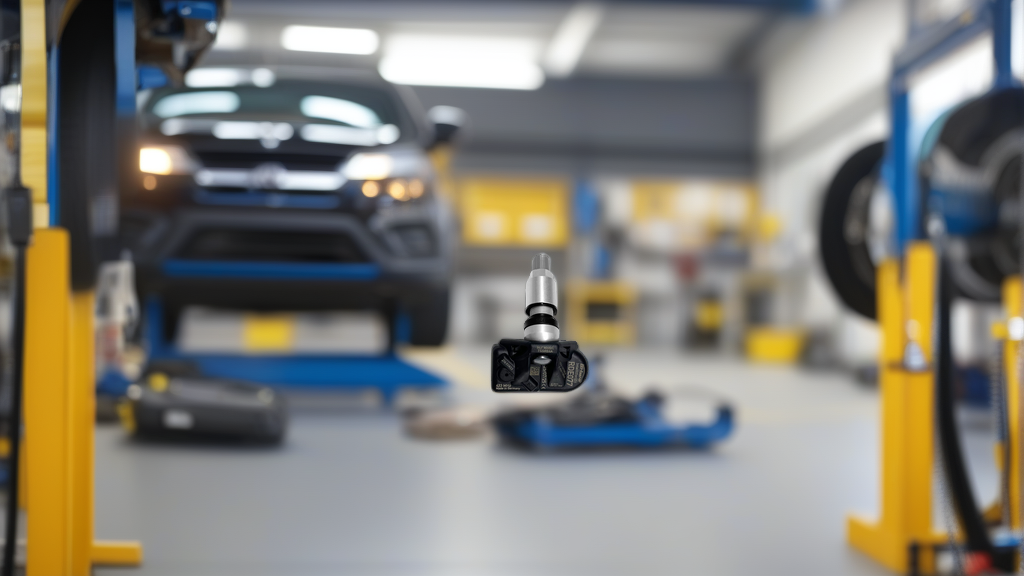
The RDE077V21 | BH-Sens 433MHz TPMS Tire Pressure Sensor | Fits Aston Martin, BMW, Maybach, Mercedes-Benz, Mini & 2 More | OE# 36106872774, 42607WAA02, 5A3DC0401 (SKU: RDE077V21) is a direct fit for GLS CLASS models from 2014-2020, including GLS 450, GLS 550, and GLS 63 AMG. It operates at 433MHz and is pre-programmed to OE specifications. Always verify fitment for your specific model year—the GLS CLASS changed TPMS protocols slightly around 2017.
Recommended Part
RDE077V21 | BH-Sens 433MHz TPMS Tire Pressure Sensor | Fits Aston Martin, BMW, Maybach, Mercedes-Benz, Mini & 2 More | OE# 36106872774, 42607WAA02, 5A3DC0401 — This BH-Sens sensor (Baolong Technology) matches OE numbers 36106872774, 42607WAA02, and 5A3DC0401. It’s a clamp-in design, pre-paired for easy installation. Replace all four sensors at once, plus the valve stem kit (sold separately) to avoid future leaks.
FAQ
How long does a GLS CLASS TPMS sensor battery last?
Typically 5-7 years, depending on driving conditions and ambient temperatures. Cold climates and frequent short trips (where the sensor transmits more often) shorten battery life. If your GLS CLASS is approaching 6 years old, plan to replace all sensors proactively.
Can a dead TPMS sensor cause the car to fail inspection?
Yes. In most US states and EU countries, a illuminated TPMS warning light is a safety inspection failure. The system must be fully operational—no warning lights—for the vehicle to pass. A dead sensor battery counts as a system fault.
Will aftermarket wheels cause TPMS interference?
Not by themselves, but aftermarket wheels with metallic TPMS sensor retention bands or poorly grounded wheel speed sensor rings can create interference. More common: aftermarket TPMS sensors that are not properly programmed to the GLS CLASS receiver module. Always use sensors pre-programmed to OE frequencies (like the RDE077V21 at 433MHz).
How do I reset the TPMS light after replacing a sensor?
On most GLS CLASS models, drive the vehicle for 10-15 minutes above 16 mph. The system automatically learns new sensor IDs. If the light persists, you may need to use a TPMS tool to “register” the new sensor IDs to the car’s receiver. Check your owner’s manual for the specific reset procedure for your model year (it varies between the W166 and X167 chassis).