
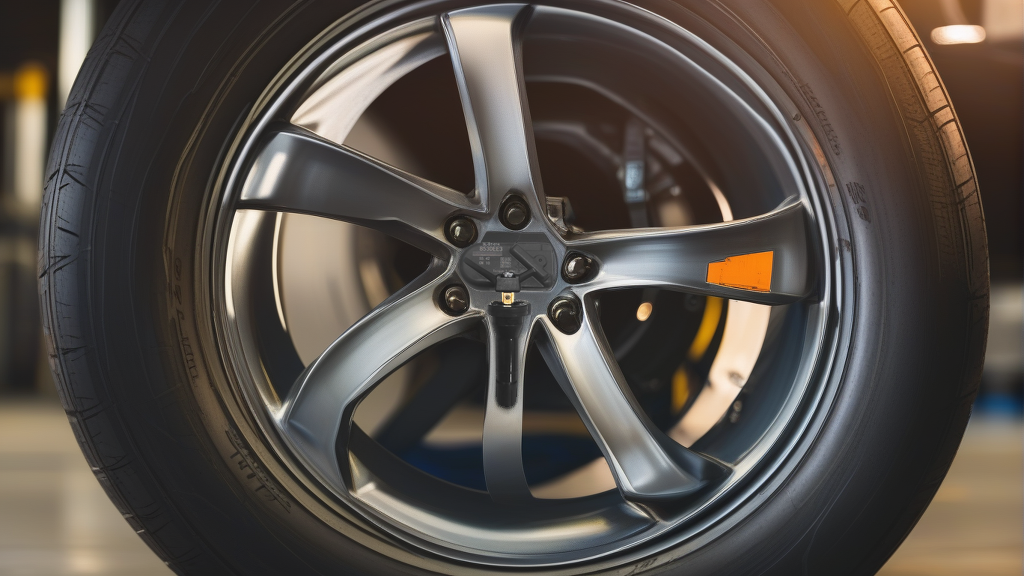
Understanding IZOA TPMS Relearn
The IZOA (a Toyota–Daihatsu subcompact crossover) uses a direct TPMS system that monitors individual tire pressures via sensors mounted inside each wheel. When you install a new sensor—like the BL-ST-014 | BH-Sens 433MHz TPMS Tire Pressure Sensor | Fits Lexus, Subaru, Toyota | OE# 28103CC010, 4260702060, 4260702070—the vehicle’s receiver does not recognize its unique ID until a relearn is completed. Skipping this step will keep the TPMS warning light illuminated.
Three Relearn Methods for IZOA
| Method | Tools Needed | Time | Best For |
|---|---|---|---|
| Auto Relearn | None (just driving) | 10–20 minutes | Sensor replacements with same position |
| OBD Relearn | TPMS programming tool (e.g., Autel TS508, ATEQ VT56) | 1–2 minutes | Quickest method, works on all models |
| Stationary Relearn | TPMS activation tool + magnet | 5–10 minutes | When OBD tool unavailable |
Auto Relearn (Drive Cycle)
- Ensure all tires are at recommended pressure (check driver door jamb sticker).
- Drive the IZOA above 25 mph (40 km/h) for 10–20 minutes.
- The system automatically learns new sensor IDs as it receives signals during driving.
- The TPMS light should turn off after the cycle completes. If it remains on, try a longer drive or switch to another method.
Note: Auto relearn works only if sensors are installed in the same wheel positions as the originals (e.g., left front replaced with left front). If you rotated tires or changed positions, use OBD or stationary relearn.
OBD Relearn (Fastest)
- Connect a compatible TPMS diagnostic tool to the IZOA’s OBD-II port (located under the dashboard).
- Follow the tool’s menu: select “IZOA” or “Toyota Yaris Cross” (same platform), then “TPMS Relearn.”
- The tool sends the new sensor IDs to the ECU via CAN bus.
- Once successful, the tool confirms completion. The TPMS light should extinguish immediately.
Pro tip: The BL-ST-014 | BH-Sens 433MHz TPMS Tire Pressure Sensor | Fits Lexus, Subaru, Toyota | OE# 28103CC010, 4260702060, 4260702070 is pre-programmed with OE IDs for many Lexus, Subaru, and Toyota models, so no cloning is needed in most cases—just a straight relearn.
Stationary Relearn (Magnet Method)
This method is less common on newer IZOAs but works on earlier models (check your owner’s manual):
- Turn ignition ON (engine off).
- Use a TPMS activation tool to trigger each sensor in sequence (LF, RF, RR, LR).
- Hold a strong magnet near the valve stem (or specified location near the spare tire, if equipped) until the horn chirps or the TPMS light blinks.
- Repeat for all four wheels. The ECU stores IDs in the order triggered.
- Turn ignition OFF, then start the engine. The warning light should go out.
Recommended Part
For a direct-fit replacement that works with IZOA’s 433MHz system, use the BL-ST-014 | BH-Sens 433MHz TPMS Tire Pressure Sensor | Fits Lexus, Subaru, Toyota | OE# 28103CC010, 4260702060, 4260702070. It matches OE part numbers like 28103CC010 and 4260702060, and is compatible with Toyota Yaris Cross (IZOA’s global twin) as well as Lexus and Subaru models.
FAQ
Can I use a universal TPMS sensor on my IZOA?
Yes, but ensure it is a 433MHz model pre-programmed with Toyota-compatible IDs. The BH-Sens BL-ST-014 is a direct-fit option—no complex cloning required. Avoid generic sensors that need manual programming unless you have a TPMS tool.
How do I know if my IZOA needs a relearn?
If the TPMS warning light stays on after replacing a sensor, or if the system shows incorrect tire pressures, a relearn is needed. The light will flash for 60–90 seconds and then stay solid when sensor IDs are missing or mismatched.
Will disconnecting the battery reset the TPMS?
No. Disconnecting the battery clears temporary codes but does not change the sensor IDs stored in the ECU. You still need to perform a relearn procedure—either by driving (auto) or using a tool (OBD/stationary).
What year IZOA models support OBD relearn?
Most IZOA models from 2018 onward support OBD relearn via a compatible tool. Earlier models (2016–2017) may require the stationary method. Always check your vehicle’s service manual or consult a professional if unsure.