
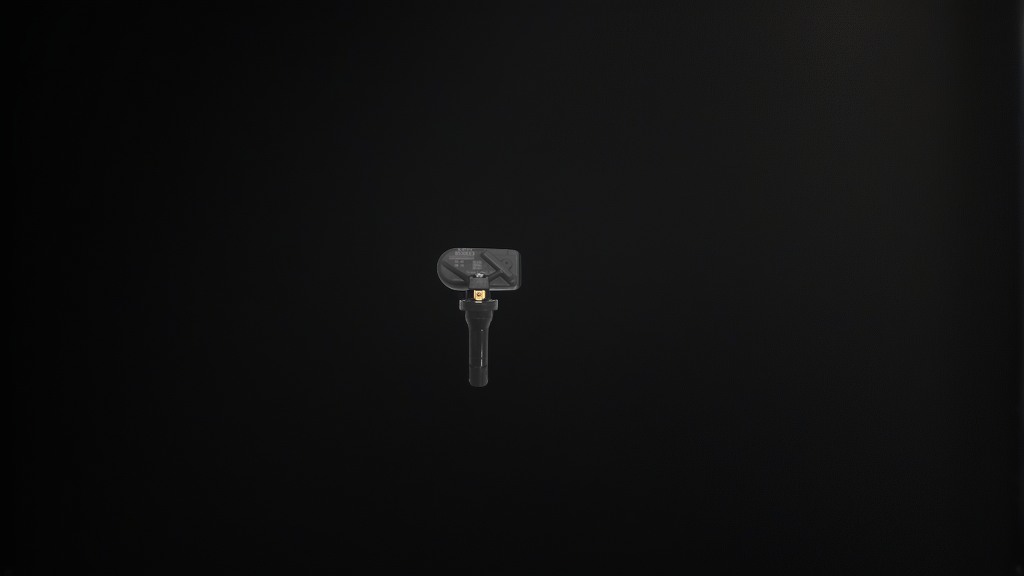
Why Your Corolla Cross Needs the Right TPMS Sensor
The Toyota Corolla Cross, launched globally from 2020 onward, uses a direct Tire Pressure Monitoring System (TPMS). Each wheel has a sensor mounted inside the tire that transmits pressure and temperature data to the car’s ECU. If you install a wrong-frequency, incompatible, or clone-only sensor, you’ll get a permanent TPMS warning light, and in some cases, the car may disable stability control or limit speed.
Whether you are a shop buying 50 units for fleet Corolla Cross vehicles or a DIY owner replacing a single dead sensor, the decisions are the same: match the hardware, verify the frequency, and choose a sensor that the vehicle’s system can learn or program.
Key Checks Before Ordering a TPMS Sensor for Corolla Cross
1. Confirm the Frequency
The Corolla Cross (both 1.8L and 2.0L variants) uses 433MHz sensors. Some aftermarket sensors are multi-frequency (433MHz + 315MHz), but you specifically need 433MHz. If you buy a 315MHz sensor, it will not communicate with the car. Check the label on your current sensor or use a TPMS scan tool to read the frequency.
2. Verify the OEM Part Number
Toyota and its supplier, Denso or Pacific Industrial, assign specific part numbers depending on the market and build date. The most common OEM numbers for Corolla Cross TPMS sensors are:
| OEM Part Number | Typical Application |
|---|---|
| 28103CC010 | Toyota Corolla Cross (2022–2024, North America) |
| 4260702060 | Toyota Corolla Cross (2022–2024, global/Asia) |
| 4260702070 | Toyota Corolla Cross (2023–2024, updated) |
| 4260702080 | Late 2023+ Corolla Cross |
| 4260702090 | Certain hybrid variants |
| 4260706070 | Lexus UX / Corolla Cross shared platform |
| 426070R030 | Subaru Crosstrek (uses same sensor) |
Not all Corolla Cross years use the same sensor. If your car was built in late 2023 or is a hybrid, you may need the 4260702070 or 4260702080. Always remove the wheel and read the existing sensor part number before ordering.
3. Sensor Type: Direct-Fit vs. Programmable
- Direct-fit (OE-style): Pre-programmed to match the OEM part number. You install it, and the car recognizes it immediately. Best for B2B bulk orders where you know the exact vehicle batch.
- Programmable (clone-capable): Can be copied from an existing sensor using a TPMS tool. Great for shops with multiple vehicle makes. The BH-Sens BL-ST-014 is a programmable 433MHz sensor that covers all the above OEM numbers.
4. Valve Stem Type
Corolla Cross sensors use a rubber snap-in valve stem. Avoid metal clamp-in sensors unless you are installing aftermarket wheels. The rubber stem is cheaper and standard for this platform.
What to Look for When Buying in Bulk (B2B Tips)
If you are sourcing sensors for inventory or fleet replacement, here are the practical notes from dealing with Chinese manufacturers:
Consistency of OE Cross-Reference
Not all “433MHz” sensors are equal. Some cheap clones may lack proper certification (FCC, IC, CE) or have poor battery life. The BH-Sens brand from Baolong Technology is one of the few Chinese manufacturers that supply OE-level parts to global automakers. Their BL-ST-014 cross-references directly to the Toyota/Lexus/Subaru part numbers listed above.
Programmability Reduces SKU Overhead
Stocking one programmable sensor that covers multiple OEM numbers means you don’t need 10 different SKUs. The BL-ST-014 can be cloned or programmed via a TPMS tool (like Autel, Bartec, or ATEQ) to mimic any of the 11 listed OEM numbers. For a shop that services Corolla Cross, RAV4, Camry, and Lexus NX, this single sensor covers them all.
Battery Life and Shelf Life
Factory sensors last 5–7 years. Bulk-ordered sensors from China should have at least 4 years of remaining battery life if stored in a cool, dry place. Ask the supplier for the manufacturing date code on the box. BH-Sens sensors typically have a 5-year shelf life from manufacture.
Packing and Labeling
For resale or workshop use, ensure sensors come in anti-static bags with clear labels showing frequency, OEM cross, and date code. Avoid bare sensors taped together—they can be damaged during shipping.
Step-by-Step: How to Replace a Corolla Cross TPMS Sensor
- Remove the wheel and deflate the tire. Break the bead near the valve stem.
- Unscrew the valve stem nut from the sensor, then remove the sensor from the rim.
- Compare the old sensor part number with the new one. If using the BL-ST-014 | BH-Sens 433MHz TPMS Tire Pressure Sensor | Fits Lexus, Subaru, Toyota | OE# 28103CC010, 4260702060, 4260702070, check that the frequency is 433MHz.
- Install the new sensor with a new rubber seal and torque the valve nut to hand-tight + 1/4 turn (no more—overtightening cracks the sensor housing).
- Mount and balance the tire.
- Re-learn the sensors using a TPMS tool or the vehicle’s automatic re-learn procedure. For Corolla Cross, this usually involves a magnet or a TPMS tool at the valve stem in a specific order (check owner’s manual).
- Drive the car above 30 km/h for 5 minutes to confirm all four sensors register.
Common Mistakes to Avoid
- Buying a 315MHz sensor by mistake. Most aftermarket listings show both. Double-check the description.
- Assuming all Corolla Cross years use the same sensor. 2020–2022 sensors may differ from 2023+ due to updated TPMS protocols.
- Using a used sensor from a salvage yard. Battery life is unknown, and the sensor may be locked to the previous vehicle.
- Skipping the valve stem nut gasket. Always replace the rubber gasket to prevent air leaks.
Recommended Part for Corolla Cross TPMS Replacement
For a reliable, programmable 433MHz sensor that covers the Corolla Cross and its platform siblings (Lexus UX, Subaru Crosstrek), the BL-ST-014 | BH-Sens 433MHz TPMS Tire Pressure Sensor | Fits Lexus, Subaru, Toyota | OE# 28103CC010, 4260702060, 4260702070 is a solid choice. It is manufactured by BH-Sens (Baolong Technology), an OE-level supplier, and cross-references to 11 OEM part numbers including 28103CC010 and 4260702060. It works with major TPMS programming tools and comes with a standard rubber snap-in valve stem.
FAQ
Can I use a universal TPMS sensor on my Corolla Cross?
Yes, as long as it is a 433MHz programmable sensor that can be cloned or programmed to match your car’s existing sensor ID. The BH-Sens BL-ST-014 is one such universal sensor that fits Corolla Cross after programming. However, you must have a TPMS tool to clone the original sensor’s ID, or you may need to perform a vehicle re-learn procedure.
How do I know if my Corolla Cross needs a new sensor?
The TPMS warning light will stay on solid or flash. If you have inflated the tires to the correct pressure (usually 33–35 psi) and the light does not go off after driving, one or more sensors are likely dead. A TPMS scan tool can tell you exactly which sensor has failed and whether it is a battery or communication issue.
Will a Lexus TPMS sensor fit my Corolla Cross?
Yes, many Lexus UX sensors (OEM 4260706070) are the same 433MHz unit used on the Corolla Cross, since they share the TNGA-C platform. The BL-ST-014 | BH-Sens 433MHz TPMS Tire Pressure Sensor | Fits Lexus, Subaru, Toyota | OE# 28103CC010, 4260702060, 4260702070 covers both Toyota and Lexus part numbers. Just verify the frequency and programming compatibility.
How long do TPMS sensors last on a Corolla Cross?
Factory sensors last 5 to 7 years under normal driving conditions. Aftermarket sensors from reputable brands like BH-Sens have a similar lifespan. Battery life depends on ambient temperature and driving frequency—expect replacement around the 5-year mark for daily-driven vehicles.