
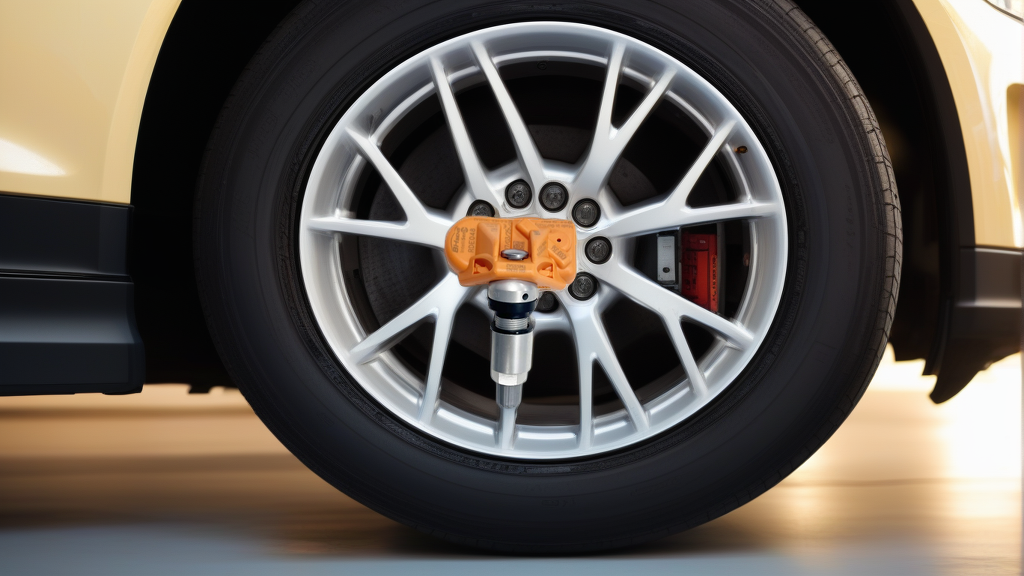
Why TPMS Relearn Matters for Your SYLPHY EV
The SYLPHY EV, like most modern EVs, uses direct TPMS sensors mounted inside each tire. When you replace a sensor—such as the SYLPHY EV—or rotate tires, the vehicle’s ECU loses track of which sensor is at which wheel position. A relearn procedure tells the system the correct sensor IDs and positions. Without it, the TPMS warning light stays on, and you lose accurate pressure readings.
The SYLPHY EV uses 433MHz TPMS sensors, which are common across many global platforms. The BH-Sens RDE048V21 sensor (OE# 11B0015CP, 11B0022CP, 2000680) is a direct-fit replacement that works with the SYLPHY EV’s system.
Tools You’ll Need
| Tool | Purpose | Notes |
|---|---|---|
| TPMS scan tool (e.g., Autel TS508, Bartec, or ATEQ) | Read sensor IDs, trigger sensors, program OBD relearn | Required for OBD method |
| Magnet (strong, like a TPMS activation magnet) | Trigger sensor learning in stationary mode | Some vehicles use this |
| Tire pressure gauge | Verify pressures before relearn | Set all tires to spec |
| OBD II connector (if using OBD method) | Connect scan tool to vehicle | Usually included with the tool |
| Vehicle owner’s manual | Confirm exact relearn procedure | Procedures vary by year |
Important: The SYLPHY EV’s TPMS system is designed for 433MHz sensors. Do not mix frequencies. The BH-Sens RDE048V21 operates at 433MHz and is compatible.
Three Relearn Methods for SYLPHY EV
1. Auto Relearn (Drive-Based)
This method requires no tools and is the most straightforward.
- Step 1: Ensure all tires are inflated to the pressures listed on the driver’s door placard.
- Step 2: Start the vehicle and drive above 25 mph (40 km/h) for 10-20 minutes on a straight, steady road. Avoid sharp turns or stops.
- Step 3: The TPMS system automatically learns sensor positions as it receives signals from each wheel.
- Step 4: The TPMS light should turn off after a successful cycle. If it remains on, try the OBD method.
Pros: No tools, no programming. Cons: Slow, may fail in cold weather or if sensors are weak.
2. OBD Relearn (Fastest Method)
This is the preferred method for shops and DIY owners with a compatible TPMS tool.
- Step 1: Connect the TPMS scan tool to the vehicle’s OBD II port (usually under the dashboard).
- Step 2: Turn the ignition to ON (engine off). The SYLPHY EV may require the “Ready” mode—check your tool’s instructions.
- Step 3: Use the tool’s menu to select “SYLPHY EV” or “Nissan Leaf” (some SYLPHY EV models share TPMS logic with Nissan Leaf). Choose the “OBD Relearn” function.
- Step 4: The tool will prompt you to trigger each sensor by its position. Use the tool’s LF (low-frequency) activation function or a magnet near the valve stem.
- Step 5: After all four sensors are detected, the tool sends the ID assignments to the ECU. The tool will confirm “Relearn Complete.”
- Step 6: Start the vehicle and drive briefly to verify the TPMS light is off.
Why this matters for your BH-Sens sensor: The RDE048V21 sensor is pre-programmed with a unique ID. The OBD tool reads that ID and writes it to the ECU, so no physical programming of the sensor is needed.
3. Stationary Relearn (Magnet or Deflation Method)
Some SYLPHY EV model years support a manual stationary relearn using a magnet or deflation sequence.
- Magnet Method:
- Turn ignition to ON.
- Place a strong magnet over the valve stem of the left front tire until the horn chirps or the TPMS light flashes.
- Repeat for right front, right rear, left rear in that order.
- After the last wheel, the horn chirps twice to confirm completion.
- Deflation Method (less common):
- Inflate all tires to spec.
- Deflate the left front tire to 20 psi (or until horn chirps), then re-inflate.
- Repeat for each wheel in the same order as the magnet method.
Caution: Not all SYLPHY EV model years support stationary relearn. Check your owner’s manual or contact a dealer before attempting.
Compatibility Table: BH-Sens RDE048V21 vs SYLPHY EV
| Parameter | Specification | SYLPHY EV Compatibility |
|---|---|---|
| Frequency | 433MHz | ✅ Yes |
| OE Numbers | 11B0015CP, 11B0022CP, 2000680 | ✅ Yes (Nissan/Infiniti platform) |
| Protocol | Direct TPMS | ✅ Yes |
| Battery Life | 5-7 years typical | ✅ Yes |
| Relearn Methods | Auto, OBD, Stationary | ✅ All three supported |
Recommended Part: BH-Sens RDE048V21
If you need a replacement TPMS sensor for the SYLPHY EV or other compatible vehicles (Aston Martin, Audi, BMW, Bentley, etc.), the RDE048V21 | BH-Sens 433MHz TPMS Tire Pressure Sensor | Fits Aston Martin, Audi, BMW, Bentley, Bugatti & 9 More | OE# 11B0015CP, 11B0022CP, 2000680 is a reliable, cost-effective choice. It is pre-programmed with a unique ID and works with standard 433MHz TPMS tools. Always verify your vehicle’s specific OE part number before purchase.
FAQ
Can I use the SYLPHY EV’s TPMS sensors on other vehicles?
The SYLPHY EV uses 433MHz sensors, which are compatible with many Nissan, Infiniti, and other platforms. However, the sensor programming (ID) must be specific to each vehicle. The BH-Sens RDE048V21 can be cloned or programmed for different vehicles using a TPMS tool, but physical fitment and frequency must match.
Why does my SYLPHY EV’s TPMS light stay on after a sensor replacement?
This usually means the relearn procedure was not completed, or the sensor ID was not written to the ECU. The most common fix is performing an OBD relearn with a compatible tool. Ensure the sensor is transmitting (trigger it with a tool) and that the battery is not dead.
How often should I replace the TPMS sensors on my SYLPHY EV?
TPMS sensor batteries typically last 5-7 years. After that, the sensor may stop transmitting or give erratic readings. If you see a “low battery” warning or the sensor fails to trigger during relearn, replacement is recommended. The RDE048V21 is a direct-fit replacement.
Do I need a special tool for the OBD relearn method?
Yes, you need a TPMS scan tool that supports OBD relearn for Nissan-platform vehicles. Tools like the Autel TS508, ATEQ VT56, or Bartec TPMS tools all support this function. Many tire shops offer this service for a small fee if you don’t have a tool.