
Why the EQV TPMS Light Comes On
The Mercedes-Benz EQV (and its platform siblings) uses direct TPMS sensors mounted inside each wheel. The system monitors pressure and temperature in real time. When the warning light illuminates, most drivers assume a simple pressure drop. But on the EQV, there are three distinct failure modes that produce the same dashboard symbol.
The most common is sensor battery depletion. These sensors use non-replaceable lithium cells rated for 5–7 years. If your EQV is a 2020–2022 model, you’re entering that window. The second cause is signal interference – the 433MHz frequency used by BH-Sens sensors can be disrupted by metallic window tint, aftermarket LED light strips, or dash cams that emit RF noise. The third is actual sensor failure due to impact damage or internal corrosion.
Symptom Checklist: Dead Battery vs. Interference vs. Sensor Fault
| Symptom | Dead Battery | Signal Interference | Sensor Fault |
|---|---|---|---|
| Light comes on after cold start | Yes, often after sitting overnight | Usually while driving | Can be random |
| Tire pressure actually low | No (pressures normal) | No | Possibly (slow leak) |
| TPMS tool shows “no signal” | Yes, for that wheel | Sometimes (intermittent) | Rarely |
| Multiple wheels affected simultaneously | Unlikely (batteries die at different rates) | Possible (if interference source is strong) | No |
| Light resets after driving 10 minutes | No | Yes, if interference source is temporary | Only if pressure rises |
Dead Sensor Battery – The Most Common EQV Issue
When a sensor battery dies, the sensor stops transmitting entirely. The EQV’s receiver module detects no signal from that wheel after a few minutes of driving. The warning light comes on steady (not flashing). You’ll notice:
- The light appears during the first few minutes of driving, not immediately on startup
- Tire pressures are correct when checked manually
- A TPMS scan tool (like an Autel or Bartec) shows “no response” from that specific sensor ID
- The issue moves if you rotate wheels (the dead sensor moves with the wheel)
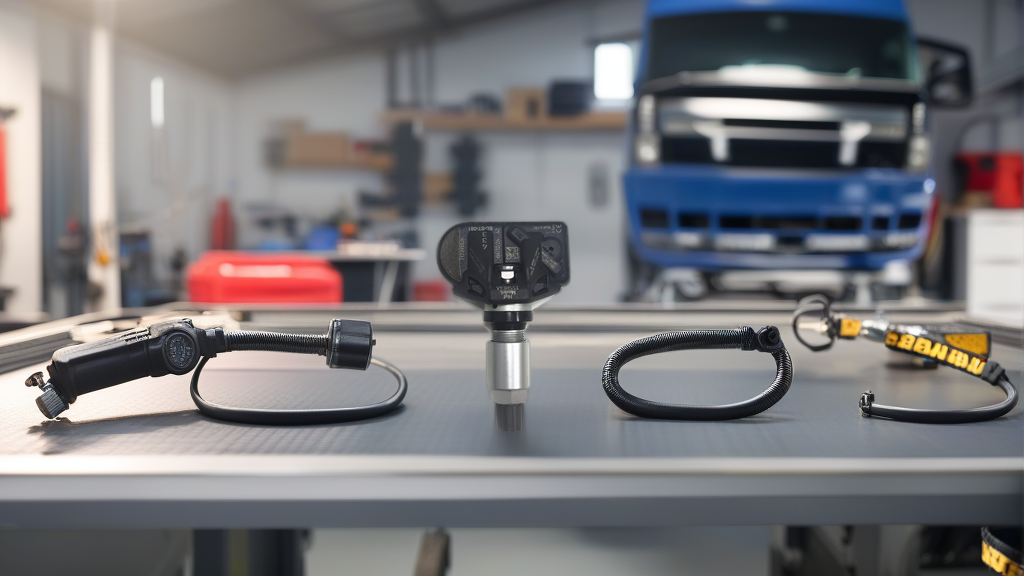
Replacement is straightforward. The EQV uses clamp-in sensors with a standard 433MHz protocol. The BL-ST-081 | BH-Sens 433MHz TPMS Tire Pressure Sensor | Fits Aston Martin, BMW, Maybach, Mercedes-Benz, Mini & 2 More | OE# 36106872774, 42607WAA02, 5A3DC0401 (BH-Sens BL-ST-081) is a direct OE replacement – it matches the factory frequency and is pre-programmed to plug-and-play with the EQV’s system.
Signal Interference – The Overlooked Culprit
The EQV’s TPMS receivers are located in the wheel wells. They’re sensitive to RF noise on the 433MHz band. Common interference sources on the EQV include:
- Metallic window tint (especially carbon or ceramic tints containing metal particles) – can block signals from sensors to receivers
- Aftermarket LED interior lighting – some LED drivers emit RF noise in the 400–500MHz range
- Dash cams with power-line adapters – cheap 12V-to-USB converters can radiate interference
- Phone chargers plugged into 12V sockets – especially older “cigarette lighter” adapters
Interference presents differently from a dead battery:
- The light may flicker or come on only when you’re driving past certain locations
- A TPMS tool can sometimes read the sensor, sometimes not
- Removing the suspected accessory (like unplugging a dash cam) resolves the issue for a test drive
Diagnosis test: Drive the EQV with the suspected accessory unplugged for 20 minutes. If the light stays off, you’ve found the source. If not, move to the battery test.
Sensor Fault or Physical Damage
Less common but worth checking: a sensor that’s been struck by road debris, corroded from tire sealant, or simply failed electronically. These sensors show a weak signal (not total loss) on a TPMS tool. The pressure reading may be inaccurate by 5–10 psi. Replace the sensor if the tool reports “fault” or “battery low” alongside erratic data.
Practical Step-by-Step Diagnosis for the EQV Owner
You’ll need: A tire pressure gauge, a TPMS scan tool (most auto parts stores loan these for free), and 20 minutes.
- Check all four tire pressures with a manual gauge. If any are low, inflate and see if the light resets after driving 5 miles.
- If pressures are correct, use the TPMS tool to scan each sensor. Note which sensor IDs respond and which don’t.
- One sensor silent = dead battery. Replace that sensor.
- All sensors respond but light is on = possible interference. Unplug any aftermarket electronics, then drive.
- Sensor shows “battery low” but still transmits – replace it soon. You have a few weeks before it dies completely.
Recommended Part for EQV TPMS Replacement
If you confirm a dead sensor, the BL-ST-081 | BH-Sens 433MHz TPMS Tire Pressure Sensor | Fits Aston Martin, BMW, Maybach, Mercedes-Benz, Mini & 2 More | OE# 36106872774, 42607WAA02, 5A3DC0401 is the correct direct-fit choice. It’s a clamp-in sensor pre-programmed at 433MHz, compatible with the EQV’s original receiver module. No cloning or relearn tool is required if you’re replacing all four – the system auto-learns new sensor IDs after a short drive. Always replace sensors in sets of four if your EQV is over 5 years old, as the remaining three are near end of life.
FAQ
How long does the EQV TPMS sensor battery last?
Mercedes-Benz specifies 5–7 years, but real-world experience shows 6–8 years in moderate climates. The EQV, being a 2020+ model, is just entering the replacement window for early units. Extreme heat or cold can shorten battery life by 1–2 years.
Can I replace just one TPMS sensor on my EQV?
Technically yes, but it’s not recommended. If one sensor’s battery died, the others are likely within 6 months of failure. Replacing all four at once saves labor and prevents repeated warning light visits. The BH-Sens BL-ST-081 is priced to make a full set affordable.
Will aftermarket wheels affect EQV TPMS signal?
Only if the wheels are made of carbon fiber or have metal inserts that block RF. Standard alloy wheels (like most aftermarket EQV wheels) do not interfere. The sensor’s 433MHz signal penetrates aluminum easily. However, steel wheels with thick rubber grommets can occasionally cause signal attenuation.
How do I reset the TPMS light after replacing sensors on the EQV?
The EQV automatically relearns new sensors after driving above 15 mph for 5–10 minutes. No manual reset procedure is needed. If the light remains on, drive another cycle. If it persists, verify the sensors are programmed to 433MHz and that the receiver module isn’t faulty.