
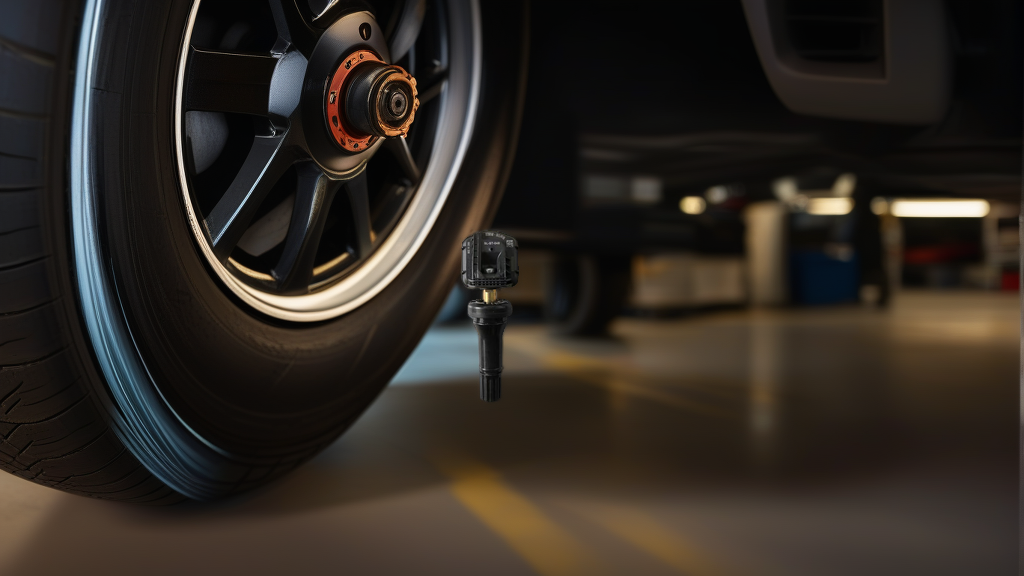
Understanding TPMS Relearn on REXTON Vehicles
REXTON vehicles, primarily SUVs and pickup trucks manufactured by SsangYong (now KG Mobility), use direct TPMS sensors mounted inside each tire. When you replace a sensor—especially with a pre-programmed unit like the BL-ST-048—the vehicle’s receiver must learn the new sensor IDs. Skipping this step leaves the TPMS warning light illuminated and disables low-pressure alerts.
The relearn procedure varies by model year and system generation. Most REXTON models from 2010 onward use 433MHz sensors and support multiple relearn methods. Below, I break down each method step by step.
Tools You’ll Need
| Tool | Purpose |
|---|---|
| TPMS scan tool (Autel TS508, Bartec Tech400SD, or equivalent) | For OBD relearn or triggering sensors |
| Magnet (neodymium, ~1 inch diameter) | For stationary relearn on some models |
| Tire pressure gauge | To set all tires to correct pressure before relearn |
| Vehicle owner’s manual | To confirm specific relearn procedure for your year/trim |
| OBD-II connector (for OBD relearn) | Built into most TPMS tools |
Note: If you use a pre-programmed sensor like BL-ST-048, the sensor already contains a programmable ID. You can clone the old sensor ID or program a new one before installation. This article assumes you have installed new sensors and need to sync them.
Method 1: Auto Relearn (Drive-Away Relearn)
This is the simplest method and requires no special tools. Most REXTON models (especially 2014–2020) support auto relearn after a battery disconnect or sensor replacement.
Step-by-Step:
- Inflate all four tires to the recommended pressure listed on the driver door jamb (typically 32–36 psi for REXTON models).
- Start the engine. The TPMS light will likely flash or stay solid.
- Drive the vehicle above 20 mph (32 km/h) continuously for 10–15 minutes. Avoid aggressive turns or hard braking.
- During this drive, the vehicle’s receiver learns each sensor ID as it receives signals. The TPMS light turns off automatically when all sensors are recognized.
- If the light remains on after 20 minutes of driving, stop and try an OBD or stationary relearn.
When to use: After installing sensors that were pre-programmed with IDs matching the original sensors (cloned), or if the vehicle system supports auto-learning without manual intervention. The BL-ST-048 sensor can be cloned to match your original sensor ID, making auto relearn more reliable.
Method 2: OBD Relearn (Tool-Based)
OBD relearn is the most reliable method for REXTON vehicles, especially 2016–2023 models. It requires a TPMS tool that communicates with the vehicle’s ECU via the OBD-II port.
Step-by-Step:
- Connect your TPMS tool to the OBD-II port (located under the dashboard, driver’s side).
- Turn the ignition to ON (engine off) or start the engine, depending on tool instructions.
- Select “REXTON” or “SsangYong” from the vehicle menu on the tool.
- Choose “TPMS Relearn” or “Sensor Learning” option.
- Follow the tool prompts—typically, you’ll need to trigger each sensor in a specific order (left front, right front, right rear, left rear).
- Use the tool’s low-frequency trigger to activate each sensor. Hold the tool against the tire sidewall near the valve stem for 2–3 seconds.
- Once all four sensors are triggered, the tool sends the IDs to the ECU via OBD. The process takes 1–3 minutes.
- The TPMS light should turn off immediately, or after a short test drive.
Tip: If your tool fails to communicate, double-check that the sensor is a 433MHz unit. REXTON does not use 315MHz sensors. The BL-ST-048 is 433MHz and works seamlessly with standard TPMS tools.
Method 3: Stationary Relearn (Magnet or Trigger Tool)
Some older REXTON models (2010–2015) use a stationary relearn procedure that doesn’t require an OBD tool. You’ll need a strong magnet or a dedicated TPMS trigger tool.
Step-by-Step (Magnet Method):
- Set all tires to correct pressure.
- Turn ignition to ON (engine off).
- Locate the TPMS learn button or receiver antenna. In most REXTON models, this is behind the glove box, under the dash near the steering column, or inside the fuse panel. Check your owner’s manual.
- Hold the magnet directly over the receiver location for 5–10 seconds until the horn chirps twice or the hazard lights flash twice. This enters learn mode.
- Starting with the left front tire, hold the magnet against the valve stem or the sensor’s sidewall (within 1 inch of the sensor) for 5–10 seconds. The horn chirps once to confirm the sensor is learned.
- Repeat for right front, right rear, and left rear in that order.
- After the fourth sensor, the horn chirps twice to confirm all IDs are stored.
- Turn ignition off, then start the engine. The TPMS light should be off.
Alternative: If your REXTON model uses a low-frequency trigger tool instead of a magnet, follow the same steps but use the tool to activate each sensor.
Fitment Note for BL-ST-048 Sensor
The BH-Sens 433MHz sensor (SKU: BL-ST-048) is designed as a direct replacement for many REXTON models. It crosses to OE numbers like 13530661, 13533166, 13538565, and others. Before starting the relearn, confirm your vehicle’s year and system type:
- 2010–2015 REXTON: Likely uses stationary or auto relearn. Pre-programming the sensor to match the original ID avoids the magnet procedure.
- 2016–2023 REXTON: Supports OBD and auto relearn. The BL-ST-048 is plug-and-play with most TPMS tools.
Always check compatibility with your specific VIN or contact the supplier. The sensor is clamp-in type and uses a standard 433MHz band.
Recommended Part
For a reliable, pre-programmed sensor that reduces relearn hassle, use the BL-ST-048 | BH-Sens 433MHz TPMS Tire Pressure Sensor | Fits Buick, Cadillac, Chevrolet, Nevo | OE# 13530661, 13533166, 13538565. It comes ready to install and works with all three relearn methods described above. Clone your original sensor ID before installation to make auto relearn nearly immediate.
Troubleshooting Common Relearn Issues
- Light stays on after auto relearn: Try driving another 10 minutes at steady speed. If still on, use OBD method to force IDs.
- OBD tool can’t connect: Verify ignition is ON. Some REXTON models require engine running. Also check tool firmware updates.
- Horn doesn’t chirp during stationary relearn: The receiver location may differ. Search online forums for your specific model year (e.g., “2012 REXTON TPMS learn button”).
- Sensor not detected: Ensure the sensor battery is active. Pre-programmed sensors like BL-ST-048 have a shelf life of 5–7 years. If stored improperly, the battery may be weak.
FAQ
What is the difference between auto relearn and OBD relearn on REXTON?
Auto relearn requires no tools—you simply drive the vehicle, and the ECU learns IDs automatically. OBD relearn uses a TPMS tool to manually trigger each sensor and upload IDs to the ECU. Auto relearn is slower and may fail if sensors are not transmitting consistently. OBD relearn is faster and guarantees success, especially after installing new sensors with unique IDs.
Can I use a single BL-ST-048 sensor for all four tires on my REXTON?
Yes, the BL-ST-048 is a universal 433MHz sensor that can be programmed to any of the four positions. You’ll need four sensors (one per tire). They come pre-programmed with a default ID, or you can clone your original IDs. For best results, clone the IDs before installation so the ECU recognizes them immediately.
Why does my REXTON TPMS light flash after sensor replacement?
A flashing TPMS light (usually for 60–90 seconds at startup) indicates the system has detected a mismatch between stored sensor IDs and actual sensor IDs. This is normal after replacement. Perform an OBD or stationary relearn to write the new IDs to the ECU. The light will turn solid and then off once the process is complete.
Does the BL-ST-048 sensor require a specific relearn tool?
No. It works with any standard TPMS tool that supports 433MHz sensors. Autel, Bartec, and ATEQ tools all work. For OBD relearn, the tool must have REXTON/SsangYong in its vehicle database. If your tool lacks that, use the auto relearn method (drive for 10–15 minutes) instead.