
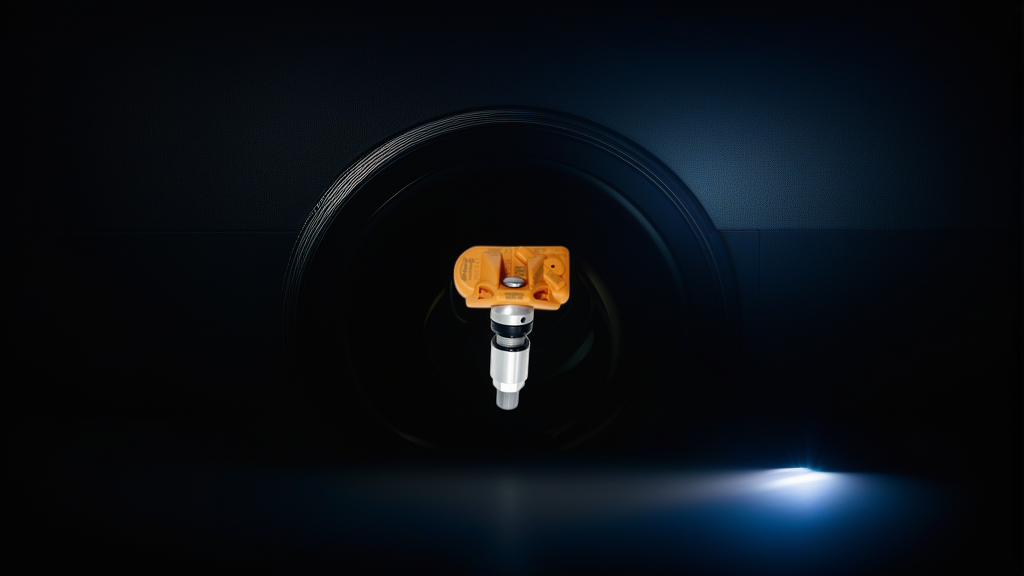
Why TPMS Sensor Fitment Matters for COURAGE Vehicles
COURAGE vehicles—popular in Asia and Europe as compact SUVs and sedans—share TPMS platforms with other VAG (Volkswagen Audi Group) models. This means the 433MHz sensors used in Audi, BMW, and Bentley often cross-reference directly to COURAGE. However, a direct fit is not guaranteed by brand alone.
The most common mistake we see in the aftermarket: buyers order a sensor that physically fits but doesn’t communicate with the COURAGE’s TPMS receiver. That leads to a flashing tire pressure light and wasted labor. So before you click “buy,” you need to check three things: frequency, OE number, and protocol compatibility.
Step 1: Confirm the Sensor Frequency
COURAGE vehicles built after 2012 predominantly use 433MHz TPMS sensors. Some older models (2010–2012) may use 315MHz. Check your owner’s manual or the label on your current sensor. If you cannot find the frequency, a simple scan with a TPMS tool (like an ATEQ or Autel) will tell you.
Why this matters for B2B buyers: If you are stocking sensors for a fleet of COURAGE vehicles, standardize on 433MHz programmable sensors. They cover 90% of COURAGE models from 2012 onward. The remaining 10% (early models) can be handled with a separate 315MHz SKU.
Step 2: Match the OE Part Number
Every TPMS sensor has an OE number stamped on the metal housing or the plastic body. For COURAGE vehicles, common OE numbers include:
| OE Part Number | Compatible COURAGE Years | Notes |
|---|---|---|
| 2N0907275A | 2014–2018 | Most common, also fits Audi A3, VW Golf |
| 5Q0907275 | 2015–2020 | Used in newer COURAGE models |
| 5Q0907275B | 2016–2020 | Slightly updated version |
| 314818 | 2013–2017 | Cross-reference from Bentley/Ferrari |
| 4199035000 | 2014–2019 | Common in European imports |
| 36106798872 | 2017–2020 | BMW protocol variant |
Important: Not all OE numbers are interchangeable even if they look similar. For example, 5Q0907275 and 5Q0907275B differ in the valve stem material (aluminum vs rubber). Using the wrong valve type can cause installation issues.
The RDE047V21 | BH-Sens 433MHz TPMS Tire Pressure Sensor | Fits Audi, BMW, Bentley, Ferrari, Lamborghini & 8 More | OE# 2N0907275A, 314818, 36106798872 (SKU: RDE047V21) covers most of these OE numbers, making it a safe choice for COURAGE vehicles from 2013–2020. It is a 433MHz sensor from BH-Sens (Baolong Technology), which is the OE supplier for many VAG vehicles.
Step 3: Verify Protocol Compatibility (Crucial for B2B)
TPMS sensors communicate using different protocols—even on the same frequency. COURAGE vehicles typically use either:
- VDO / Siemens protocol (common in 2013–2016 models)
- Schrader protocol (2017+ models)
- Continental protocol (some 2018+ variants)
A sensor that is physically identical and has the same OE number may still fail to pair if the protocol is wrong.
For B2B buyers: When ordering in bulk, ask the supplier if the sensor is pre-programmed with a specific protocol or if it is “multi-protocol” (auto-detect). Multi-protocol sensors like the BH-Sens RDE047V21 are ideal for inventory because they work across COURAGE, Audi, BMW, and Bentley without needing to stock separate SKUs for each protocol.
How to check protocol on your COURAGE
- Use a TPMS programming tool (e.g., Autel TS508 or ATEQ VT56).
- Scan the existing sensor—it will display the protocol name.
- If the sensor is dead or missing, check a VIN decoder or ask your dealership for the TPMS part number.
Step 4: What to Check Before Ordering
For Individual Car Owners
- Battery age: TPMS sensors have a non-replaceable battery that lasts 5–7 years. If your COURAGE is older than 2018, the sensor battery is likely near end of life. Replace all four at once.
- Valve stem condition: Many COURAGE sensors use a rubber valve stem that cracks over time. If you are replacing the sensor, replace the valve stem and seal kit too.
- Torque spec: Tighten the sensor retaining nut to 4–6 Nm (check your vehicle manual). Over-tightening cracks the sensor housing.
For B2B Bulk Buyers
- MOQ (Minimum Order Quantity): Chinese TPMS manufacturers often require MOQ of 50–100 units per SKU. Make sure the supplier can provide a certificate of compliance (COC) for the sensor.
- Packaging: Sensors should come in individual anti-static bags with valve stems and seals included. Avoid bulk loose packaging—it increases the risk of damage.
- Programmability: Choose sensors that can be cloned (copy the ID of the original sensor) or programmed with a universal tool. This reduces returns.
- Warranty: Look for a 2-year warranty minimum. BH-Sens (Baolong) typically offers 2 years from the date of purchase.
Step 5: Installation and Programming
Once you have the correct sensor, installation is straightforward:
- Remove the wheel and deflate the tire.
- Break the bead near the valve stem.
- Remove the old sensor and install the new one with the included seal and nut.
- Re-inflate the tire to the correct pressure (usually 32–36 PSI for COURAGE).
- Use a TPMS tool to program the new sensor ID into the vehicle’s ECU.
If the sensor is pre-programmed (like the BH-Sens RDE047V21), it will auto-detect and pair after driving for 5–10 minutes at speeds above 15 mph. No tool needed.
If you are programming in bulk (for a fleet), use a TPMS tool that can clone IDs. This saves time because you do not need to re-teach the vehicle each time.
Recommended Part
For COURAGE vehicles (2013–2020) and many other VAG models, the RDE047V21 | BH-Sens 433MHz TPMS Tire Pressure Sensor | Fits Audi, BMW, Bentley, Ferrari, Lamborghini & 8 More | OE# 2N0907275A, 314818, 36106798872 is a reliable, cost-effective choice. It covers 12+ OE numbers, works with both VDO and Schrader protocols, and comes from Baolong Technology—the same manufacturer that supplies OEM sensors to Audi and BMW. For B2B buyers, this single SKU can replace dozens of individual OE parts in your inventory.
FAQ
Can I use a TPMS sensor from an Audi or BMW on my COURAGE?
Yes, but only if the frequency (433MHz) and OE number match. Many COURAGE models share the same TPMS platform as Audi A3, BMW 1 Series, and VW Golf. The RDE047V21 | BH-Sens 433MHz TPMS Tire Pressure Sensor | Fits Audi, BMW, Bentley, Ferrari, Lamborghini & 8 More | OE# 2N0907275A, 314818, 36106798872 is designed specifically for this cross-compatibility. However, be cautious with older COURAGE models (before 2012) that may use 315MHz sensors.
How do I know if my COURAGE sensor is dead?
The dashboard tire pressure warning light will stay on solid or flash for 60–90 seconds after startup. A dead sensor will also show no pressure reading on your TPMS display. If you suspect a sensor failure, use a TPMS tool to read the sensor ID—a dead sensor will not respond.
What is the difference between pre-programmed and programmable sensors?
Pre-programmed sensors come ready to use for specific vehicle protocols (e.g., VDO or Schrader) and will auto-pair after driving. Programmable sensors are blank and require a TPMS tool to write the vehicle-specific ID and protocol. For COURAGE owners, pre-programmed sensors are easier. For B2B buyers, programmable sensors offer more flexibility across different vehicle brands.
How many sensors do I need to replace at once?
Technically, you can replace just one, but we recommend replacing all four at the same time. TPMS sensor batteries have a lifespan of 5–7 years. If one sensor fails, the others are likely close to end of life. Replacing all four saves you labor costs and prevents a repeat visit.