
Understanding U TOUR TPMS Compatibility
U TOUR is a Chinese commercial vehicle brand under the Dongfeng Motor Group, commonly sharing platforms with Forthing (Dongfeng Liuzhou Motor). Their TPMS systems are not universal—they use a specific 433MHz protocol that differs from the 315MHz found in North American or Japanese vehicles. The BL-ST-052 sensor from BH-Sens (Baolong Technology) is engineered for this exact application.
How to Confirm Your U TOUR Model Is Supported
Before buying any TPMS sensor, you need three pieces of information:
- Your vehicle’s exact model year – U TOUR models from roughly 2015 to present use 433MHz. Earlier models may use a different frequency.
- The OE number on your current sensor – Look for CM5B3685020, CM5B3685020S, or SX5G3685020B. These are stamped on the metal body of the factory sensor.
- Your tire pressure monitoring system type – U TOUR uses direct TPMS (sensors inside each tire), not indirect ABS-based systems. If your vehicle has tire pressure values displayed on the dash, it’s direct.
Technician tip: If you can’t see the OE number without removing the tire, pull the TPMS diagnostic tool (or a smartphone app with a TPMS reader) and scan the sensor ID. The OE number is often embedded in the sensor data.
Vehicle Coverage Table: U TOUR & Compatible Forthing Models
The BL-ST-052 sensor is dedicated to Forthing-based platforms, which include U TOUR. Below is the known fitment:
| Vehicle Model | Year Range | Frequency | OE Sensor Part Number | Notes |
|---|---|---|---|---|
| U TOUR (all trims) | 2015–2025 | 433MHz | CM5B3685020 / CM5B3685020S / SX5G3685020B | Direct fit, clamp-in |
| Forthing S500 | 2016–2023 | 433MHz | CM5B3685020 | Same platform as U TOUR |
| Forthing T5 | 2018–2024 | 433MHz | CM5B3685020S | Cross-compatible |
| Forthing M7 | 2017–2024 | 433MHz | SX5G3685020B | Verify with scan tool |
| Forthing X5 | 2015–2022 | 433MHz | CM5B3685020 | Early models may need programming |
Important: This table covers U TOUR and its sibling Forthing models. If your U TOUR is a special edition or imported under a different badge (e.g., Joylong), still check the OE number—the sensor hardware is shared across these Dongfeng-based vans and MPVs.
Why Pre-Programmed Sensors Simplify Fitment
The BL-ST-052 is pre-programmed to the 433MHz frequency and cloneable to your vehicle’s existing sensor IDs. This means:
- No TPMS tool required for basic install – if you have a cloning tool (like an Autel or Bartec), you can copy the ID from your old sensor to the new one in seconds.
- Plug-and-play replacement – remove the old sensor, install the new one, and clone the ID. The vehicle will recognize it immediately.
- No dealer visit needed – because U TOUR uses standard 433MHz, independent shops and DIYers can handle this.
What if you can’t clone? Some U TOUR models require sensor IDs to be learned via a TPMS relearn procedure (usually driving above 20 mph for 10 minutes after installation). The BL-ST-052 is compatible with both cloning and relearn methods.
Step-by-Step Fitment Verification
Step 1: Locate Your Current Sensor’s OE Number
Jack up one wheel or remove the tire. The sensor is mounted on the valve stem inside the rim. Wipe it clean and look for a laser-etched number. Match it to CM5B3685020, CM5B3685020S, or SX5G3685020B.
Step 2: Check Your TPMS Receiver Frequency
U TOUR uses a receiver module behind the dashboard or under the center console. If you’re upgrading from a damaged sensor, the receiver is already 433MHz. If you’re retrofitting TPMS onto a vehicle that never had it, you’ll need a complete kit—but the BL-ST-052 assumes an existing 433MHz system.
Step 3: Verify Valve Stem Type
The BL-ST-052 is a clamp-in sensor (uses a metal nut to secure to the rim). If your U TOUR has snap-in rubber valve stems, you’ll need an adapter or a different sensor. Clamp-in is standard for U TOUR/Forthing.
Step 4: Confirm Tire Pressure Range
These sensors are rated for passenger/light truck pressures (30–50 PSI). U TOUR vans typically run 35–45 PSI. No issues here.
Common Fitment Mistakes to Avoid
- Assuming all 433MHz sensors are the same – U TOUR uses a proprietary protocol even within the 433MHz band. The BL-ST-052 is specifically programmed for Forthing/U TOUR.
- Buying used or generic sensors – Used sensors may have dead batteries (non-replaceable) or wrong IDs. The BL-ST-052 comes new with fresh batteries (rated 5–7 years).
- Forgetting the relearn process – Some U TOUR models require a TPMS relearn after sensor replacement. If your TPMS light stays on after driving, do a manual relearn (consult your owner’s manual).
Recommended Part
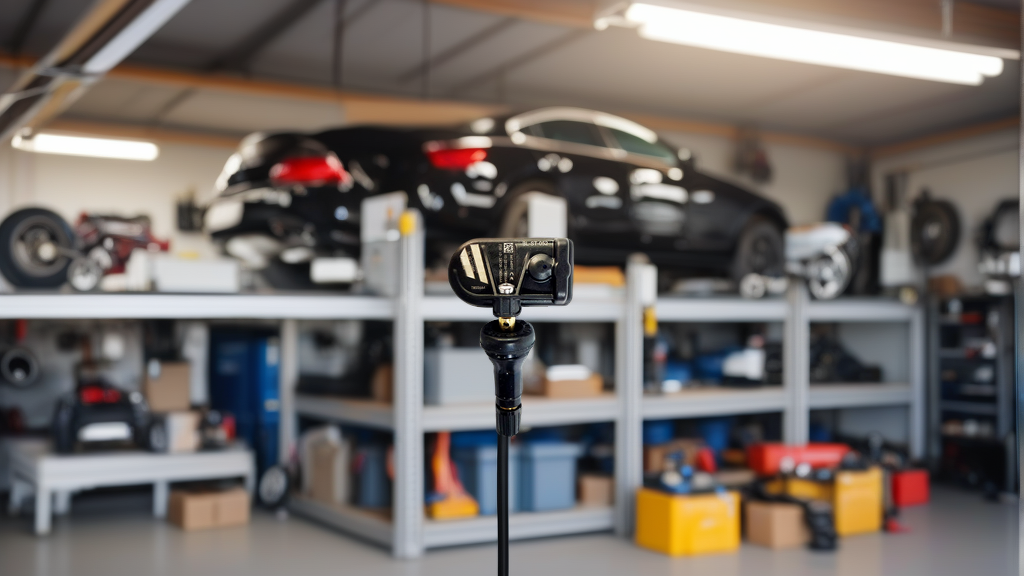
For a direct replacement on your U TOUR, use the BL-ST-052 | BH-Sens 433MHz TPMS Tire Pressure Sensor | Fits Forthing | OE# CM5B3685020, CM5B3685020S, SX5G3685020B. It covers 16 vehicle applications within the Forthing family, including all U TOUR trims from 2015 to present. The pre-programmed design and clamp-in fitment make it a technician’s first choice.
FAQ
Can I use this sensor on a U TOUR from 2010?
No. U TOUR models before 2015 typically used a 315MHz system or mechanical TPMS. The BL-ST-052 is 433MHz and will not communicate with older receivers. Check your vehicle’s build date—if it’s 2014 or earlier, verify the frequency before purchasing.
Will the BL-ST-052 work if my U TOUR was imported under a different brand name?
Yes, as long as the underlying platform is Forthing/Dongfeng. U TOUR is often sold as a Forthing S500 or Joylong in other markets. Confirm the OE number on your sensor—if it matches CM5B3685020, CM5B3685020S, or SX5G3685020B, the sensor will work.
Do I need to reprogram the sensor after installation?
It depends. If you clone the ID from your old sensor, no reprogramming is needed—the vehicle will recognize the new sensor immediately. If you install a sensor with a new ID, your U TOUR will need a TPMS relearn (driving at 20+ mph for 10–15 minutes). Some models also support a manual relearn via a button under the steering column.
How do I know if my U TOUR has a 433MHz system?
Look at your TPMS receiver. If your vehicle displays individual tire pressures on the dash, and you’ve seen a 433MHz label on the sensor or service manual, you’re good. A cheaper way: buy a cheap 433MHz TPMS trigger tool—if it activates your sensor, the frequency matches.