
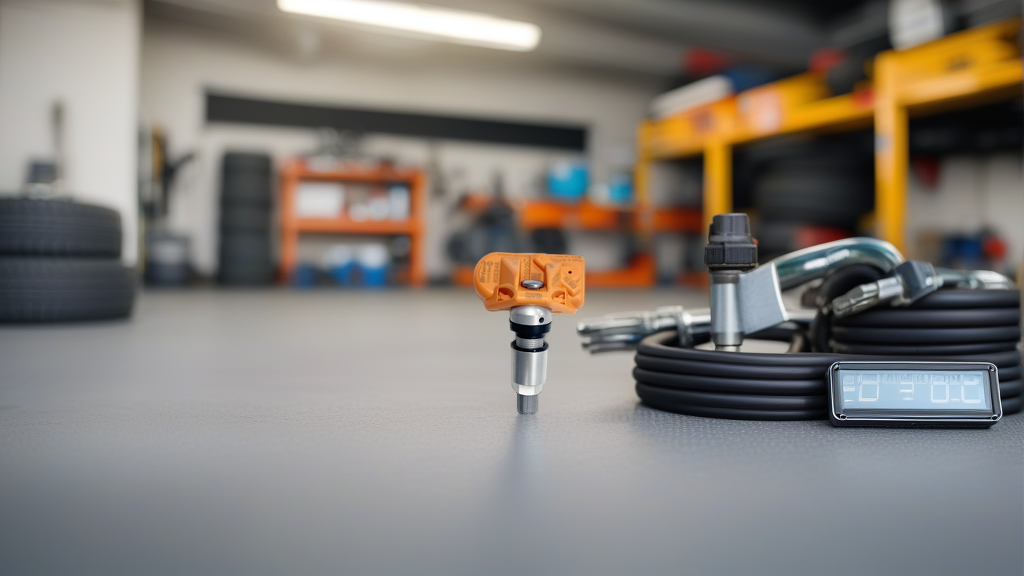
Quick Answer: The BH-Sens RDE048V21 (433MHz) TPMS sensor is compatible with most BMW models from 2008–2018 that use the original 433MHz system, including 3 Series, 5 Series, X3, X5, and 7 Series. However, fitment depends on your BMW’s production date, existing TPMS frequency, and whether your vehicle uses direct or indirect TPMS. Always verify your original OE part number (e.g., 11B0015CP, 36236781847) before purchasing.
—
If you own a BMW and your TPMS light is on, you’ve probably realized that finding the right replacement sensor isn’t as simple as picking any “BMW compatible” part. The BH-Sens RDE048V21 is one of the most versatile aftermarket sensors on the market—it covers 13 brands, including BMW—but “compatible” doesn’t mean “guaranteed to work on your specific car.” This guide walks you through exactly how to confirm fitment before you spend money, using real OE numbers, production year ranges, and the exact steps a technician would take.
Why BMW TPMS Fitment Is Tricky
BMW uses two completely different TPMS architectures depending on the model year and region:
- Direct TPMS (2008–2018 most models): A physical sensor inside each tire transmits pressure and temperature data via radio frequency (typically 433MHz in Europe/Asia, 315MHz in North America for many early models). The RDE048V21 is a 433MHz sensor.
- Indirect TPMS (F-series and newer, some models): No sensors in the wheels—the system uses ABS wheel speed sensors to detect pressure loss. These cars cannot use any physical TPMS sensor.
The RDE048V21 is designed for direct 433MHz systems. If your BMW has the indirect system (common on F30 3 Series after 2016, and G-series chassis), this sensor will not work—no matter how many OE numbers match.
BMW Model Compatibility Chart for RDE048V21
Below is a practical guide. These year ranges are general; always confirm with your VIN or existing sensor.
| BMW Model Series | Chassis Code | Compatible Years (Approx.) | Notes |
|---|---|---|---|
| 3 Series | E90, E91, E92, E93 | 2008–2012 | 433MHz direct TPMS standard |
| 3 Series | F30, F31 | 2012–2016 | Early F30 uses 433MHz; after ~2015 some switch to indirect |
| 5 Series | E60, E61 | 2008–2010 | 433MHz |
| 5 Series | F10, F11 | 2010–2016 | 433MHz through ~2015 |
| X3 | E83 | 2008–2010 | 433MHz |
| X3 | F25 | 2010–2017 | 433MHz on most; check production date |
| X5 | E70 | 2008–2013 | 433MHz |
| X5 | F15 | 2014–2018 | 433MHz on early F15; later models may differ |
| 7 Series | F01, F02 | 2008–2015 | 433MHz |
| 1 Series | E81, E82, E87, E88 | 2008–2012 | 433MHz |
| Z4 | E89 | 2009–2016 | 433MHz |
Important: North American BMWs often used 315MHz sensors from the factory. The RDE048V21 is 433MHz. If your car came with 315MHz, you would need a different sensor or a vehicle-side module update—neither of which is covered here. Check your old sensor’s frequency printed on the housing.
How to Verify Fitment Before Buying (Step-by-Step)
You can skip the guesswork by doing this in under five minutes:
- Find your existing sensor’s OE number. Remove a wheel (or look through the valve stem if you can read the part number). Common BMW OE numbers for 433MHz sensors that RDE048V21 replaces include:
- 11B0015CP
- 11B0022CP
- 2000680
- 36236781847
- 36236798726
- 4F0907275B (also used on Audi/VW, but works on BMW)
- 7P0907275
- 7PP907275F
If your sensor’s OE number matches any of these, the RDE048V21 is a direct replacement.
- Check your BMW’s build date. Open the driver’s door, look at the sticker on the B-pillar. The month/year of manufacture is listed. If your car was built before 2008, it likely has an older 315MHz system or no TPMS at all. If built after 2016, it may use indirect TPMS.
- Use a TPMS scan tool. Many tire shops can read your sensor ID and frequency without removing the tire. This is the most accurate method—it tells you exactly what frequency your car expects.
- Verify your vehicle’s TPMS type. In your BMW’s iDrive, go to Vehicle Info → Tire Pressure Monitor. If you see numeric pressure values for each tire, you have direct TPMS. If you only see a “Tire Pressure Monitor” menu with no pressures, it’s the indirect system—no sensor needed.
Cross-Brand Compatibility: Why This Sensor Works Beyond BMW
The RDE048V21 is a true multi-application sensor. It covers Aston Martin, Audi, Bentley, Bugatti, and nine other brands because it uses a programmable chipset that mimics the original sensor’s communication protocol. For BMW owners, this means you can use the same sensor that also fits a 2012 Audi A8 or a 2014 Bentley Continental GT—as long as the OE numbers match. This is possible because BH-Sens (Baolong Technology) manufactures sensors to the same physical and electrical specifications as the OE suppliers (Huf, Schrader, etc.) but at a fraction of the cost.
What About Programming and Activation?
The RDE048V21 is a programmable sensor. It does not come pre-programmed for your BMW. You have two options:
- Use a TPMS programming tool (such as Autel TS508, Bartec, or ATEQ) to write your vehicle’s original sensor ID into the new sensor. Many tire shops do this for a small fee.
- Use a universal cloning tool that copies the data from your old sensor to the new one.
After installation, your BMW may require a re-learn procedure. For most E-series and early F-series BMWs, the car auto-learns after driving above 25 mph for 10–15 minutes. For newer models, you may need to use the iDrive reset function (usually found in the Vehicle Settings menu).
Common Fitment Mistakes
- Assuming all 433MHz sensors are the same. They’re not. The RDE048V21 uses a specific protocol that matches BMW’s 2008–2016 era. It will not work on a 2007 BMW 328i (which uses 315MHz) or a 2019 BMW 330i (which uses indirect TPMS).
- Ignoring the valve stem type. The RDE048V21 comes with a standard rubber valve stem. If your BMW uses a metal clamp-in valve stem (common on some 5 Series and X5), you may need to order the sensor with the correct stem or reuse your existing one.
- Buying based on “fits all” listings. A sensor that fits “BMW 3 Series 2008–2018” is meaningless because the 2018 3 Series (G20) uses indirect TPMS and has no physical sensor in the wheels.
Recommended Part
If you’ve verified your BMW uses a 433MHz direct TPMS system and your OE number matches one of the listed numbers, the RDE048V21 | BH-Sens 433MHz TPMS Tire Pressure Sensor | Fits Aston Martin, Audi, BMW, Bentley, Bugatti & 9 More | OE# 11B0015CP, 11B0022CP, 2000680 is a reliable, cost-effective replacement. It is manufactured by Baolong, one of the largest OE TPMS suppliers in China, and is used by many independent shops as a standard replacement for BMW, Audi, and Bentley vehicles.
FAQ
Will the RDE048V21 work on my 2015 BMW X5 (F15)?
Most 2015 F15 X5 models with direct TPMS use 433MHz sensors. If your original sensor’s OE number is 11B0015CP, 36236781847, or 7PP907275F, yes. However, some very late 2015 production X5s switched to a different frequency. Check your build date—if it’s after August 2015, verify with a scan tool first.
Can I install this sensor myself, or do I need a tire shop?
You can install the sensor yourself if you have the tools to break the tire bead and access the valve stem. However, you will still need a TPMS programming tool to write your vehicle’s sensor ID into the new sensor. Most DIYers prefer to have a tire shop handle the installation and programming simultaneously.
The RDE048V21 is listed for Aston Martin and Bentley—does that mean it’s lower quality?
No. The sensor uses the same internal electronics regardless of which car brand you install it in. The difference is that the sensor’s programmable memory stores the specific vehicle protocol and sensor ID. Baolong supplies sensors to multiple luxury brands because the underlying 433MHz frequency and hardware are identical—only the software configuration changes. It is a genuine OE-quality part, not a generic clone.
How do I know if my BMW uses 433MHz or 315MHz?
Look at the original sensor. The frequency is usually printed on the top or side of the sensor body (e.g., “433MHz” or “433.92MHz”). If you can’t see it, use a TPMS scan tool, or check your vehicle’s service manual. For North American BMWs, most 2008–2012 models used 315MHz; 2012–2016 models often used 433MHz, but there are exceptions. Always verify with the physical sensor before ordering.