
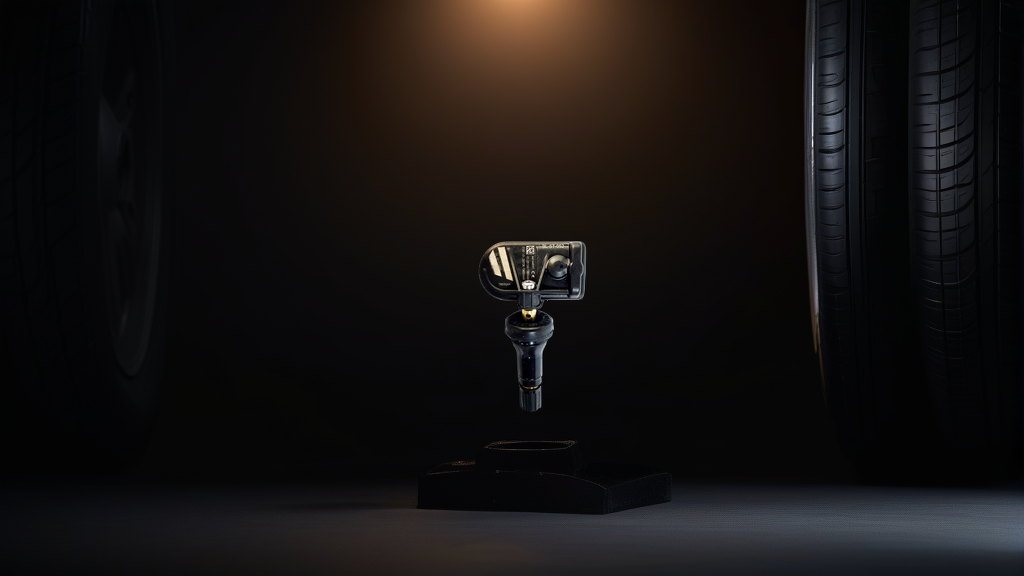
Understanding the E爱丽舍 TPMS System
The E爱丽舍 uses a direct TPMS system with sensors mounted inside each wheel. These sensors measure tire pressure and temperature, transmitting data via 433MHz radio frequency to the vehicle’s receiver module. When the system detects a problem, the dashboard warning light illuminates—either solid (indicating low pressure) or flashing (indicating a system fault).
Common Causes of TPMS Warning Light on E爱丽舍
1. Dead Sensor Battery
Each TPMS sensor contains a non-replaceable lithium battery designed to last 5-7 years. As the battery drains, the sensor transmits weaker signals or stops transmitting entirely. Symptoms include:
- Intermittent readings: Pressure shows normally on cold mornings but disappears after driving
- No signal on specific wheel: One tire consistently shows dashes or “0” pressure
- Warning light flashes for 60-90 seconds then stays solid: This is the standard start-up diagnostic sequence indicating a missing or faulty sensor
Diagnostic tip: If your E爱丽舍 is 2017 or older, expect at least one sensor to fail soon. The battery degradation accelerates in extreme temperatures.
2. Signal Interference Diagnosis
433MHz TPMS sensors can experience interference from:
| Interference Source | Symptoms | Diagnosis Method |
|---|---|---|
| Metalized window tint | False low-pressure warnings, especially after tint installation | Test with tint removed at window corner near receiver antenna |
| Aftermarket LED headlights/DRLs | Random warning light activation at night | Disconnect aftermarket lights temporarily |
| Wireless phone chargers | Intermittent signal loss near charging pad | Move phone charger away from center console |
| Heavy-duty vehicle electronics | Constant “system fault” warning | Check for non-OEM electronic accessories |
Real-world case: A 2019 E爱丽舍 owner reported TPMS warnings only when driving past a specific cell tower. This is rare but possible with shielded or damaged sensors. The fix was replacing the failing sensor rather than the interference source.
3. Low Tire Pressure (The Obvious One)
Before assuming sensor failure, check tire pressure with a manual gauge. The TPMS warning typically activates when pressure drops 25% below the recommended value (usually 2.2-2.5 bar for E爱丽舍). Seasonal temperature changes can trigger this—a 10°C drop reduces tire pressure by about 0.1 bar.
4. Sensor Damage or Corrosion
Clamp-in sensors like those on the E爱丽舍 have a metal valve stem that can corrode in salt-belt regions. Corrosion at the valve stem base prevents the sensor from sealing properly, causing slow air leaks and false low-pressure warnings. Inspect visually—green or white crust around the valve base indicates corrosion.
Diagnostic Steps for E爱丽舍 Owners
Step 1: Read TPMS Codes
Use a TPMS diagnostic tool (like Autel TS608 or Bartec Tech400) to check each sensor’s status. The tool will show:
- Sensor ID and battery voltage (below 2.4V indicates end-of-life)
- Pressure and temperature readings
- Error codes (e.g., “Sensor Not Found” or “Invalid Data”)
Step 2: Perform a Relearn Procedure
After replacing a sensor or correcting pressure, the E爱丽舍 may require a relearn. Two common methods:
- Automatic relearn: Drive above 40 km/h for 10-20 minutes—the system should auto-detect new sensors
- Manual relearn: Use a TPMS activation tool at each tire in sequence (check your owner’s manual for specific order)
Step 3: Rule Out Interference
If one sensor shows intermittent data while others work fine, swap that wheel with a known-good wheel. If the problem follows the sensor, it’s the sensor. If it stays at the same wheel position, check for interference near that corner’s receiver antenna (typically near the wheel well or behind the bumper).
Recommended Part: BH-Sens 433MHz Sensor for E爱丽舍
When replacement is necessary, the BL-ST-052 | BH-Sens 433MHz TPMS Tire Pressure Sensor | Fits Forthing | OE# CM5B3685020, CM5B3685020S, SX5G3685020B is a direct-fit solution. This BH-Sens (Baolong Technology) sensor operates at 433MHz and is pre-programmed with OE numbers CM5B3685020, CM5B3685020S, and SX5G3685020B. It’s a clamp-in type that matches the original Forthing/BAIC group fitment used in many E爱丽舍 models. No programming required—just install and perform a relearn.
Note: Always replace sensors in sets of four if three or more have failed. Mixing old and new sensors can cause inconsistent signal strength.
FAQ
How do I know if my E爱丽舍 TPMS sensor battery is dead vs. a pressure issue?
Use a manual tire pressure gauge first. If all tires show proper pressure but the warning light is on, the issue is likely a dead sensor battery or signal fault. A TPMS scan tool will confirm—battery voltage below 2.4V means the sensor is dying.
Can aftermarket LED bulbs cause TPMS interference on E爱丽舍?
Yes, especially low-quality LED headlights or daytime running lights. The switching power supplies in these bulbs can emit radio frequency noise that disrupts 433MHz TPMS signals. Symptoms include warnings that appear only when lights are on. Test by temporarily removing the aftermarket bulbs.
How long does it take to replace a TPMS sensor on an E爱丽舍?
A professional installation takes 30-45 minutes per sensor, including tire dismount, sensor replacement, and relearn. DIY replacement is possible if you have a tire machine and TPMS tool, but improper installation can damage the sensor or cause air leaks.
What is the correct tire pressure for E爱丽舍 to avoid TPMS warnings?
Check your driver’s door jamb sticker. Typical values are 2.2 bar (32 psi) front and 2.4 bar (35 psi) rear when cold. Inflate to these values at least once per month, especially during temperature transitions between seasons.