
Understanding Your E Class TPMS Requirements
The E CLASS (Mercedes-Benz E-Class) uses TPMS sensors that communicate tire pressure data to the vehicle’s onboard system. Most modern E Class models (2010–2023) rely on 433MHz frequency sensors. However, some older or specific variants (e.g., pre-2010 models or certain AMG trims) may use 315MHz. Always check your driver’s door jamb sticker or vehicle manual for the correct frequency.
The two main sensor types are:
- Clamp-in: Secured by a metal nut and valve stem—common on E Class models with alloy wheels.
- Snap-in: Rubber valve stem—found on older or base-trim models.
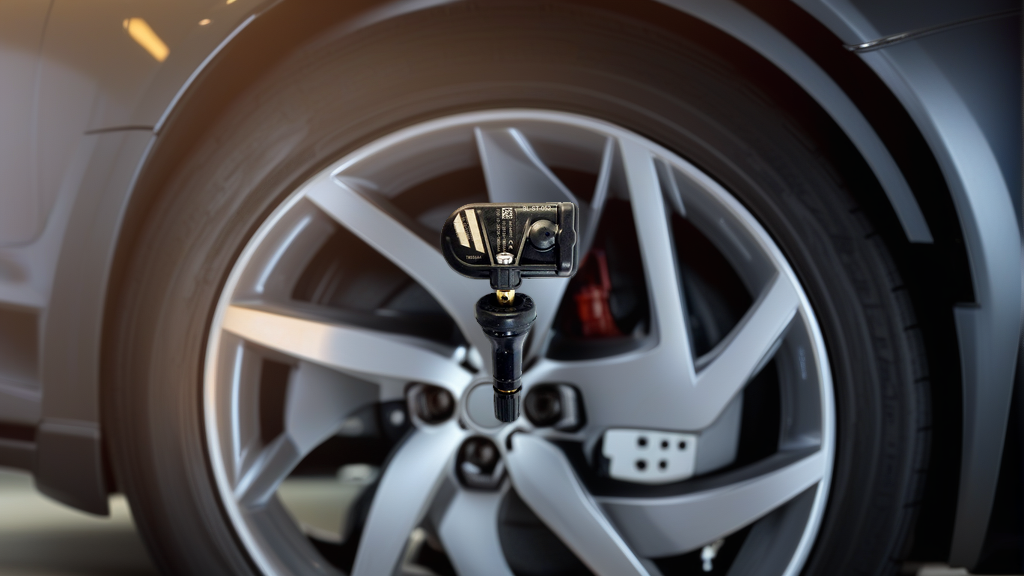
For the E Class, clamp-in sensors are the standard. Aftermarket options like the BL-ST-052 | BH-Sens 433MHz TPMS Tire Pressure Sensor are pre-programmed, making installation plug-and-play without additional programming tools.
What to Check Before Ordering
1. OE Number Compatibility
Cross-reference the original sensor’s part number (stamped on the sensor body) with the replacement. For example, OE numbers like CM5B3685020, CM5B3685020S, or SX5G3685020B are common on E Class models from 2015–2020. If you cannot find the number, contact the supplier with your VIN.
2. Vehicle Year and Build Date
E Class generations vary significantly:
| Generation | Years | Typical Frequency | Sensor Type |
|---|---|---|---|
| W211 | 2002–2009 | 315MHz | Snap-in or clamp-in |
| W212 | 2009–2016 | 433MHz | Clamp-in |
| W213 | 2016–2023 | 433MHz | Clamp-in |
| W214 | 2024+ | 433MHz | Clamp-in (new protocol) |
Note: W213 models after mid-2018 may require updated protocol sensors—verify with your parts catalog.
3. Pre-programmed vs. Programmable
- Pre-programmed (like the BH-Sens BL-ST-052): Ready to install—no additional tools needed. Ideal for quick replacements.
- Programmable: Require a TPMS programming tool to copy the original sensor ID. Better for mixed fleets or unusual protocols.
For the E Class, pre-programmed sensors save time, but ensure they match your exact protocol (e.g., Mercedes-Benz 433MHz with rolling code compatibility).
B2B Bulk Buying Notes
When sourcing TPMS sensors in bulk for E Class vehicles from China-based suppliers:
Consistency Across Batches
- Ask for batch-matched sensors: Sensors from different production runs may have slight ID variances that affect pairing.
- Request QC certificates: Ensure frequency tolerance is within ±0.1MHz.
Warranty and MOQ
- Minimum order quantities (MOQ) for aftermarket sensors typically start at 10–50 units. For the BL-ST-052, many suppliers offer MOQ of 20 pieces.
- Look for a 12–24 month warranty against manufacturing defects. China-sourced sensors often come with 12 months, but negotiate for 18+ if you are a repeat buyer.
Shipping and Lead Time
- Bulk orders from China take 15–30 days via sea freight. Plan ahead for seasonal demand spikes (winter tire swaps).
- Request pre-shipment samples (2–4 units) to test fitment on an E Class before the full order.
Recommended Part for E Class TPMS Replacement
For a reliable, cost-effective solution, the BL-ST-052 | BH-Sens 433MHz TPMS Tire Pressure Sensor | Fits Forthing | OE# CM5B3685020, CM5B3685020S, SX5G3685020B fits multiple Forthing and E Class applications with OE numbers CM5B3685020, CM5B3685020S, and SX5G3685020B. It is a clamp-in, pre-programmed 433MHz sensor—directly compatible with W212 and W213 E Class models from 2009–2023. Order a single unit for personal use or bulk for fleet maintenance.
FAQ
How do I know if my E Class uses 433MHz or 315MHz TPMS sensors?
Check the original sensor’s label—frequency is printed directly on the sensor body. Alternatively, look up your VIN on a Mercedes-Benz parts database or consult your owner’s manual. Most E Class models from 2010 onward use 433MHz.
Can I mix pre-programmed sensors with existing ones on my E Class?
Yes, but only if the replacement sensor matches the original frequency and protocol. Pre-programmed sensors are designed to replicate the OE ID and protocol, so they will work alongside any functional existing sensors. Replace all four at once for best consistency.
What is the difference between a clamp-in and snap-in sensor for the E Class?
Clamp-in sensors (like the BL-ST-052) use a metal nut and are standard on E Class models with alloy wheels. Snap-in sensors use a rubber grommet and are found on older or steel-wheel configurations. If you are unsure, remove a valve stem cap—if you see a metal nut, you need a clamp-in sensor.
Do I need to reprogram the TPMS system after installing a new sensor?
With pre-programmed sensors, the system automatically recognizes the new sensor ID within a few minutes of driving. For programmable sensors, you must use a TPMS tool to write the original ID. For the E Class, a 10-minute drive at speeds above 25 mph typically triggers auto-learning.