
Why Sensor Selection Matters for WHALE Vehicles
WHALE is a growing brand in the Chinese automotive market, often sharing platforms with MG, Roewe, and Rising models. This platform sharing means TPMS sensors are frequently interchangeable, but choosing the wrong sensor can lead to intermittent signal loss, incorrect pressure readings, or complete system failure. The most common mistake buyers make is assuming any 433MHz clamp-in sensor will work—it won’t.
What to Check Before Ordering a WHALE TPMS Sensor
1. OE Part Number Verification
Before you order any sensor, pull the existing sensor from your WHALE wheel or check your vehicle’s service records. The BL-ST-031 sensor covers four critical OE numbers:
| OE Number | Common Application Notes |
|---|---|
| 10290600 | Early WHALE and Roewe models |
| 10625492 | Mid-production WHALE, MG crossovers |
| 10718213 | Late-model WHALE SUVs |
| 11205327 | Some Rising and MG EV platforms |
Do not rely on visual inspection alone—the sensor body may look identical across generations, but the internal chipset differs. Cross-check these numbers against your vehicle’s VIN through a dealer or a trusted parts catalog.
2. Frequency—Never Assume 433MHz Works
WHALE vehicles use 433MHz TPMS sensors. This is the standard for most Chinese and European platforms, but some aftermarket sensors advertise “multi-frequency” capability. The BH-Sens BL-ST-031 is fixed at 433MHz, which is correct for WHALE. If you buy a generic 315MHz sensor (common on older US or Japanese cars), it will not communicate with your WHALE’s receiver module.
3. Clamp-in vs. Snap-in Design
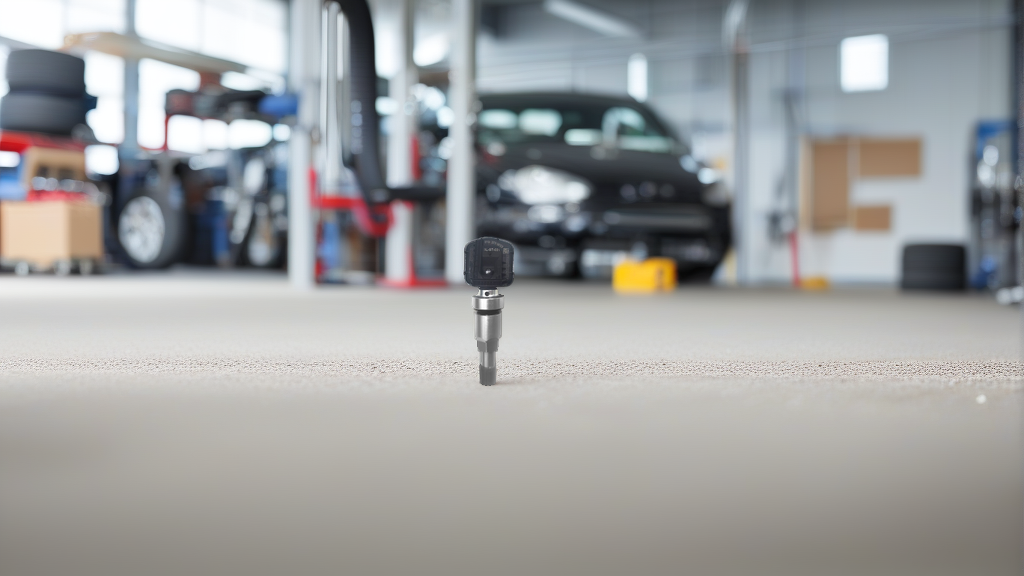
The BL-ST-031 is a clamp-in sensor, secured by a metal nut and grommet. WHALE vehicles from the factory use clamp-in sensors. Snap-in sensors (rubber valve stem) are not interchangeable—they lack the correct thread pitch and sealing surface. Always replace with the same design.
4. Pre-programmed vs. Programmable
This is critical for DIY installers and B2B buyers alike:
- Pre-programmed sensors (like the BL-ST-031) come ready to install. They have the correct ID and protocol already loaded. You do not need a programming tool.
- Programmable sensors require a TPMS tool to copy the original sensor ID into the new sensor. If you buy programmable sensors for a fleet or bulk order, you must account for the time and tool cost to program each one.
For WHALE vehicles, BH-Sens pre-programmed sensors cover 59 OE fitments. This means one SKU can serve multiple models in your inventory.
B2B Bulk Buying Notes for WHALE TPMS Sensors
If you are sourcing sensors for a shop, fleet, or distribution, follow these guidelines:
- Request a fitment matrix. The BL-ST-031 fits 59 OE applications. Ask the supplier for the full list (by make, model, year) before placing a bulk order. This avoids dead stock.
- Check batch consistency. Pre-programmed sensors from the same production batch should have identical performance. Request a sample from the batch to test on a WHALE vehicle before committing to a large quantity.
- Understand return policies on electronics. TPMS sensors are non-returnable in many cases once installed. Verify that the supplier offers defect replacements within a reasonable window (e.g., 12 months).
- Look for OE packaging or labeling. BH-Sens (Baolong Technology) supplies OEM parts to SAIC (parent company of WHALE, MG, and Roewe). If the bulk package carries Baolong branding and the correct OE cross-reference, you can sell them with confidence.
Recommended Part for WHALE Vehicles
For most WHALE models requiring a 433MHz clamp-in TPMS sensor, the BL-ST-031 | BH-Sens 433MHz TPMS Tire Pressure Sensor | Fits Im, MG, Rising, Roewe | OE# 10290600, 10625492, 10718213 is the easiest drop-in solution. It is pre-programmed, covers OE numbers 10290600, 10625492, 10718213, and 11205327, and is compatible with Im, MG, Rising, and Roewe platforms. If you maintain a mixed fleet of SAIC-built vehicles, this single SKU will cover the majority of your needs.
FAQ
How do I know if my WHALE uses a 433MHz sensor?
Check the label on the original sensor. It will state “433MHz” or “FCC ID” followed by a number that corresponds to 433MHz. Alternatively, look up your vehicle’s VIN in an online TPMS catalog or consult your owner’s manual. WHALE vehicles built after 2015 almost exclusively use 433MHz.
Can I use a BL-ST-031 sensor on a WHALE that originally had a different OE number?
Yes, as long as the OE number is one of the four listed (10290600, 10625492, 10718213, 11205327). The BL-ST-031 is pre-programmed to match those IDs. If your vehicle’s OE number is not in that list, contact the supplier with your VIN to confirm compatibility.
Do I need a TPMS relearn tool after installing the BL-ST-031?
In most WHALE models, pre-programmed sensors will auto-learn after a short drive (typically 10–20 minutes above 25 km/h). Some models may require a manual relearn using a TPMS tool. Check your vehicle’s service manual. If you have a 2019 or newer WHALE, auto-relearn is standard.
What is the difference between BH-Sens and other TPMS brands for WHALE?
BH-Sens (Baolong Technology) is an OE supplier for SAIC, meaning the sensors are built to the same specifications as the factory parts. Generic aftermarket brands may use different chipsets or lower-quality seals, leading to shorter battery life or signal dropouts. For B2B buyers, BH-Sens offers consistent quality across batches, which reduces warranty claims.