
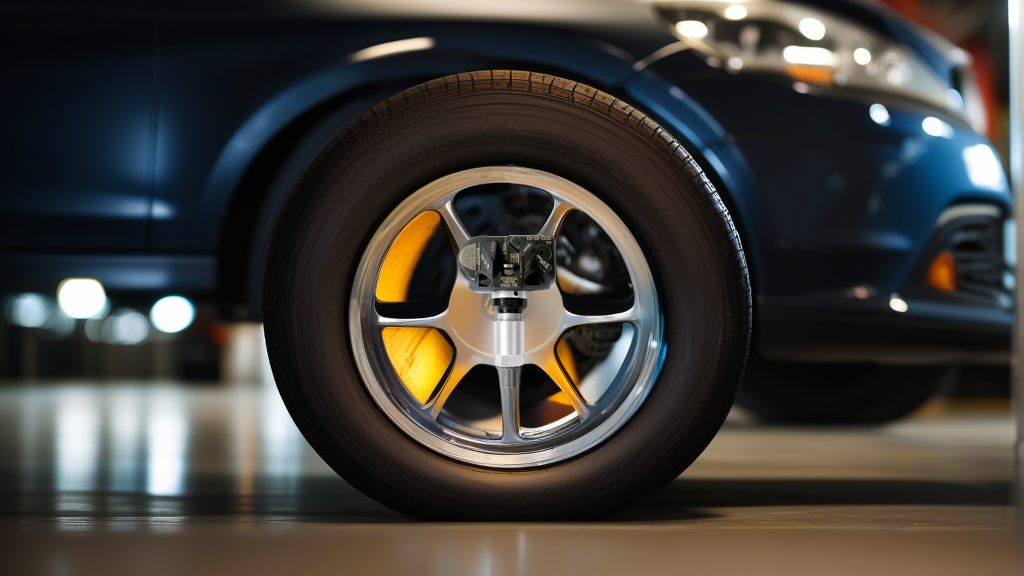
Understanding the TPMS Decision on Your EMGRAND GSE
The Geely Emgrand GSE (also sold as the Geometry E in some markets) uses a direct TPMS system—meaning each wheel has a physical sensor that transmits pressure and temperature data to the car’s ECU. When one fails, you face the classic aftermarket parts dilemma: shell out for the dealer’s OEM part, or gamble on a cheaper alternative.
This article isn’t marketing fluff. It’s a practical breakdown of what you’re actually getting with each option, based on the hardware inside the wheel, the compatibility requirements of the GSE, and real-world ownership costs.
The OEM Argument: When It Actually Makes Sense
Let’s be clear: OEM TPMS sensors for the Emgrand GSE are manufactured by a tier-1 supplier—most likely Baolong or Continental. The dealer then marks them up significantly. An OEM sensor for the GSE typically runs between $55 and $85 per unit, depending on your region and whether you buy from the dealership or a genuine parts reseller.
Three Scenarios Where OEM is Justified
- Vehicle still under factory warranty – If your GSE is less than 3 years old or under 60,000 km, replacing a failed TPMS with aftermarket parts could theoretically void the sensor-related portion of your warranty. Most dealers won’t push the issue, but it’s a risk.
- You need dealer-level programming – Some 2020-2022 Emgrand GSE models use a proprietary TPMS protocol that requires dealer diagnostic tools to learn new sensor IDs. If your local shop doesn’t have the Geely-specific tool, you may be forced to visit the dealer anyway.
- You prefer zero compatibility risk – OEM sensors always work. There’s no guessing about frequency, programming protocol, or valve stem fitment. If you’re paying someone else to install them, the labor cost often makes the price difference less painful.
The Case for Quality Aftermarket: BH-Sens BL-ST-073
Here’s where the smart money goes for most Emgrand GSE owners. The BH-Sens BL-ST-073 (SKU: BL-ST-073) is a direct replacement for the OE sensors listed at the top of this article. BH-Sens is the aftermarket brand of Baolong Technology—the same Chinese manufacturer that supplies OEM sensors for Geely, BAIC, GWM, and many other manufacturers.
Key specs for the GSE owner:
- Frequency: 433MHz (matches the GSE’s standard TPMS band)
- Type: Clamp-in, pre-programmed
- Compatible OE numbers: 01732445, 25M01A031A, 3641100XKR02A, and others
- Fits: BAIC, BAIC EV, GWM, Geely, Geometry, and 8 more brands
The pre-programmed aspect is critical. Many aftermarket sensors require a cloning tool to copy the original sensor’s ID. The BL-ST-073 comes already programmed with the correct protocol for Geely/Geometry vehicles. You install it, drive briefly, and the car recognizes it—no special tools needed in most cases.
Price Comparison (US Market Approximations)
| Item | OEM (Dealer) | OEM (Online Genuine) | BH-Sens BL-ST-073 |
|---|---|---|---|
| Single sensor | $65-85 | $45-65 | $18-25 |
| Set of 4 | $260-340 | $180-260 | $72-100 |
| Programming | Included | $15-30 (if needed) | None (pre-programmed) |
| Warranty | 1-2 years | 1 year | 1 year |
The savings are obvious. A full set of four aftermarket sensors costs less than one dealer-purchased OEM sensor. And because BH-Sens is an OE manufacturer, the build quality is essentially identical to what the dealership sells.
Fitment and Compatibility on the Emgrand GSE
The Emgrand GSE uses a standard 433MHz TPMS system. The BL-ST-073 sensor is a clamp-in design, which means it fits into the valve stem hole with a retaining nut—no band-clamp mounting required. This is the same design as the factory sensor.
Important check before buying:
- Verify your GSE’s production year. Most 2019-2023 models use 433MHz, but a small number of early 2019 units used 315MHz. Check the label on your original sensor or consult your owner’s manual.
- Confirm the valve stem material. The BL-ST-073 uses a rubber grommet seal. If you live in a region with heavy road salt, consider replacing the valve stem core at the same time.
- Torque the retaining nut to the manufacturer’s spec (typically 3.5-4.5 Nm). Do not overtighten—this is a common mistake that cracks the sensor housing.
When Aftermarket Can Fail (And How to Avoid It)
Not all aftermarket TPMS sensors are created equal. I’ve seen cheap no-name sensors from Alibaba that fail within six months, transmit wrong pressure readings, or refuse to pair. The BH-Sens BL-ST-073 avoids these issues because:
- OE pedigree: Baolong Technology manufactures sensors for Geely’s assembly lines. The BH-Sens line uses the same components, same PCB layout, same battery cells.
- Pre-programmed accuracy: The sensor ships with the correct Geely/Geometry protocol. No need to clone or reflash.
- Quality control: Each sensor is tested for frequency accuracy, pressure range, and temperature stability before leaving the factory.
The only scenario where aftermarket fails is if you buy a sensor that’s not specifically designed for the Geely/Geometry protocol. The BL-ST-073 is explicitly engineered for this application.
Installation Notes for the DIY Owner
If you’re installing the BL-ST-073 | BH-Sens 433MHz TPMS Tire Pressure Sensor | Fits BAIC, Baic Ev, GWM, Geely, Geometry & 8 More | OE# 01732445, 25M01A031A, 3641100XKR02A yourself, here’s the workflow:
- Remove the wheel and deflate the tire completely.
- Break the bead near the valve stem using a tire machine or manual bead breaker.
- Cut the old sensor’s retaining nut with a Dremel or nut splitter (factory nuts are often corroded).
- Remove the old sensor and valve stem.
- Install the new BH-Sens sensor with the included grommet and retaining nut.
- Tighten the nut to 4 Nm (3 ft-lbs). Do not use an impact gun.
- Re-inflate the tire, balance the wheel, and reinstall on the car.
- Drive the car at 15-20 mph for 5-10 minutes. The GSE’s TPMS computer will automatically learn the new sensor ID.
In rare cases where auto-learning doesn’t work, you may need a TPMS tool to trigger the sensor and initiate learning. Most tire shops can do this for a small fee.
Recommended Part
For a direct replacement that works out of the box, the BL-ST-073 | BH-Sens 433MHz TPMS Tire Pressure Sensor | Fits BAIC, Baic Ev, GWM, Geely, Geometry & 8 More | OE# 01732445, 25M01A031A, 3641100XKR02A is the best value for Emgrand GSE owners. It’s pre-programmed, uses the correct 433MHz frequency, and comes from the same manufacturer that builds the factory sensors. Buy a full set of four and save over 70% compared to OEM.
FAQ
Can I use the BH-Sens BL-ST-073 on a 2021 Emgrand GSE?
Yes. The 2021 Emgrand GSE uses the 433MHz TPMS protocol that this sensor supports. The BL-ST-073 is pre-programmed for Geely/Geometry vehicles and will auto-pair after a short drive in most cases. If your car doesn’t recognize it, a standard TPMS trigger tool will force the learning process.
How long do aftermarket TPMS sensors typically last compared to OEM?
Both OEM and quality aftermarket sensors from manufacturers like Baolong use similar lithium batteries rated for 5-7 years. The BH-Sens BL-ST-073 has a typical lifespan of 5-6 years under normal driving conditions. OEM sensors often last 6-8 years, but you’re paying a 300% premium for that extra year or two. For most owners, the aftermarket sensor will outlive the time they keep the car.
Will using an aftermarket TPMS sensor void my car’s warranty?
In the United States, the Magnuson-Moss Warranty Act prevents manufacturers from voiding a warranty simply because you used an aftermarket part. The dealer would need to prove that the aftermarket sensor caused the failure. For the TPMS system specifically, using a compatible sensor like the BL-ST-073 does not void the warranty on your engine, transmission, or other unrelated systems. However, if the sensor itself fails and damages the TPMS module, that specific repair may not be covered.
How do I know if my Emgrand GSE uses 433MHz or 315MHz sensors?
Check the label on your original sensor. It will clearly state “433 MHz” or “315 MHz.” You can also look at the tire pressure monitoring system’s receiver module location (usually behind the glove box or under the dash) and read the frequency from the sticker. As a general rule: 2019-2023 Emgrand GSE models sold in most global markets use 433MHz. Only very early 2019 units or China-market-specific variants sometimes use 315MHz.