
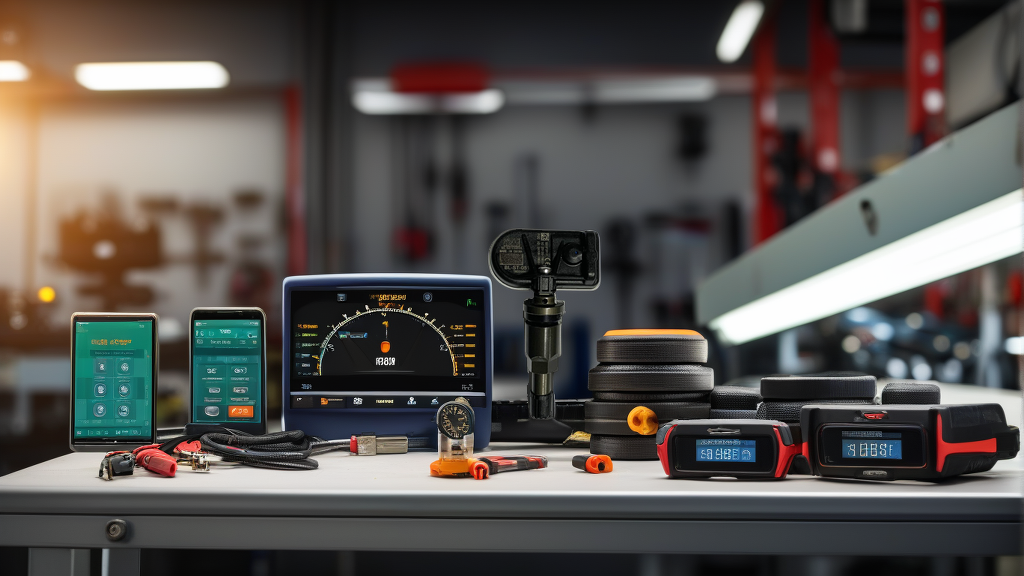
Why Winter Tire Swaps Demand TPMS Attention on Your Nio
Nio vehicles rely on the Tire Pressure Monitoring System (TPMS) to alert you when pressure drops below safe thresholds. Winter tire swaps introduce three specific risks:
- Sensor damage during mounting/dismounting if the technician isn’t careful with clamp-in sensors.
- Automatic re-learning failure after swapping wheels with different sensors.
- Cold-weather false alerts because pressure naturally drops as temperatures fall.
Nio uses a direct TPMS system—each wheel has a sensor transmitting real-time pressure and temperature data. Unlike some brands that require complex OBD re-learning, most Nio models (including ET5, ET7, ES6, ES8) auto-detect new sensors after a short drive above 25 km/h (15 mph). But this only works if the sensors are compatible and pre-programmed to the correct frequency.
BH-Sens BL-ST-051: The Sensor That Fits Your Winter Set
Before you call your tire shop, know the part number. The BL-ST-051 from BH-Sens (Baolong Technology) is a direct-fit, pre-programmed 433MHz TPMS sensor for Nio and Onvo vehicles. It replaces OE numbers P0242518, P0302230, and P0385734.
Here’s what matters when buying a sensor for your winter wheels:
| Feature | BL-ST-051 Detail |
|---|---|
| Frequency | 433MHz (standard for Nio) |
| Type | Clamp-in (uses metal valve stem) |
| Pre-programmed? | Yes—no cloning tool needed |
| Compatible Brands | Nio, Onvo |
| OE Fitments | 6 specific vehicle applications |
| Battery Life | 5–7 years typical |
Using a non-433MHz sensor or an unprogrammed unit will cause the TPMS light to stay on. The BL-ST-051 is ready out of the box—install and drive.
Adjusting Tire Pressure for Winter Conditions
Cold air is denser than warm air. For every 10°F (5.5°C) drop in ambient temperature, tire pressure decreases by roughly 1 psi. If you set your Nio’s tires to 38 psi in a 70°F garage, then drive into 20°F weather, you’ll lose about 5 psi. That’s enough to trigger the low-pressure warning.
Winter pressure rule: Add 3–5 psi above the manufacturer’s recommended cold pressure (check your door jamb sticker). This compensates for temperature drops and improves snow traction by maintaining proper contact patch. Don’t exceed the tire’s sidewall maximum—usually 44–50 psi.
For Nio models, typical door jamb pressures range from 36–42 psi. Set winter tires on the higher end of that range in a heated garage, then re-check after the tires have been outside for a few hours.
Storage Tips for Spare TPMS Sensors
If you keep a second set of wheels with sensors mounted (winter set), or you have spare sensors, storage conditions affect battery life and accuracy.
- Temperature: Store sensors between 50°F and 80°F (10°C–27°C). Extreme heat accelerates battery chemical degradation; extreme cold increases internal resistance.
- Humidity: Avoid damp basements. Moisture can corrode the sensor’s internal circuit board, especially around the valve stem seal.
- Pressure load: If the sensors are mounted on wheels with tires, keep them inflated to at least 20 psi to prevent sidewall damage. Deflated tires can pinch the sensor.
- Signal interference: Don’t store sensors near strong electromagnetic sources (large transformers, induction chargers). It won’t damage them, but it’s unnecessary.
Step-by-Step: Swapping Wheels on Your Nio
- Gather tools: Jack, torque wrench (check your manual for torque specs—typically 120–140 Nm on Nio alloys), and the BL-ST-051 sensors if replacing old ones.
- Set pressure before mounting: Inflate all four winter tires to the target cold pressure (add 3–5 psi as mentioned).
- Install sensors: If using new sensors, hand-tighten the valve stem nut to spec (usually 4–6 Nm, but confirm with the shop). Over-tightening can crack the sensor housing.
- Mount wheels: Torque lug nuts in a star pattern to spec.
- Drive to re-learn: After installation, drive above 25 km/h for 5–10 minutes. The TPMS should recognize the new sensors. If the light stays on after 15 minutes, you may have a faulty sensor or incompatible frequency.
- Verify pressures: Use the Nio infotainment screen to check each tire’s reading. All four should display within 1 psi of your set pressure.
Common Winter TPMS Issues on Nio
- Sensor not detected: Usually a frequency mismatch (Nio requires 433MHz). The BL-ST-051 solves this.
- Battery dead: Sensors last 5–7 years. If your winter set is older than that, replace sensors before the swap.
- Valve stem leak: Clamp-in sensors use a rubber gasket. If the sensor is reused, replace the gasket and valve core.
- False low-pressure warning at cold start: Normal. If the pressure is above 28 psi when cold, drive 5 minutes. If the warning persists, check for a leak.
Recommended Part
For Nio owners looking to avoid TPMS headaches during winter swaps, the BL-ST-051 | BH-Sens 433MHz TPMS Tire Pressure Sensor | Fits Nio, Onvo | OE# P0242518, P0302230, P0385734 is a reliable, pre-programmed solution. It covers both Nio and Onvo models with OE-level compatibility. Buy one for each winter wheel, install, and drive—no programming tools needed.
FAQ
Will the BL-ST-051 work on my Nio ET5 Touring?
Yes. The BL-ST-051 is listed for 6 Nio/Onvo applications, including the ET5, ET7, ES6, and ES8. It operates at 433MHz, which is the standard frequency for all current Nio models. Confirm your vehicle’s year range with the seller, but this sensor covers 2020–2025 models.
Can I reuse my old TPMS sensors from my summer wheels for winter?
You can, but it’s not ideal. Reusing sensors means you’ll have to swap them back each season, risking seal damage. Also, if the sensors are over 5 years old, battery failure is likely mid-season. A dedicated winter set with new sensors is more reliable.
Why does my Nio show a TPMS warning after a winter tire swap even though pressures are correct?
Most likely the sensors haven’t been recognized yet. Drive above 25 km/h for 5–10 minutes. If the warning persists, the sensors may be incompatible frequency (e.g., 315MHz instead of 433MHz) or not pre-programmed for Nio. The BL-ST-051 eliminates this problem.
How do I store my summer wheels with TPMS sensors?
Store them in a cool, dry place (55–75°F). Keep tires inflated to at least 20 psi to protect the sensor from sidewall pressure. For long storage (over 6 months), consider removing the sensors to avoid battery drain from constant temperature monitoring—but most owners leave them mounted without issues.