
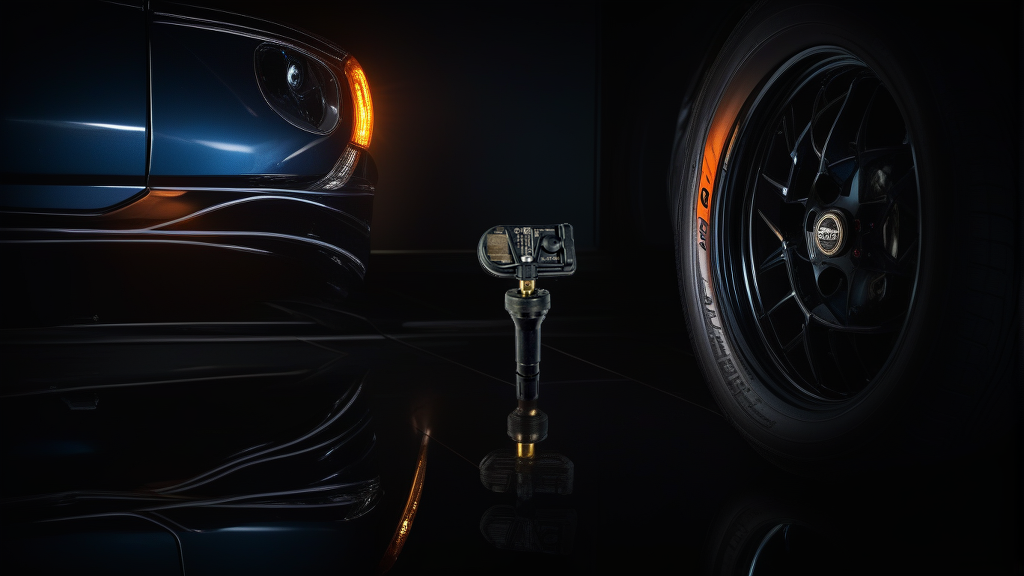
Understanding the TPMS System on Your QIN PLUS DM-I
The QIN PLUS DM-I uses a direct TPMS system – each wheel has a sensor that transmits pressure and temperature data to the vehicle’s receiver module. The system operates at 433MHz and uses the 0x022A protocol. When the warning light comes on, the vehicle is telling you something is wrong, but it doesn’t always mean a flat tire. Below we break down the three most common causes and how to identify each.
1. Dead Sensor Battery – The Most Common Failure
TPMS sensors are powered by internal lithium batteries. These batteries cannot be replaced – the entire sensor must be swapped. Typical lifespan is 5–7 years from the original vehicle manufacture date. Since the QIN PLUS DM-I launched in 2021, early models are now entering the battery failure window.
Symptoms of a Dead Sensor Battery
- Intermittent warning light – The TPMS light may flash for 60–90 seconds after starting and then stay solid, or it may come and go.
- No pressure reading – The dashboard displays “—” or “0” for one or more tire positions.
- Cold-weather triggering – Low temperatures can drop a weak battery below the voltage threshold, causing the sensor to stop transmitting.
- Multiple sensors failing around the same time – If your vehicle is 5+ years old, two or more sensors may fail within weeks of each other.
How to Confirm a Dead Battery
You need a TPMS diagnostic tool (like a Autel or Bartec unit) capable of reading 433MHz sensors with the 0x022A protocol. Place the tool next to each tire valve stem and trigger the sensor. If the tool cannot wake the sensor or reports low voltage (<2.3V), the battery is dead. If you don’t have a tool, a tire shop can perform this check in under 5 minutes.
2. Signal Interference – A Tricky Diagnosis
TPMS sensors transmit at very low power. Anything that generates radio frequency noise near the QIN PLUS DM-I’s receiver (usually located behind the glove box or under the dashboard) can block or confuse the signal.
Common Interference Sources
| Interference Source | How It Affects TPMS | What To Do |
|---|---|---|
| Aftermarket LED headlights or fog lights | Cheap LED drivers emit RF noise in the 400–500 MHz range | Disconnect lights temporarily to test. Install shielded LED drivers. |
| USB chargers plugged into the 12V socket | Low-quality chargers can radiate harmonics | Remove all USB chargers and test drive. Use only OEM-quality chargers. |
| Dashcams with wireless modules | 2.4GHz Wi-Fi or Bluetooth transmitters can cause harmonics | Disable Wi-Fi/Bluetooth on the dashcam or move it away from the receiver area. |
| Vehicle-mounted CB radio or amateur radio antennas | High-power transmitters overload the TPMS receiver | Keep antennas at least 3 feet from the TPMS receiver module. Use ferrite chokes on power leads. |
| Nearby cell towers, broadcast towers, or radio transmitters | Rare, but possible in areas with very strong signals | Drive to a different location (e.g., parking garage) and see if the warning clears. |
Diagnosing Interference
If all tires show good pressure and no sensor battery issues on a diagnostic tool, but the warning light still comes on, try:
- Turn off all aftermarket electronics (radio, dashcam, phone chargers, interior lights).
- Drive the vehicle for 10–15 minutes. If the light goes off, one of those devices is the culprit.
- Turn devices back on one at a time to find the offender.
3. Actual Low Pressure or Fast Leak
Don’t overlook the obvious. The TPMS light may simply mean a tire is underinflated. Use a quality gauge to check all four tires (including the spare if equipped). The QIN PLUS DM-I recommended cold pressure is typically 33–36 PSI (check your driver’s door sticker).
If a tire loses 5+ PSI in a week, you likely have a slow leak (nail, valve stem issue, or rim bead leak). A fast leak will trigger the warning light immediately along with a dashboard pressure display showing a sharp drop.
When to Replace the Sensors
If one sensor has a dead battery, it’s smart to replace all four at once. You’ll save on labor (mounting and balancing) and avoid a repeat trip in a few months when another battery dies. The BL-ST-096 | BH-Sens 433MHz TPMS Tire Pressure Sensor | Fits BYD (2025+) | OE# EUEA3609200B, 110964, BLST096 is a direct OE equivalent for 2025+ BYD vehicles, including your QIN PLUS DM-I. It matches OE part numbers EUEA3609200B and 110964, and uses the 0x022A protocol with auto-relearn – no programming tool needed. Simply install, drive above 25 mph for 10 minutes, and the system learns the new sensors automatically.
Recommended Part
For a reliable, plug-and-play replacement, use the BL-ST-096 (BH-Sens 433MHz TPMS Tire Pressure Sensor) – BL-ST-096 | BH-Sens 433MHz TPMS Tire Pressure Sensor | Fits BYD (2025+) | OE# EUEA3609200B, 110964, BLST096. It fits 34 BYD models and requires zero programming. Always replace the rubber valve stem and metal nut when installing new sensors to prevent leaks.
FAQ
How long do TPMS sensors last on the QIN PLUS DM-I?
The internal batteries are designed to last 5–7 years under normal driving conditions. Factors like extreme heat, cold, and high mileage can shorten lifespan. If your vehicle is approaching 5 years, expect sensor failures to begin.
Can I replace just one TPMS sensor, or do I need all four?
You can replace a single sensor, but many owners choose to replace all four at once to save on mounting labor and prevent future failures. The new BL-ST-096 sensor will auto-relearn alongside existing working sensors – the system will accept mixed sets.
What does a flashing TPMS light mean on the QIN PLUS DM-I?
A flashing light for 60–90 seconds after startup, followed by a solid light, indicates a system fault – usually a dead sensor battery or a missing sensor signal. Immediate flashing without a solid light sometimes means the system is in learn mode after a battery disconnect. If it stays flashing, use a TPMS diagnostic tool to check.
Can aftermarket wheels cause TPMS interference?
Yes, if the wheels have metallic valve stem holes or are made of non-standard materials (e.g., some aftermarket alloys with thick paint or coatings can block RF signals). Always verify that your wheel type is compatible with 433MHz TPMS sensors. If not, your TPMS may intermittently drop out.