
Understanding the TPMS Warning Light on Your California T
The Ferrari California T (2014–2017) uses a direct TPMS system with sensors inside each wheel. Each sensor contains a battery that transmits pressure and temperature data to the car’s receiver. When the warning light illuminates, it’s telling you something is wrong—but not always a flat tire. Two of the most overlooked causes are sensor battery end-of-life and RF signal interference.
Before replacing anything, check your tire pressures manually with a gauge. If pressures are normal (check your owner’s manual for the correct values), the problem is either a failing sensor or a communication issue.
Common Causes of a TPMS Warning Light
Dead Sensor Battery Symptoms
TPMS sensors use sealed lithium batteries that cannot be replaced. They typically last 5–7 years, which aligns with the age of most California T models now. Look for these signs:
- Light stays on solid after a few minutes of driving – The car has confirmed the sensor is not transmitting.
- Flashing light at startup then steady – Classic symptom of a dead sensor battery (the system detects a missing sensor during initialization).
- Cold weather triggers the light – A weak battery can drop voltage in freezing temperatures, causing intermittent failures.
- Only one wheel shows no reading – Use a TPMS scan tool to check which sensor is silent. If it’s the same wheel every time, that sensor’s battery is likely dead.
Signal Interference Diagnosis
Signal interference is trickier. The TPMS receiver in the California T operates at 315MHz (North American market) or 433MHz (European). Interference happens when another device transmits on a nearby frequency, or when the sensor’s signal is blocked. Common sources:
- Aftermarket LED lights, especially in the trunk or near the wheel wells
- High-power dash cams or radar detectors mounted near the TPMS antenna
- Tire rotation without re-learning sensor positions – the receiver still expects the left front sensor but now it’s on the right front, causing a false “no signal” warning
- Metalized window tints that block RF signals
- Nearby broadcast towers or charging stations in certain parking lots
Symptoms of interference:
- Light comes on only in specific locations (e.g., your driveway or a particular gas station)
- Light goes off after restarting the car or moving to a different area
- Multiple sensors show no reading simultaneously (unlikely for battery failure)
- Warning appears after installing new electronics
Symptom Comparison Table
| Symptom | Likely Dead Battery | Likely Interference |
|---|---|---|
| Light stays on after driving 5+ minutes | Yes | No (usually intermittent) |
| Flashing light at key-on, then steady | Yes | Possibly, if sensor not recognized |
| Only one wheel affected | Yes | Unlikely (usually multiple wheels) |
| Happens in same parking spot every time | No | Yes |
| Started after new accessory install | No | Yes |
| Light turns off after restarting | No | Yes |
Fixing the Issue
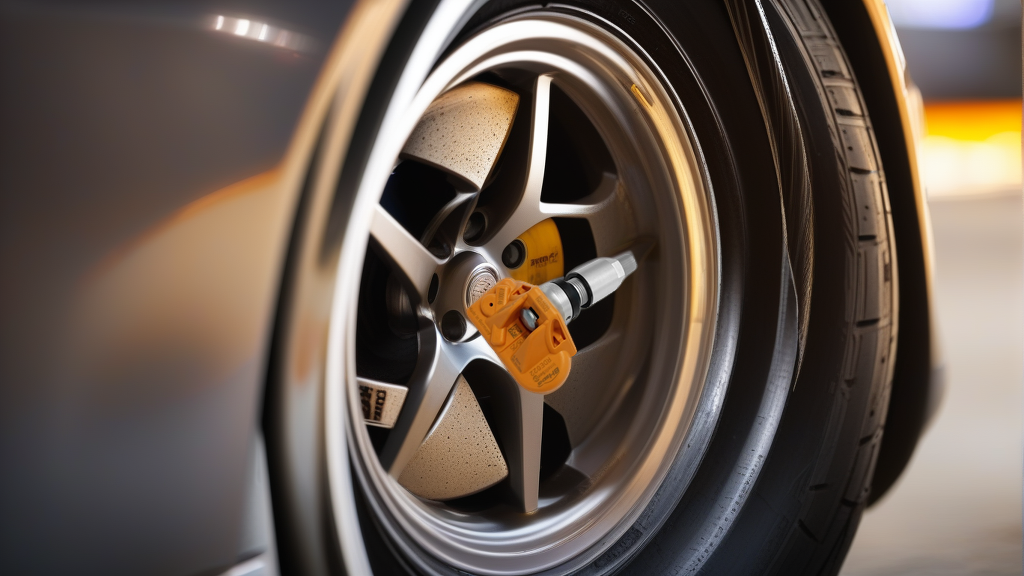
For dead batteries: The only fix is to replace the sensor. The Ferrari California T uses a clamp-in sensor with a 315MHz frequency for North American models. A direct OE replacement like the RDE022V21 | BH-Sens 315MHz TPMS Tire Pressure Sensor | Fits Aston Martin, Audi, BMW, Bentley, Ferrari & 5 More | OE# 249363, 290569, 4F0907275A (BH-Sens RDE022V21) fits perfectly. It matches the original OE numbers 249363, 290569, 4F0907275A, and others. Make sure to have a TPMS tool to program or re-learn the sensor ID to the vehicle after installation.
For interference: Start by identifying the source. Remove any recently installed aftermarket electronics temporarily. If the warning disappears, reinstall one at a time to find the culprit. For tire rotation issues, perform a TPMS re-learn procedure (usually via a magnet or dedicated tool near the valve stem, as described in your owner’s manual). If window tint is suspect, ask your tint shop about non-metallic films.
Recommended Part: BH-Sens RDE022V21 for California T
If you’ve confirmed a dead sensor, the RDE022V21 | BH-Sens 315MHz TPMS Tire Pressure Sensor | Fits Aston Martin, Audi, BMW, Bentley, Ferrari & 5 More | OE# 249363, 290569, 4F0907275A is a reliable, pre-programmed option that works with the California T’s 315MHz system. It’s clamp-in, so it replaces the original sensor and valve stem assembly. Always replace sensors in pairs or all four if the other batteries are near the end of their life—this saves you from repeat labor costs.
FAQ
How do I know which TPMS sensor is bad on my California T?
Use a TPMS diagnostic tool (many tire shops have one) to scan each sensor’s ID and signal strength. The tool will tell you if a sensor is not transmitting or has a low battery. Alternatively, watch the warning light: if it flashes at start and then stays solid, the car is detecting a missing sensor. A steady light with no flashing usually means low pressure, but verify with a tire gauge.
Can a low car battery cause the TPMS light to come on?
Yes, but indirectly. A weak 12V battery can cause erratic electronics behavior, including the TPMS receiver. If your car battery is old (3+ years) and the TPMS light is accompanied by other electrical glitches (dim lights, slow crank), test the battery first. However, a dead TPMS sensor battery is much more common on an older California T.
Will aftermarket wheels affect the TPMS on a California T?
Aftermarket wheels can interfere if they are made of materials that block RF signals (e.g., certain carbon fiber or thick aluminum alloys). Also, if the new wheels use different valve positions or tire pressure thresholds, the TPMS system might not read correctly. Always transfer the original sensors or install compatible 315MHz sensors when changing wheels.
How long does a TPMS sensor battery last in a Ferrari California T?
Typically 5 to 7 years from the first time the sensor transmits (when the car was built). If your California T is from 2014–2017, the original sensors are likely at or past their expected lifespan. Expect failures to start around the 6-year mark.