
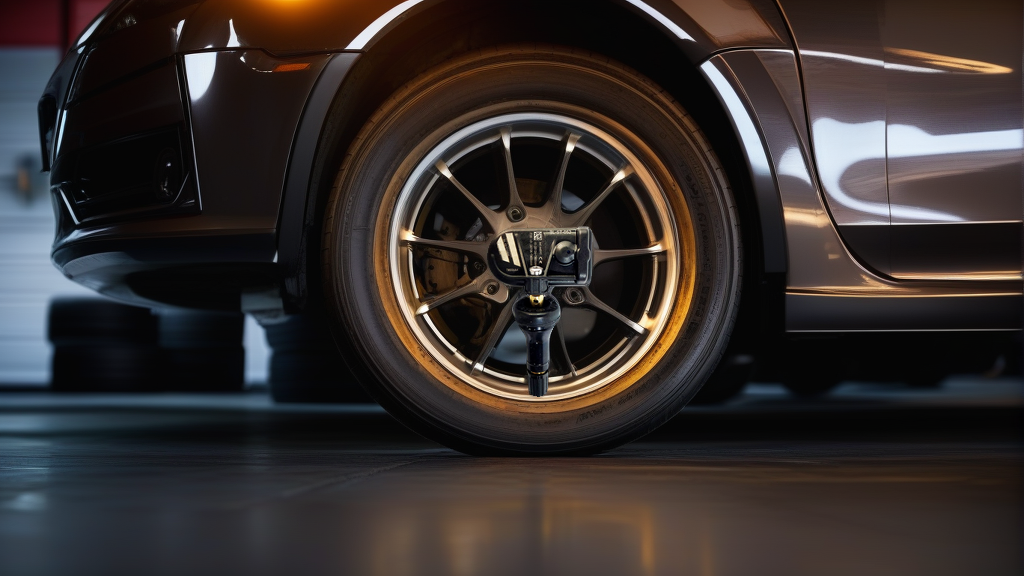
Start With the Three Things That Actually Matter
Every TPMS ordering mistake comes down to one of three mismatches: frequency, protocol, or physical fitment. Get all three right and the sensor will program and seal on the first try.
1. Frequency — 433MHz vs 315MHz. Most vehicles sold in China, Europe, and Asia run 433MHz. North American-market vehicles often use 315MHz. Your Voyah almost certainly uses 433MHz, but confirm it — a 315MHz sensor in a 433MHz system simply won’t communicate, no matter how many times you re-learn it.
2. Protocol and programming. There are two flavors: pre-programmed sensors locked to a specific OE part number, and universal sensors you write with a programming tool. Pre-programmed units are faster and less error-prone for shops doing repeat work. Universal units give you inventory flexibility but require a tool and a trained tech.
3. Valve stem type. Clamp-in sensors use a metal stem with a nut and rubber grommet, torqued to the wheel. Snap-in sensors use a rubber stem pulled through the hole. They are not interchangeable — the wheel’s valve hole and the sensor body are designed as a pair.
Check Before You Order
- Read the old sensor. The OE number is printed or laser-etched on the housing. Write down every digit.
- Check the valve stem condition. Cracked rubber or corroded metal means replacing the whole assembly, not just the electronics.
- Confirm wheel type. Aftermarket alloys sometimes have different valve hole diameters.
- Verify the service kit. Clamp-in sensors need a fresh grommet, nut, and core. Reusing old hardware is the number one cause of slow leaks.
- Check the manufacture date. TPMS batteries have a shelf life. Old stock sitting in a warehouse loses capacity before it ever hits the road.
Fitment Snapshot: BL-ST-052
| Spec | Detail |
|---|---|
| Brand | BH-Sens (Baolong Technology) |
| Frequency | 433MHz |
| Type | Clamp-in, pre-programmed |
| OE Numbers | CM5B3685020, CM5B3685020S, SX5G3685020B |
| Primary Fitment | Forthing (16 verified applications) |
| SKU | BL-ST-052 |
This sensor is a direct OE replacement for the listed Forthing applications, and it’s a common cross-reference candidate when shops are hunting a 433MHz clamp-in unit with those exact OE numbers. If your Voyah’s old sensor carries one of these numbers, this is the drop-in. If it doesn’t, keep looking — cross-referencing by “looks the same” gets expensive. You can check current stock and the full application list here: BL-ST-052 | BH-Sens 433MHz TPMS Tire Pressure Sensor | Fits Forthing | OE# CM5B3685020, CM5B3685020S, SX5G3685020B.
Notes for B2B Bulk Buyers
- Order by OE number, not by brand. Distributors who order by “fits Voyah” get returns. Build your purchase order line-by-line from OE numbers.
- Buy service kits in the same ratio. One grommet/nut/core kit per sensor. Shops hate a job that stalls on a $2 grommet.
- Confirm programming method in writing. Ask the supplier whether the sensors ship pre-programmed or need a tool. Get it in the quote.
- Check batch consistency. For repeat orders, request the same production batch where possible so programming behavior stays predictable.
- Test one before you commit to a pallet. Program and activate a single unit on a bench before scaling up.
Recommended Part
For Forthing applications using OE numbers CM5B3685020, CM5B3685020S, or SX5G3685020B, the BH-Sens 433MHz clamp-in sensor is the correct pre-programmed replacement: BL-ST-052 | BH-Sens 433MHz TPMS Tire Pressure Sensor | Fits Forthing | OE# CM5B3685020, CM5B3685020S, SX5G3685020B.
FAQ
Can I use a 315MHz sensor on a Voyah?
No. Frequency must match the vehicle’s receiver. A 315MHz sensor will not communicate with a 433MHz system, and no amount of relearning will fix it.
Do I need a programming tool for the BL-ST-052?
No — it ships pre-programmed to the listed OE numbers. You still need a TPMS activation/relearn tool to trigger the sensor and let the vehicle register it, which is standard procedure on any sensor swap.
How long do TPMS sensor batteries last?
Typically 5–10 years depending on usage and climate. Heat accelerates drain, so hot-climate vehicles often fail at the lower end. If one sensor dies, the others are usually close behind — replacing all four at once saves a second trip.
What if my old sensor’s OE number isn’t listed?
Don’t force it. Match frequency, protocol, valve type, and the OE number together. If the number doesn’t cross-reference, source the correct unit rather than adapting a near-match.