
What the TPMS Light Is Actually Telling You
The Continental GTC runs a direct TPMS: a battery-powered sensor is strapped to the valve stem inside each wheel, transmitting pressure and temperature data over radio frequency to a receiver module, which then reports to the instrument cluster. That means there are three separate things that can go wrong — the tire, the sensor, or the radio link between them. Most owners assume it’s always the tire. It usually isn’t.
A steady light (sometimes with a chime) means at least one tire is below the threshold. A flashing light for roughly 60–90 seconds, then solid, is the system’s way of saying “I’ve lost communication with a sensor” — that’s a hardware or signal fault, not a pressure fault.
The Five Real Causes, Ranked by Frequency
1. Genuine Low Pressure or Cold-Weather Drop
The boring answer is often the right one. A tire losing 1–2 PSI a week from a slow bead leak or a nail will trigger the light before you can see anything wrong. Temperature also matters: pressure drops roughly 1 PSI per 10°F of ambient drop, which is why lights cluster on the first cold morning of the season and disappear after 10 minutes of driving.
Action: Check all four tires with a quality gauge, cold. Inflate to the placard pressure on the driver’s door jamb — not the max pressure moulded on the sidewall.
2. Sensor Battery at End of Life
Direct sensors are sealed units. Battery life typically runs anywhere from five to ten years depending on how much the car is driven and how often the sensor transmits. When the battery fades, the transmitter output drops and the receiver starts dropping packets. You get exactly what a battery failure looks like in any radio device: intermittent behaviour that gets steadily worse.
3. Sensor ID Lost After Tire or Wheel Service
If the wheels were rotated, swapped for winters, or the tires replaced, the sensor IDs may no longer match what the module expects for each corner. The light comes on immediately after service and stays on — pressure is fine, but the system doesn’t recognise the transmitters.
4. Physical Sensor Damage
Bent valve stems, cracked sensor housings, or a sensor knocked loose during a careless tyre mount. These often show up as a single corner that reports erratically or not at all.
5. Receiver or Antenna Fault
Less common, but real. Corroded connectors at the receiver module, a chafed antenna lead, or a failed module will drop multiple sensors at once, often all four.
Dead Sensor Battery Symptoms — What to Look For
| Symptom | Most Likely Cause | How to Confirm |
|---|---|---|
| Light returns every cold morning, clears after driving | Low pressure / temperature drop | Cold pressure gauge check |
| One corner drops out intermittently, gets worse over months | Dying sensor battery | TPMS tool reads “low battery” or weak signal |
| No reading at all from one wheel, others fine | Dead sensor or damaged valve stem | Tool returns no ID from that corner |
| All four sensors missing after wheel swap | IDs not relearned | Relearn procedure, check IDs against tool |
| Fault follows the wheel when rotated | Sensor fault, not receiver | Rotate and re-scan |
| All four drop simultaneously at the same location | RF interference | Move the car and re-check |
If a scan tool reports a sensor with no pressure data, no ID response, or an unclear battery status, that sensor is finished. There’s no battery to change on a sealed unit — it gets replaced.
Diagnosing 433MHz Signal Interference
The sensors transmit in the 433MHz ISM band (most European-market cars; some North American vehicles use 315MHz — verify your frequency before ordering). That band is crowded. Anything transmitting nearby can stomp on the sensor packets.
Common culprits:
- Aftermarket dash cams, reversing cameras and wireless phone chargers, especially cheap ones with poorly shielded power supplies
- Remote starters, aftermarket alarms and keyless-entry extenders
- LED retrofit bulbs with unshielded drivers
- Tire-shop TPMS initiator tools left transmitting near the car
- Municipal or commercial transmitters, and parking structures with active RFID
How to confirm interference rather than a dead sensor:
- Move the car 100 metres and re-scan. If the sensor reappears, it’s environmental.
- Unplug aftermarket electronics one at a time and re-scan after each.
- Fault follows the location, not the wheel — a different sensor drops out in the same parking spot.
- Signal strength readings are erratic rather than flat-zero.
A genuinely dead sensor gives you nothing, anywhere. An interfered sensor gives you nothing in one place.
Fixing It Properly
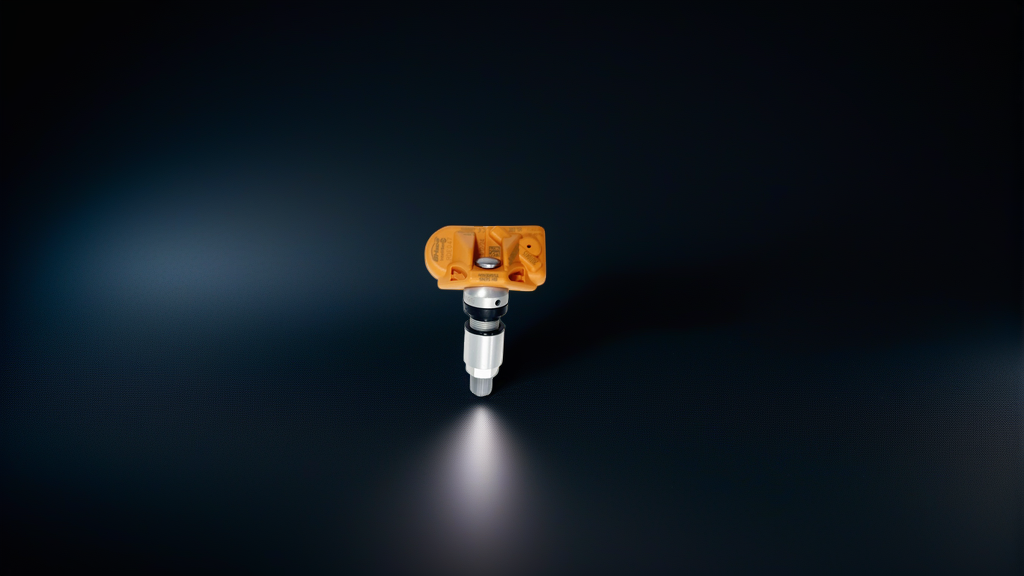
First, verify frequency. Then, when a sensor genuinely needs replacing, use a direct-fit 433MHz unit rather than a universal programmable one that may not hold its learned ID reliably. The RDE047V21 | BH-Sens 433MHz TPMS Tire Pressure Sensor | Fits Audi, BMW, Bentley, Ferrari, Lamborghini & 8 More | OE# 2N0907275A, 314818, 36106798872 — BH-Sens 433MHz TPMS sensor, OE references 2N0907275A, 314818, 36106798872 and others — is a pre-programmed, direct-fit option covering Audi, BMW, Bentley, Ferrari, Lamborghini and several more platforms. Have your tyre shop note the sensor ID before mounting so the relearn step takes five minutes instead of an hour.
Recommended Part
RDE047V21 | BH-Sens 433MHz TPMS Tire Pressure Sensor | Fits Audi, BMW, Bentley, Ferrari, Lamborghini & 8 More | OE# 2N0907275A, 314818, 36106798872 — BH-Sens 433MHz TPMS Tire Pressure Sensor, direct-fit replacement with OE-compatible IDs. Confirm your vehicle’s frequency and OE number before ordering; torque the valve stem to your service manual specification, not by feel.
FAQ
How long do Continental GTC TPMS sensors last?
Most sealed direct sensors last between five and ten years, or roughly 50,000–100,000 miles. Harsh climates, high mileage, and constant key-on/off cycling shorten that. Once one sensor dies, the others in the same set are usually close behind — replacing all four in one visit saves you three more trips to the tyre shop.
Can I just ignore the TPMS light?
You can, but you’re giving up the only system that tells you a tyre is deflating before you feel it. On a heavy, fast grand tourer, a soft tyre at speed is a handling and heat problem long before it’s a visible one. If the light is intermittent, at least get the sensor scanned so you know whether it’s pressure, battery, or signal.
Will a TPMS sensor work without programming?
Direct-fit sensors like the RDE047V21 come pre-programmed with their ID, but the vehicle still needs to learn that ID — either through an automatic relearn drive cycle or a scan tool. Some platforms pick up new sensors automatically after a short drive; others need a tool. Check your model year’s relearn procedure or have a shop do it.
Why did my TPMS light come on after I replaced a tyre?
Either the sensor wasn’t transferred to the new wheel, it was damaged during mounting, or the system lost the ID during the swap. Have the shop scan the corner. If the sensor survived, a relearn fixes it; if the valve stem was bent or the housing cracked, the sensor needs replacing.