
Why the Wrong Sensor Keeps Showing Up
TPMS sensors look almost identical in the box, and that’s exactly the problem. Two sensors with the same thread, the same cap and the same black housing can run on different frequencies, speak different protocols, or use a valve stem that won’t seal in your rim. The result is a dashboard light that never goes out, a sensor that reads fine in the shop and dies at 60 mph, or a return you eat out of your own margin.
For LM SERIES owners and shops servicing them, the fix is boring and reliable: verify fitment against three data points instead of guessing by brand name.
Check 1: Frequency — 433 MHz or 315 MHz
Frequency is the single most common cause of a no-communication fault. Most European-market vehicles — including the BMW, Mercedes-Benz, Mini, Maybach and Aston Martin applications this sensor covers — run on 433 MHz. Many North American-market vehicles use 315 MHz, and the same nameplate can use different frequencies depending on where it was sold.
Don’t assume from the badge. Read the label on the old sensor, check the OE number, or decode the VIN. If the old sensor is missing or unreadable, a parts catalog lookup by VIN is the safest route.
Check 2: Valve Type and Rim Fit
TPMS sensors mount one of two ways:
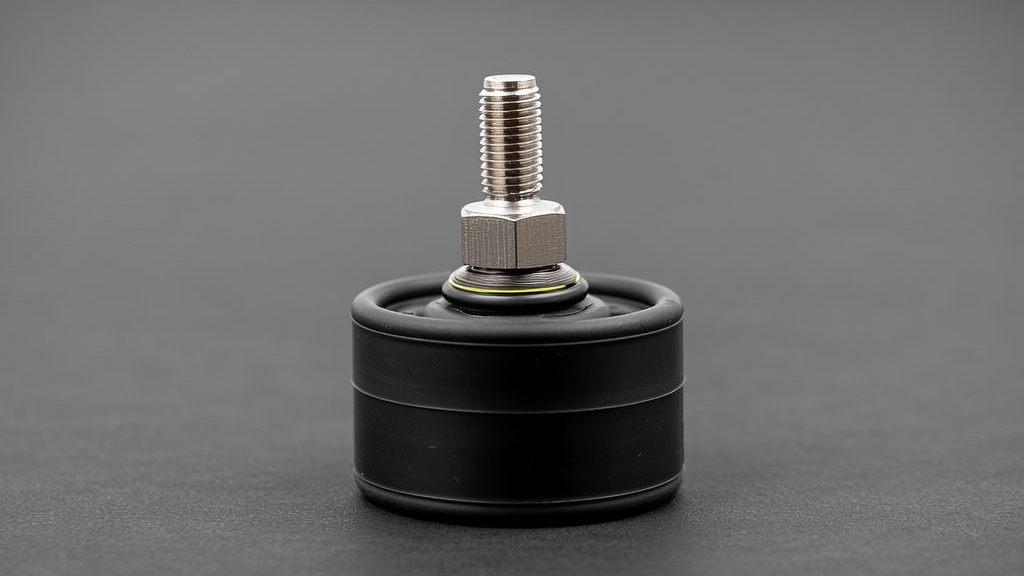
- Clamp-in — a metal stem secured with a nut through the rim. Common on higher-end European platforms, serviceable, and reusable with a new service kit.
- Snap-in — a rubber stem pulled through the valve hole. Common on many Asian and domestic applications and generally replaced as a unit.
They are not interchangeable without the correct rim hole. Check the valve hole diameter and the rim profile before ordering, especially on aftermarket wheels where the hole may differ from the factory rim.
Check 3: OE Number and Protocol
This is where the counterfeit and “close enough” market burns buyers. A sensor must match the vehicle’s receiving protocol, not just its frequency. The most reliable shortcut is to cross-reference the OE number printed on the original sensor against the supplier’s published cross-reference list.
BL-ST-081 at a Glance
| Spec | Detail |
|---|---|
| Brand | BH-Sens (Baolong Technology) |
| Frequency | 433 MHz |
| Type | Clamp-in, pre-programmed |
| Cross-reference OE numbers | 36106872774, 42607WAA02, 5A3DC0401, 687793602, 687793604, 6877937, 688714701, A0009052102, A0009054104, A0009057205 |
| Typical coverage | Aston Martin, BMW, Maybach, Mercedes-Benz, Mini and additional applications in the catalog |
If your OE number appears on that list, the sensor is the correct protocol match. If it doesn’t, don’t force it — find the number that does. A verified cross-reference is worth more than a cheap guess, because a comeback costs you the labor twice.
Pre-Order Checklist
Run through this before you add anything to the cart:
- Read the OE number on the old sensor or look it up by VIN.
- Confirm the frequency for your specific market, not just the model.
- Confirm clamp-in or snap-in, and check the rim valve hole.
- Note any mid-cycle build splits — the same model year can use different sensors depending on production date.
- Confirm your shop has a relearn or activation tool that supports the protocol.
- Decide whether you’re replacing one sensor or the full set.
On that last point: if three sensors are already several years old, replacing one usually means a second visit within months. For most drivers past the 5–7 year mark on original sensors, a full set is cheaper than three separate appointments.
Programming and Relearn: What to Expect
Pre-programmed sensors still need to be introduced to the vehicle. Depending on the platform, that happens automatically after a short drive, through an OBD relearn procedure, or with a handheld activation tool that wakes the sensor and writes its ID. Know which method your vehicle uses before quoting the job — some European platforms require an OBD tool, and that changes your labor estimate.
B2B Bulk Buying Notes
If you’re stocking for resale or fleet service, a few habits separate a profitable TPMS line from a shelf of dead inventory:
- Buy by market, not by brand. Split your stock into 433 MHz clamp-in, 433 MHz snap-in and 315 MHz categories. Ordering “BMW sensors” without frequency discipline creates mismatches.
- Get the cross-reference list in writing. A supplier who can’t produce a documented OE list is a supplier who will cost you warranty claims.
- Sample first, then scale. Order a small batch, install two or three, and confirm relearn behavior before committing to volume.
- Ask about what’s in the box. Valve core, cap, nut and service kit included or not? That changes your landed cost per unit.
- Confirm MOQ, lead time and warranty terms in writing, including how dead-on-arrival units are handled.
- Check packaging format. Bulk trays suit service shops; retail-ready blister packs with barcodes suit counter sales. Specify which you need.
- Track your failure rate by batch. It’s the fastest way to know when a supplier’s quality slips.
Recommended Part
For 433 MHz clamp-in applications across BMW, Mercedes-Benz, Mini, Maybach and Aston Martin fitments, the BH-Sens BL-ST-081 covers the OE numbers listed above and ships pre-programmed:
FAQ
Will any 433 MHz sensor work on any 433 MHz vehicle?
No. Frequency is necessary but not sufficient — the sensor also has to speak the vehicle’s protocol and carry the correct ID format. Two 433 MHz sensors from different manufacturers can behave completely differently on the same car. Always match the OE cross-reference, not just the frequency.
Do I need to replace all four TPMS sensors at once?
Not always, but it’s usually the smarter call. Sensors age at roughly the same rate and share the same battery chemistry, so when one fails the others are often close behind. If your remaining sensors are more than five or six years old, replacing the set avoids a second labor charge within months.
Can I install a TPMS sensor myself?
The sensor itself is straightforward, but mounting a clamp-in stem requires seating the nut correctly and torquing it to the rim manufacturer’s specification — over-tightening is a common cause of slow leaks. You’ll also need a tool to trigger and relearn the sensor. If you don’t have both, have a shop mount and program it.
What if my OE number isn’t on the cross-reference list?
Stop and verify before ordering. Check the VIN through a parts catalog, or contact the supplier with your OE number and model year. A sensor with the wrong protocol may physically fit and still never communicate with the vehicle’s receiver.