
Start With the Sensor Type, Not the Price
Most mis-bought TPMS sensors aren’t defective — they’re just the wrong variant. A 433 MHz sensor installed on a 315 MHz system will sit there silently, and the dashboard light will never go out no matter how many times you re-learn it. So before you compare prices, pin down the vehicle side of the equation.
If you’re servicing a CALIFORNIA vehicle, or any European model that shares the same sensor architecture, the process is the same: pull the OE number off the old sensor body or the parts catalogue, confirm the frequency, then buy to that number.
The Three Checks Before You Order
1. Frequency: 433 MHz or 315 MHz
This is the first hard filter. European and most Asian-market vehicles typically run 433 MHz; many North American domestic applications run 315 MHz. Some platforms use both depending on market and build date, so never assume from the badge on the hood. Check the old sensor’s markings, the door jamb label, or run the VIN through a TPMS lookup tool.
2. OE Number Cross-Reference
OE numbers are the most reliable language in this category. A single sensor can carry eight or ten cross-references because the same part was superseded repeatedly across model years and brands. Match your OE number against the seller’s list — exact character by character. Watch for the common trap of numbers that look nearly identical but differ in the last digit, which usually signals a different frequency or protocol.
3. Valve Style and Seating
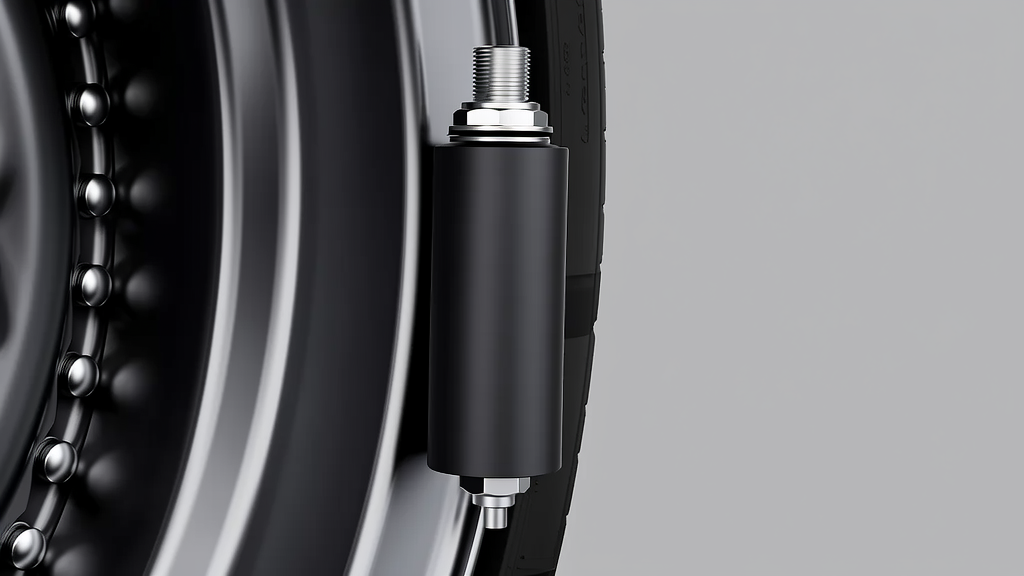
Clamp-in sensors bolt to the rim through a metal stem with a nut and rubber seal. Snap-in sensors push through a rubber grommet. They are not interchangeable without the correct hardware, and clamp-in units generally need a fresh seal and nut on every tyre change. If your wheel has a recessed or angled valve hole, confirm the stem angle before ordering — an incorrect angle will leak or foul the brake caliper.
Spec Table: BL-ST-081 Reference
| Item | Detail |
|---|---|
| SKU | BL-ST-081 |
| Brand | BH-Sens (Baolong Technology) |
| Frequency | 433 MHz |
| Sensor type | Clamp-in, pre-programmed |
| OE references | 36106872774, 42607WAA02, 5A3DC0401, 687793602, 687793604, 6877937, 688714701, A0009052102, A0009054104, A0009057205 |
| Typical applications | Aston Martin, BMW, Maybach, Mercedes-Benz, Mini and others |
That cross-reference spread is wide, which is normal for a platform-shared sensor — but it’s exactly why you match numbers rather than guessing from the vehicle brand.
What “Pre-Programmed” Actually Means
A pre-programmed sensor ships with a fixed protocol already written to its memory. It does not need to be cloned from an old sensor, but most vehicles still require a relearn or activation step after fitting — either an OBD relearn, a drive-cycle trigger, or a quick activation with a TPMS tool.
Two practical notes from the shop floor:
- Read every sensor before you mount the tyre. A 10-second scan on the bench catches a dead battery or a wrong-frequency unit before you’ve paid for a dismount and rebalance.
- Keep the packaging until the light is out. Batch or date-code issues are rare but real, and having the original box and SKU makes a warranty claim straightforward.
If you’re fitting a large batch, budget for one TPMS tool that reads 433 MHz and can display the sensor ID and pressure. It pays for itself the first time you avoid re-breaking a wheel down.
B2B Bulk Buying Notes
For shops, resellers and fleet buyers, the risk profile changes. You’re not buying one sensor for one car — you’re buying a bin of parts that a technician will grab blind at 5 pm on a Friday. A few controls keep that from becoming a comeback:
| Check | Why it matters for bulk orders |
|---|---|
| Frequency stated on the SKU, not the brand | Prevents mixed 315/433 MHz stock in one bin |
| Full OE cross-reference list in writing | Lets your counter staff match by number, not by guesswork |
| Battery date codes and batch consistency | Avoids a whole batch aging out on the shelf |
| Clamp-in hardware included or listed separately | Nut and seal shortages stall jobs |
| Sample order before a full pallet | Confirms protocol and build quality on your tool |
| Clear warranty and DOA policy | Defines who eats the labour on a failed unit |
Order by OE number on the purchase order, and ask the supplier to label inner boxes with the SKU and frequency. It costs nothing and saves hours. Also confirm whether the sensor is supplied with the clamp-in nut and seal — some listings include them, some don’t, and a missing seal turns a 20-minute job into a parts run.
One more thing on mixed fleets: don’t standardise on a single sensor SKU just because it covers the most vehicles. Standardise on a frequency and protocol that matches your actual fleet mix, then stock the two or three cross-references that cover the rest.
Recommended Part
BL-ST-081 | BH-Sens 433MHz TPMS Tire Pressure Sensor | Fits Aston Martin, BMW, Maybach, Mercedes-Benz, Mini & 2 More | OE# 36106872774, 42607WAA02, 5A3DC0401 — the BH-Sens 433 MHz clamp-in sensor covers the OE references listed above across Aston Martin, BMW, Maybach, Mercedes-Benz and Mini applications. Confirm your OE number and frequency against the table before ordering, and scan each unit on the bench before it goes on a wheel.
FAQ
How do I confirm whether my vehicle uses a 433 MHz sensor?
Check the markings on the sensor body you’re removing, the tyre placard or door jamb label, or run the VIN through a TPMS lookup. A TPMS scan tool reading the existing sensor ID will also display the frequency it’s broadcasting on. Don’t guess from the model year alone — build-date splits happen.
Can I fit a clamp-in sensor where a snap-in sensor was originally used?
Usually yes, provided the wheel’s valve hole diameter and stem angle are compatible and you use the correct nut and seal. Check the wheel specification or your vehicle manual before committing, and always fit a new seal and nut rather than reusing old hardware.
Do I need to reprogram the sensor after installation?
A pre-programmed sensor already carries its protocol, but most vehicles still need a relearn or activation step — OBD relearn, a prescribed drive cycle, or a trigger with a TPMS tool. Follow the procedure in your vehicle manual, then verify all four positions read correctly on the dash or scan tool.
Is bulk buying TPMS sensors safe for a mixed fleet?
It’s safe if you buy by OE number and frequency rather than by brand, sample-test a batch on your own tool before committing to volume, and keep frequency-labelled stock separated. Mixing 315 MHz and 433 MHz units in one bin is the most common and most avoidable bulk-buy error.